
Aegon Global Equity Income
The Aegon Global Equity Income strategy focuses on generating reliable, growing dividends alongside long-term capital appreciation. It invests in a concentrated portfolio of around 40–50 high-quality companies with strong balance sheets, steady cash flows and consistent earnings.

Quick Access
Our Opinion
We particularly like the clarity and repeatability of the team’s process behind this fund, which rests on a simple dividend screen and a disciplined fundamental framework. Perhaps the most impressive aspect of the fund, however, has been its remarkable consistency across different market cycles. Combined with a soft-core style that sidesteps both deep value traps and speculative growth, this is a dependable option for investors seeking a steady, quality-led global equity allocation.
Fund Managers
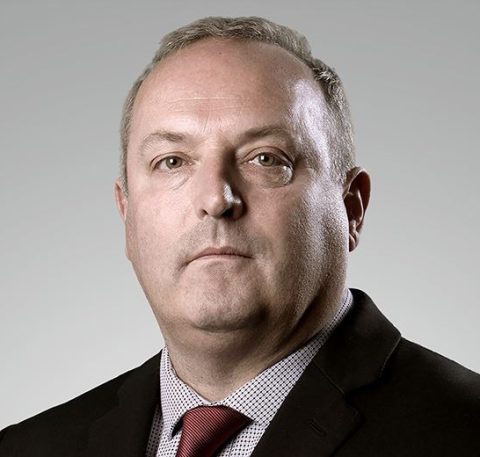
Mark Peden, Co manager
Mark is the architect of the Aegon Global Equity Income strategy and has been its lead manager since inception in 2012. He has been in the industry since 1992, having joined the firm in the same year, and has held a number of positions across International and European equity funds over his tenure, although European equities remain his main area of research expertise. Mark graduated from the University of York and the University of California with a BSc honours degree in economics with politics and is a CFA Charterholder.
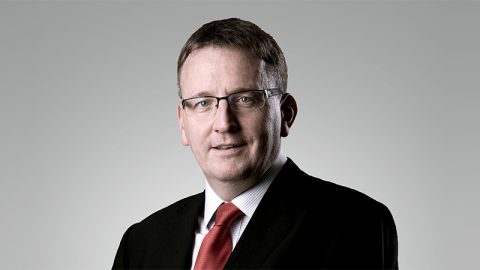
Douglas Scott, Co manager
Douglas is a co-manager on the Aegon Global Equity Income strategy, having been involved since launch and formally appointed as a named portfolio manager in 2015. He also co-manages Aegon's International (ex-US) income strategy and covers the tobacco, real estate, telecoms, beverages and oil services sectors. He joined Aegon in 2003, having previously worked at Investec as a stockbroker specialising in telecoms, and earlier held roles within UK equity teams at TRW and Abbey National. He has been in the industry since 1996 and holds a first class honours degree in aeronautical engineering from the University of Glasgow, along with a diploma in actuarial science from Heriot-Watt University.
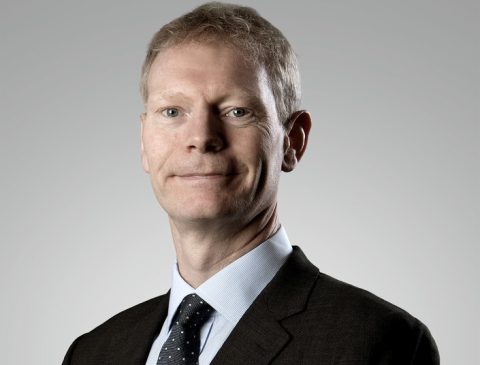
Robin Black, Co manager
Robin is a co-manager on the Aegon Global Equity Income strategy. He also co-manages the US Sustainable Equity Income strategy and covers the Asia Pacific region. Prior to joining Aegon, he was global head of pan-Asian sales at Macquarie Group in Hong Kong before returning to London to establish a global equity sales team, and earlier in his career held roles at Deutsche Bank, Citigroup, Merrill Lynch and Martin Currie. He has been in the industry since 1995 and holds a BA in history and economic history from the University of Aberdeen, an MSc in project analysis, finance and investment from the University of York, and an MSc in investment analysis from the University of Stirling.
Risk

Risk is managed as an integral part of the process. A dedicated portfolio risk team provides independent oversight using the BlackRock Aladdin system, with regular monitoring of portfolio characteristics including tracking error, Value at Risk (VaR) and stress testing scenarios.
The portfolio is constructed with an emphasis on large-cap, highly liquid companies, which helps keep liquidity risk low. Cash is typically below 3%, with the portfolio remaining close to fully invested.
Stock-specific risk is kept deliberately high, reflecting the team’s focus on fundamental research and security selection. Diversification is maintained through controls on exposures, with sector and regional deviations generally kept within approximately +/-10% relative to the MSCI All Country World Index. This helps ensure that performance is driven primarily by stock selection rather than unintended macroeconomic or geographic bets.
Company Description
Aegon’s heritage dates back to 1844. The name Aegon originated in 1983, when two Dutch insurance companies (AGO and ENNIA) merged together. Aegon asset management was established in 1988 and employs 1,200 people across the world, including almost 400 investment professionals. Its largest investment area is fixed income. Consideration of Environmental, Social and Governance (ESG) factors is a core element of Aegon’s investment analysis. The Global Responsible Investment team supports ESG integration by research and investment teams and leads the company’s active ownership activities.
Investment process
The strategy is built on the belief that dividend income is a key driver of long-term equity returns, and that companies capable of growing dividends tend to deliver stronger and more resilient performance over time. The process is structured into three stages: screening, fundamental analysis and portfolio construction.
The starting point is the global equity universe, which is first filtered for investability, removing companies with insufficient scale or liquidity. This is followed by a proprietary dividend screen which applies six criteria, including dividend yield relative to the market, dividend sustainability (cover and balance sheet strength), expected dividend progression, and return on invested capital. This reduces the opportunity set to roughly 400 stocks (around 10% of the global universe) which forms the core research universe for the team.
The team spends the bulk of its time getting to know this filtered universe in detail, supplemented by ideas from the wider Aegon equities team and by direct company engagement. New ideas are typically driven by change, whether in macro conditions, company strategy, earnings outlooks or dividend policy, which the team believes is often mispriced by the market in the short term.
The second stage of analysis combines three perspectives: business quality, valuation, and earnings momentum. Business quality assesses the durability of returns and dividend capacity; valuation is considered as a range-based assessment of fair value rather than a single price target; and momentum indicators, including earnings revisions, help to validate or challenge the fundamental view and improve timing.
The final stage is portfolio construction. The portfolio typically holds 40–50 stocks and is built through debate within the core team. Position sizing balances three considerations: fundamental conviction, contribution to portfolio yield and impact on overall risk.
A key feature of the process is the use of yield “buckets”, which helps balance the portfolio across different types of dividend exposure: a core allocation sits in a 2–4% yield range, complemented by lower-yielding structural growth companies and higher-yielding defensive holdings. The resulting portfolio is deliberately concentrated enough for conviction, but diversified enough to ensure balance across styles and cycles, with an average holding period of around three years.
Risk
Risk is managed as an integral part of the process. A dedicated portfolio risk team provides independent oversight using the BlackRock Aladdin system, with regular monitoring of portfolio characteristics including tracking error, Value at Risk (VaR) and stress testing scenarios.
The portfolio is constructed with an emphasis on large-cap, highly liquid companies, which helps keep liquidity risk low. Cash is typically below 3%, with the portfolio remaining close to fully invested.
Stock-specific risk is kept deliberately high, reflecting the team’s focus on fundamental research and security selection. Diversification is maintained through controls on exposures, with sector and regional deviations generally kept within approximately +/-10% relative to the MSCI All Country World Index. This helps ensure that performance is driven primarily by stock selection rather than unintended macroeconomic or geographic bets.
ESG
ESG considerations are fully integrated into bottom-up stock selection through a formal three-stage framework. For each company, analysts assess performance on material ESG factors, the significance of these factors to the overall investment case and the direction of travel over time. The fund achieved SFDR Article 8 status in 2022 and explicitly targets a portfolio weighting at least 20% higher than the MSCI All Country World index in stocks rated AAA and AA for ESG by MSCI. Active ownership is a central part of the approach, with engagement led by Aegon's Responsible Investment team and tracked against predefined milestones.
Related Insights

Balancing growth and income for long-term returns

Spring 2026: the funds gaining and losing their Elite Ratings
The information, data, analyses, and opinions contained herein (1) include the proprietary information of FundCalibre, (2) may not be copied or redistributed without prior permission, (3) do not constitute investment advice offered by FundCalibre, (4) are provided solely for informational purposes and therefore are not an offer to buy or sell a fund, and (5) are not warranted to be correct, complete, or accurate. FundCalibre shall not be responsible for any trading decisions, damages, or other losses resulting from, or related to, this information, data, analyses, or opinions or their use. The Elite Fund rating is subjective in nature and reflects FundCalibre’s current expectations of future events/behaviour as they relate to a particular fund. Because such events/behaviour may turn out to be different than expected, FundCalibre does not guarantee that a fund will perform in line with its FundCalibre benchmark. Likewise, the Elite Fund rating should not be seen as any sort of guarantee or assessment of the creditworthiness of a fund nor of its underlying securities and should not be used as the sole basis for making any investment decision. FundCalibre disclaims any responsibility for trading decisions, damages or other losses resulting from any use of the Elite Fund rating. All performance data, as well as fund size, OCF, AMC, annual income (historic), share price discount or premium, is sourced directly from FE Analytics, and will change periodically.