
Capital Gearing Trust
Capital Gearing Trust (CGT) aims to preserve investors’ real wealth over time and deliver returns ahead of inflation, rather than simply chasing short-term performance or beat a specific market benchmark. The managers do this by investing across a range of holdings including equities, bonds, investment trusts, ETFs and cash.

Quick Access
Our Opinion
This is an ideal consideration for any investor with an aversion to risk and a long-term time horizon. Capital Gearing Trust places an emphasis on capital protection, delivering a positive return to investors in 41 of the past 43 years whilst also substantially outperforming inflation over the long term. We like the use of its flexible investment asset allocation strategy as a way of navigating risk whilst demonstrating an ability to deliver growth over the long term.
Fund Managers
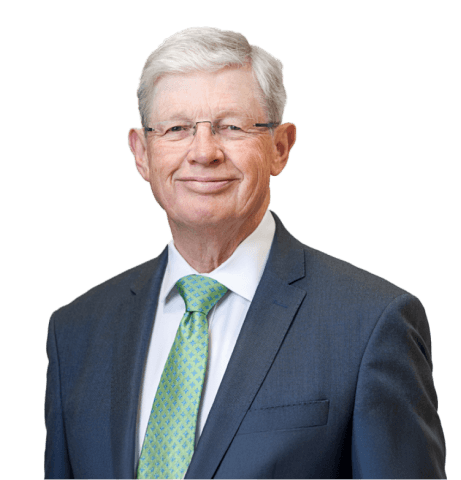
Peter Spiller, Co-Manager
Prior to founding CGAM in 2000, Peter Spiller was a partner and strategy director at Cazenove & Co Capital Management and a US equity investor at Capel Cure & Myers. Peter has managed Capital Gearing Trust plc since 1982.

Alastair Laing, Co-Manager
Alastair Laing joined CGAM in 2011, and has co-managed the trust since that date. Alastair joined CGAM from Hg Capital LLP (a pan-European private equity fund) and previously worked with the mergers and acquisitions team at Deloitte LLP. Alastair was educated at Edinburgh University and was an MBA Scholar at London Business School. He is a member of the Chartered Institute of Accountants of Scotland.

Chris Clothier, Co-Manager
Chris Clothier joined CGAM in 2015 and has co-managed the trust since that date. Prior to that he was a director at IPGL Limited, a private investment vehicle with a range of public and private interests predominantly in the financial services industry, where he worked for six years. Before that he worked at MMC Ventures, an early-stage venture capital firm. Chris studied Chemistry at New College, Oxford
Risk

Capital Gearing Trust places capital preservation at the heart of its investment process. However, there are a number of risk management processes in place to evaluate ongoing performance and positioning.
Risk management is carried out through continuous monitoring of position sizes, asset class weightings, and overall portfolio construction. The investment team regularly evaluates the balance between risk assets and non-risk assets, ensuring alignment with prevailing valuations and macroeconomic conditions.
There are various levels of oversight. CGAM has four committees that report up to the Board: the Investment Oversight Committee, Remuneration Committee, Audit Committee and the Risk Oversight & Valuations Oversight committee. The Investment Oversight Committee reviews, on an annual basis, the investment style of the firm. The Risk Oversight & Valuations Committee reviews, on a quarterly basis, various measures including liquidity risk, concentration etc.
The board of CGT also have oversight of the portfolio and will challenge the managers where appropriate.
Company Description

CG Asset Management (CGAM) is an independent London-based boutique investment manager dedicated to preserving and growing clients’ wealth through disciplined, long-term asset allocation and capital protection strategies. Founded in 2001, the firm’s employee-owned structure aligns its interests with clients, and its consistent, conservative approach has delivered strong performance across economic cycles. CGAM welcomes investors who share its patient, risk-aware outlook.
Investment process
Capital Gearing Trust’s investment objective is to generate returns ahead of inflation, without losing money. The trust looks to achieve these returns over the long term through a global portfolio of equities, bonds and commodities offering both diversification and risk management.
The investment process sees assets placed in three core buckets. The first bucket is risk assets, which includes the likes of equities/funds, property and infrastructure. For this, the team may use investment trusts and ETFs where appropriate (the managers will typically use passives if they find a suitable opportunity).
The second bucket is inflation-linked bonds – this is because they have a negative correlation to equities and typically outperform conventional government bonds – which includes the likes of US TIPS, UK Linkers and other high-quality sovereigns. Both the risk assets and inflation-linked bonds buckets can hold between 20-50% of the total assets of the trust.
The remainder will go into the third bucket – this is the managed liquidity reserve, which includes cash & treasury bills, short-dated government bonds and short-dated credit. This bucket also looks to reduce the duration and volatility of the portfolio.
The final portfolio is typically quite diverse with between 175-200 holdings. With an ongoing charge of 0.41%*, the trust is also very cost efficient.
Risk
Capital Gearing Trust places capital preservation at the heart of its investment process. However, there are a number of risk management processes in place to evaluate ongoing performance and positioning.
Risk management is carried out through continuous monitoring of position sizes, asset class weightings, and overall portfolio construction. The investment team regularly evaluates the balance between risk assets and non-risk assets, ensuring alignment with prevailing valuations and macroeconomic conditions.
There are various levels of oversight. CGAM has four committees that report up to the Board: the Investment Oversight Committee, Remuneration Committee, Audit Committee and the Risk Oversight & Valuations Oversight committee. The Investment Oversight Committee reviews, on an annual basis, the investment style of the firm. The Risk Oversight & Valuations Committee reviews, on a quarterly basis, various measures including liquidity risk, concentration etc.
The board of CGT also have oversight of the portfolio and will challenge the managers where appropriate.
ESG
Capital Gearing Trust’s Responsible Investment approach varies across asset classes, based on their capacity to influence the behaviour of a security issuer. In those asset classes in which they have limited influence e.g. government bond and corporate bond markets, they employ exclusions to ensure their Responsible Investment (RI) values are reflected. For government bonds they exclude issuers who do not achieve high rankings on a range of human rights, press freedom and government effectiveness criteria. For corporate bond issuers they exclude sectors that may inflict high levels of harm on society including controversial weapons, tobacco, gambling, thermal coal, adult entertainment and predatory lending.
For their investment trust holdings they look to deliver positive change through active engagement which they consider the most impactful ESG integration approach. They devote significant resources to active engagement with managers and boards to deliver improved ESG outcomes. CGT votes at every AGM for all their holdings and frequently vote against board recommendations when they have concerns
The firm report on all aspects of Responsible Investing every six months, including case studies of engagement activities, updated carbon metrics, their voting record and links to any changes in their RI policy. Development and compliance of the Responsible Investing Policy is overseen by the RI Committee that in turn reports to CGAM’s board on its activities. CGAM is a signatory to the UN PRI.
Gearing
CGT’s investment policy permits gearing, including the use of derivatives up to 20% of the value of net assets. However, the board and management do not use this facility as they believe it will impact their aim of capital preservation.
Related Insights

Designing a long-term ISA portfolio that works
390. Europe rising: what’s driving returns

389. Oil, inflation and uncertainty
The information, data, analyses, and opinions contained herein (1) include the proprietary information of FundCalibre, (2) may not be copied or redistributed without prior permission, (3) do not constitute investment advice offered by FundCalibre, (4) are provided solely for informational purposes and therefore are not an offer to buy or sell a fund, and (5) are not warranted to be correct, complete, or accurate. FundCalibre shall not be responsible for any trading decisions, damages, or other losses resulting from, or related to, this information, data, analyses, or opinions or their use. The Elite Fund rating is subjective in nature and reflects FundCalibre’s current expectations of future events/behaviour as they relate to a particular fund. Because such events/behaviour may turn out to be different than expected, FundCalibre does not guarantee that a fund will perform in line with its FundCalibre benchmark. Likewise, the Elite Fund rating should not be seen as any sort of guarantee or assessment of the creditworthiness of a fund nor of its underlying securities and should not be used as the sole basis for making any investment decision. FundCalibre disclaims any responsibility for trading decisions, damages or other losses resulting from any use of the Elite Fund rating. All performance data, as well as fund size, OCF, AMC, annual income (historic), share price discount or premium, is sourced directly from FE Analytics, and will change periodically.