
IFSL Marlborough Global SmallCap
The IFSL Marlborough Global SmallCap fund is a high-conviction global equity fund investing in quality smaller companies in developed markets. Sub-managed by Australian specialist Ausbil Investment Management, its philosophy is centred on "unrecognised growth" — identifying businesses where future earnings growth is not yet fully reflected in share prices. The team combines quantitative screening with fundamental research, to uncover opportunities in the less efficient global small-cap universe, where reduced analyst coverage can create greater scope for active managers to add value. In August 2026, the IFSL Marlborough Global Innovation fund was merged into the strategy, creating a larger, broader global small-cap portfolio.

Quick Access
Our Opinion
Tobias and Simon complement each other well. We particularly like the team’s willingness to build positions gradually as conviction develops, reflecting the time it can take to fully understand a business and their management teams. Most of the strategy's top ten has been held for over six years, which tells you this is genuine long-term investing. We also like that it is a true small-cap fund with no drift up the market-cap spectrum. For investors seeking differentiated exposure to developed-market smaller companies via an experienced and repeatable process, we believe this fund is a compelling option.
Fund Managers
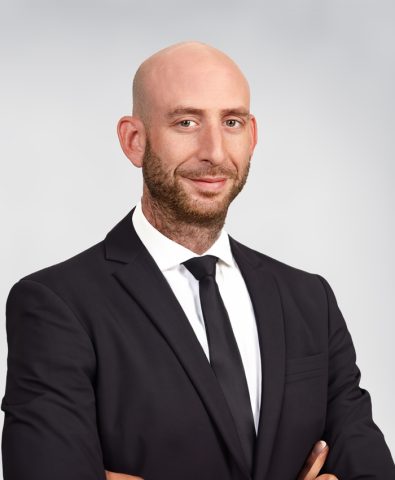
Tobias Bucks, Co-Manager
Tobias is a graduate of Edinburgh University and has over 15 years' investment experience. He moved to Australia to join Ausbil in 2017 and co-manages the fund alongside Simon Wood. Before moving ‘down under’, he was a fund manager at Baring Asset Management in the UK, where he was responsible for managing global small-cap funds and mandates for retail and institutional clients. He subsequently held Senior Analyst and Head of Research roles at Phillip Capital, Platypus Asset Management and CLSA, and started his investment career as a junior global equity portfolio manager at Newton Asset Management.
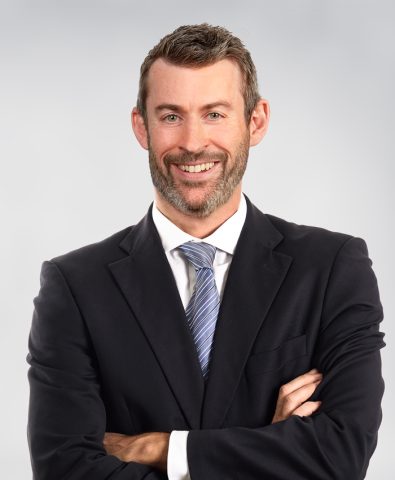
Simon Wood, Co-Manager
Simon graduated from the University of Brighton with a degree in Accounting and Finance and has over 20 years' investment experience. Prior to joining Ausbil, he spent four years at AMP Capital in Sydney as an Investment Consultant. Before emigrating to Australia, Simon spent 11 years at Baring Asset Management, where he was a director within the Global Quantitative Research Team - an integral part of the Barings investment process that worked collaboratively with portfolio managers at every stage.
Risk

Smaller companies can offer attractive long-term growth opportunities but are generally more volatile than larger businesses. Their share prices can move more sharply during periods of market uncertainty and they can also be less liquid, making them harder to buy and sell quickly. Liquidity is therefore an important consideration for the managers, who limit the size of each holding based on its average daily trading volume over the previous three months. This helps ensure the fund can buy or sell positions efficiently while limiting the potential impact on the share price.
The fund typically invests in 50–80 companies across developed markets, providing diversification while remaining focused on the managers’ highest-conviction ideas. New positions are usually introduced at relatively small weights and increased gradually as conviction grows.
The managers also use a structured sell discipline for underperforming investments. If a new holding underperforms by 25% within six months of purchase, it is sold. Secondary, relative underperformance of 15% triggers a formal review of the investment case, while underperformance of 25% prompts a more comprehensive reassessment, helping ensure poor-performing investments are identified and addressed promptly.
Company Description

Marlborough Fund Managers offers investments across various asset classes, ranging from UK fixed interest to international equities and exchange traded funds (ETFs). They were awarded the Elite Provider for Equities rating each year from 2016 to 2021. Marlborough's managers are hand-picked and given freedom to invest as they feel optimal in the fund's sector. For this fund, day-to-day management is outsourced to Ausbil Investment Management, an Australian investment specialist with which Marlborough has an exclusive partnership. Founded in 1997, Ausbil manages around AUD 20 billion and is owned by its employees and New York Life Investment Management.
Investment process
The managers believe that successful investing comes from identifying companies whose future growth is not yet fully recognised by the market. They call this “unrecognised growth” and believe that, over the long term, share prices ultimately follow earnings. Their investment philosophy is built around four key pillars: quality management teams; liquidity; ESG considerations and valuation. While they consider the wider economic backdrop when constructing the portfolio, they believe the greatest opportunity to add value comes from selecting individual companies.
To achieve this, they follow a disciplined four-step investment process:
1. Macroeconomic analysis
The team starts by assessing the global economic backdrop, considering factors such as economic growth, inflation and interest rates. They focus exclusively on developed markets, believing these offer stronger governance, greater transparency and more reliable access to company information than emerging markets. This helps them understand where different countries and sectors sit within the economic cycle and provides context for portfolio construction.
2. Regional and sector analysis
Using Ausbil's proprietary region and sector Matrix, the managers compare different regions and industries based on factors including valuations, growth prospects and quality. This helps shape the portfolio’s regional and sector exposure while highlighting areas where they believe conditions are more favourable. Together, these first two stages guide the fund's active regional and sector positioning.
3. Bottom-up stock selection
This is the most important part of the investment process and where the managers believe they can add the greatest value. Starting with a universe of around 4,500 developed market smaller companies, they use proprietary screening tools to identify businesses with attractive quality, growth and valuation characteristics. Detailed fundamental research then focuses on factors such as financial strength, management quality and long-term growth potential, with meetings with company management helping to build conviction. The managers are candid that getting to know management teams properly takes time, which is one reason name turnover is so low. ESG considerations are integrated throughout the research process.
4. Portfolio construction
The final portfolio typically holds between 50 and 80 companies. The managers combine their highest-conviction investment ideas with the broader regional and sector insights from the earlier stages to create a diversified portfolio. New holdings usually start as relatively small positions and are increased over time as conviction grows, while position sizes also reflect liquidity and systematic risk.
Risk
Smaller companies can offer attractive long-term growth opportunities but are generally more volatile than larger businesses. Their share prices can move more sharply during periods of market uncertainty and they can also be less liquid, making them harder to buy and sell quickly. Liquidity is therefore an important consideration for the managers, who limit the size of each holding based on its average daily trading volume over the previous three months. This helps ensure the fund can buy or sell positions efficiently while limiting the potential impact on the share price.
The fund typically invests in 50–80 companies across developed markets, providing diversification while remaining focused on the managers’ highest-conviction ideas. New positions are usually introduced at relatively small weights and increased gradually as conviction grows.
The managers also use a structured sell discipline for underperforming investments. If a new holding underperforms by 25% within six months of purchase, it is sold. Secondary, relative underperformance of 15% triggers a formal review of the investment case, while underperformance of 25% prompts a more comprehensive reassessment, helping ensure poor-performing investments are identified and addressed promptly.
ESG
The team believe that a company's understanding of and adherence to relevant ESG issues is an important indicator of its quality, durability and sustainability. Every company researched is assigned an ESG score, and companies falling below the team's minimum threshold are excluded from investment. All members of the team are responsible for ESG integration, supported by Ausbil's dedicated in-house ESG Research. Ausbil was one of the pioneers of ESG integration in the Australian market, and the framework applied here mirrors that used across the firm's domestic equity strategies. Proprietary analysis is supplemented by data from Bloomberg, FactSet, MSCI, company accounts and regulatory filings.
Related Insights

Are these acorns finally getting the conditions they need to grow?

Six global funds offering six very different ways to invest

Meet the latest funds to earn an Elite Rating
The information, data, analyses, and opinions contained herein (1) include the proprietary information of FundCalibre, (2) may not be copied or redistributed without prior permission, (3) do not constitute investment advice offered by FundCalibre, (4) are provided solely for informational purposes and therefore are not an offer to buy or sell a fund, and (5) are not warranted to be correct, complete, or accurate. FundCalibre shall not be responsible for any trading decisions, damages, or other losses resulting from, or related to, this information, data, analyses, or opinions or their use. The Elite Fund rating is subjective in nature and reflects FundCalibre’s current expectations of future events/behaviour as they relate to a particular fund. Because such events/behaviour may turn out to be different than expected, FundCalibre does not guarantee that a fund will perform in line with its FundCalibre benchmark. Likewise, the Elite Fund rating should not be seen as any sort of guarantee or assessment of the creditworthiness of a fund nor of its underlying securities and should not be used as the sole basis for making any investment decision. FundCalibre disclaims any responsibility for trading decisions, damages or other losses resulting from any use of the Elite Fund rating. All performance data, as well as fund size, OCF, AMC, annual income (historic), share price discount or premium, is sourced directly from FE Analytics, and will change periodically.