
International Biotechnology Trust
The International Biotechnology Trust (IBT) invests in a diversified portfolio of biotechnology and life sciences companies worldwide. Its objective is to achieve long-term capital growth by identifying businesses developing innovative medicines, therapies, and healthcare technologies. The managers invest across companies of different sizes, from established global leaders to smaller firms with promising drug pipelines, using scientific and financial analysis to select holdings.

Quick Access
Our Opinion
The performance of this trust under the tenure of Ailsa and Marek has been incredibly strong. The diversified nature of the portfolio has proved successful in producing this performance in both up and down markets for the sector. The extensive team has a strong network, enabling them to invest across the full biotech sector, ranging from established global leaders with proven products to smaller, earlier-stage companies with significant growth potential.
Fund Managers
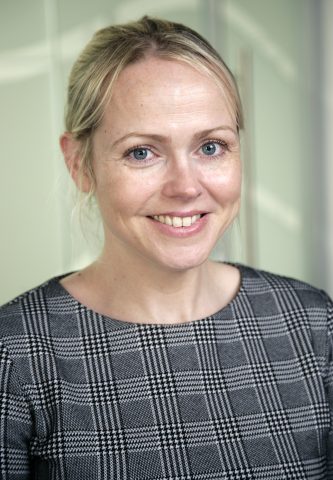
Ailsa Craig , Co-Manager
Ailsa has worked on the IBT strategy since 2008 and became co-lead manager in March 2021. Before moving to Schroders with IBT, Ailsa was managing the trust at SV Health Investors. She began her career in the Global and US investment team at Insight Investment (formerly Rothschild Asset Management) before spending two years at Baring Asset Management as a research analyst specialising in pharmaceutical and biotechnology companies. Ailsa holds a BSc (Hons) in Biology from the University of Manchester and has both the Investment Management Certificate (IMC) and the Securities Institute Diploma.
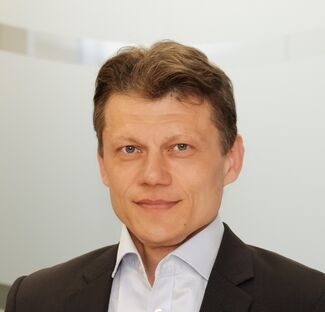
Marek Poszepczynski, Co-Manager
Marek has worked on the IBT strategy since 2013 and became co-lead manager in March 2021. Before moving to Schroders with IBT, he managed the trust at SV Health Investors. He has more than 15 years’ experience in the life sciences industry, specialising in biotechnology financing, licensing and business development. His previous roles include lead equity analyst at Handelsbanken, Vice President of Business Development at Karolinska Development and Licensing Director at Biovitrum. Marek has been involved in IPOs, licensing transactions and company building, and holds master’s degrees in Biochemistry and Business Management from the Royal Institute of Technology in Stockholm.
Risk
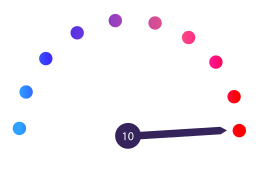
The International Biotechnology Trust is a specialist investment trust and carries a higher level of risk than a broadly diversified global equity fund. The principal risk is sector concentration, as the portfolio invests predominantly in biotechnology and life sciences companies whose share prices can be significantly affected by clinical trial results, regulatory approvals, patent developments and product launches. The trust also invests globally, meaning returns can be affected by currency movements, and its shares can trade at a premium or discount to their net asset value (NAV). In addition, a small proportion of the portfolio is invested in unquoted companies, which can be more difficult to value and sell.
The managers seek to reduce risk by diversifying across different areas of healthcare and companies at different stages of development, while maintaining a disciplined, risk-aware investment approach focused on capital preservation. Additionally, independent oversight is provided through Schroders' risk management framework and the board of directors also reviews risk management processes regularly.
Company Description

Schroders is a global investment manager which provides active asset management, wealth management and investment solutions, with £773.7 billion of assets under management*. As a UK listed FTSE100 company, Schroders has a market capitalisation of circa £6 billion and over 6,000 employees across 38 locations. Established in 1804, Schroders remains true to its roots as a family-founded business. The group was awarded the Elite Equities Provider Rating in 2015, 2016 and 2017.
Investment process
The International Biotechnology Trust typically holds 90-120 companies, primarily on a bottom-up basis. The selection process includes evaluating the strength of a company's science, clinical trial data, intellectual property, commercial opportunity, management quality, financial position and valuation. A top-down overlay is also applied to reflect the biotechnology market cycle, helping to manage risk to make sure the portfolio remains appropriately diversified across therapeutic areas, company sizes and stages of development.
The result is a basket approach, designed to capture upside but spread risk across four specific baskets (rare diseases, oncology, metabolic and central nervous system). The team has a focus on late-stage high-growth companies which are at, or approaching, the launch phase.
The majority of the assets are invested in quoted companies listed on global stock exchanges, predominantly in the United States, which is home to the world's largest biotechnology market. Alongside listed equities, the trust also allocates approximately 5–15% of net assets to unquoted companies and specialist venture capital funds. These unquoted companies give managers access to earlier-stage innovations that may offer significant long-term growth potential
Risk
The International Biotechnology Trust is a specialist investment trust and carries a higher level of risk than a broadly diversified global equity fund. The principal risk is sector concentration, as the portfolio invests predominantly in biotechnology and life sciences companies whose share prices can be significantly affected by clinical trial results, regulatory approvals, patent developments and product launches. The trust also invests globally, meaning returns can be affected by currency movements, and its shares can trade at a premium or discount to their net asset value (NAV). In addition, a small proportion of the portfolio is invested in unquoted companies, which can be more difficult to value and sell.
The managers seek to reduce risk by diversifying across different areas of healthcare and companies at different stages of development, while maintaining a disciplined, risk-aware investment approach focused on capital preservation. Additionally, independent oversight is provided through Schroders' risk management framework and the board of directors also reviews risk management processes regularly.
ESG
The International Biotechnology Trust integrates ESG considerations into its investment process as part of its fundamental company research and risk assessment, rather than applying a strict ethical or exclusionary screening approach. The managers assess how ESG factors may affect a company's long-term prospects, including corporate governance, board quality, business ethics, clinical trial conduct, product safety, regulatory compliance and environmental management.
Given the trust's focus on biotechnology and life sciences, particular emphasis is placed on the social impact of investments, with portfolio companies developing innovative medicines and technologies that address unmet medical needs and improve patient outcomes. Engagement is aided by Schroders’ team of ESG and sustainability specialists, as well as their screening systems SustainEx and CONTEXT, which help evaluate/engage with companies on ESG issues.
Gearing
IBT uses modest gearing to enhance long-term returns when the managers identify attractive investment opportunities. The board allows borrowing of up to 20% of net assets, although the trust has historically operated well below this limit. In practice, gearing has typically been maintained in the 5–10% range.
Related Insights

Sell in May? Not this year…

The silver economy: five sectors poised to prosper

Meet the latest funds to earn an Elite Rating
The information, data, analyses, and opinions contained herein (1) include the proprietary information of FundCalibre, (2) may not be copied or redistributed without prior permission, (3) do not constitute investment advice offered by FundCalibre, (4) are provided solely for informational purposes and therefore are not an offer to buy or sell a fund, and (5) are not warranted to be correct, complete, or accurate. FundCalibre shall not be responsible for any trading decisions, damages, or other losses resulting from, or related to, this information, data, analyses, or opinions or their use. The Elite Fund rating is subjective in nature and reflects FundCalibre’s current expectations of future events/behaviour as they relate to a particular fund. Because such events/behaviour may turn out to be different than expected, FundCalibre does not guarantee that a fund will perform in line with its FundCalibre benchmark. Likewise, the Elite Fund rating should not be seen as any sort of guarantee or assessment of the creditworthiness of a fund nor of its underlying securities and should not be used as the sole basis for making any investment decision. FundCalibre disclaims any responsibility for trading decisions, damages or other losses resulting from any use of the Elite Fund rating. All performance data, as well as fund size, OCF, AMC, annual income (historic), share price discount or premium, is sourced directly from FE Analytics, and will change periodically.