
Invesco Global Equity Income Trust
The Invesco Global Equity Income Trust (IGET) seeks to deliver a combination of sustainable income and long-term capital growth by investing in a diversified portfolio of high-quality companies across global equity markets. The portfolio is managed using a disciplined, bottom-up investment approach, focusing on businesses with resilient cash flows, strong balance sheets, and the ability to generate growing dividends over time. The portfolio is deliberately concentrated, typically comprising 40–60 holdings, providing a balance between high-conviction stock selection and global diversification. Following the merger with Franklin Global Trust, the trust has grown to over £500 million in net assets, enhancing its scale and improving share liquidity.

Quick Access
Our Opinion
Not only has the trust delivered an excellent long-term track record, but it has done so through a balanced investment approach that combines exposure to both growth and value stocks, helping to mitigate style risk. We also value the managers' flexibility to invest in companies with little or no current dividend yield where they identify compelling long-term capital appreciation opportunities. This flexibility, combined with the team's focus on quality companies and disciplined approach to valuation, makes the trust an attractive option for investors seeking a combination of income and long-term capital growth.
Fund Managers
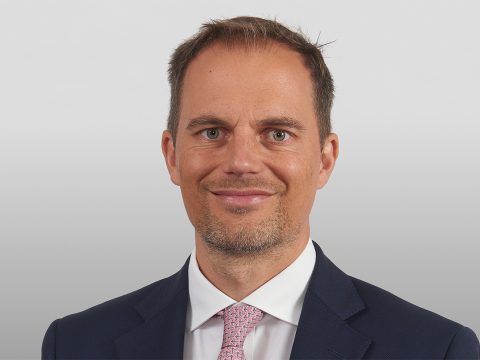
Stephen Anness, Co-Manager
Stephen Anness is head of Invesco’s Henley-based global equities team and manages portfolios across its global equity income and growth strategies. He joined Invesco’s UK equities team as a trainee analyst in 2002, before becoming a portfolio manager and taking responsibility for his first UK fund in 2008. He moved to the global equities team in 2012, having contributed to its idea generation and stock selection since 2009. Stephen took responsibility for the global equity income strategy in December 2019. He holds a BSc in Economics, the Securities Institute Diploma, the Investment Management Certificate from the CFA Society of the UK and has studied Corporate Finance at the London Business School.

Joe Dowling, Co-Manager
Joe Dowling is a fund manager in Invesco’s global equities team, managing portfolios across its global founders and owners and global equity income and growth strategies. He first worked at Invesco through two internships while studying at the University of Bath, gaining experience across the global equity, global equity income and global smaller companies teams. He joined the global equities team full-time as an analyst in July 2013. He holds a BSc in Business Administration from the University of Bath and the Investment Management Certificate from the CFA Society of the UK.
Risk

IGET holds a relatively focused portfolio of 40–60 companies, so the performance of individual holdings can have a greater impact than in trusts which hold more companies. The managers seek to manage this risk through detailed company research, ongoing monitoring and formal monthly team meetings with daily team debate.
Risk at the portfolio level includes correlation analysis, style/factor bias monitoring and quarterly portfolio reviews with the portfolio manager and risk manager. This is supported by independent oversight, including quarterly reviews by Invesco’s independent risk function and an annual challenge from its Chief Investment Officer (CIO). By investing in both growth and value companies, the managers aim to reduce the trust's reliance on any one investment style.
Company Description

Founded in 1969, Invesco forms part of Invesco Ltd, a global independent investment management company with more than 7,000 employees in more than 25 countries. Its focus is on equities, but it also invests in fixed interest and other asset types. In October 2018, Invesco Perpetual dropped its Perpetual branding and is now simply known as Invesco.
Investment process
The Invesco Global Equity Income Trust looks for quality companies at attractive prices that can grow cash flows. These are businesses which can succeed in any market environment as they are competitively advantaged, have strong fundamentals and no obvious ESG risks.
Companies tend to sit in one of three buckets:
1. Dividend compounders (70-100% of the portfolio) – these have a strong track record of dividend payments, with an attractive and growing yield.
2. Low/no yield with faster growth (0-20% of the portfolio) – these are lower dividend yield companies yet have excellent capital allocation with clear per share value creation.
3. Dividend restoration (0-10% of the portfolio) — there are companies undergoing a temporary challenge with a clear route to dividend restoration.
The investment process is broadly split into five stages called IDEAS (identify, determine, evaluate, approve and structure).
The approval stage includes a peer review, other sources of risk (currency, geopolitics, liquidity) and an assessment in the context of the existing portfolio holdings. The structure stage sees companies placed in either the highest-conviction bucket (3.75-6% holdings); core positions (2-3.75%); or incoming/exiting ideas with wider potential outcomes (0-2%).
The final portfolio consists of between 40-60 companies, with individual positions ranging between 1-6%. The team can invest up to 10% in emerging markets and IGET aims to pay a dividend of at least 4% per year.
Risk
IGET holds a relatively focused portfolio of 40–60 companies, so the performance of individual holdings can have a greater impact than in trusts which hold more companies. The managers seek to manage this risk through detailed company research, ongoing monitoring and formal monthly team meetings with daily team debate.
Risk at the portfolio level includes correlation analysis, style/factor bias monitoring and quarterly portfolio reviews with the portfolio manager and risk manager. This is supported by independent oversight, including quarterly reviews by Invesco’s independent risk function and an annual challenge from its Chief Investment Officer (CIO). By investing in both growth and value companies, the managers aim to reduce the trust's reliance on any one investment style.
ESG
IGET incorporates ESG considerations into its investment process but does not have a formal sustainable investment objective or apply strict exclusionary screens. Instead, ESG analysis forms part of the managers' assessment of company quality, valuation and long-term risk. The core aspects of the ESG philosophy include materiality; ESG momentum; and engagement.
Materiality refers to the consideration of ESG issues that are financially material to the company being analysed. ESG momentum, or improving ESG performance over time, indicates the degree of improvement of various ESG metrics and factors and helps fund managers identify upside in the future.
The team view engagement with companies as an opportunity to encourage continual improvement. Dialogue with portfolio companies is a core part of the investment process for the investment team. As such, they often participate in board-level dialogue and give views on management, corporate strategy, transparency and capital allocation as well as wider ESG aspects.
Gearing
IGET can use up to 20% gearing – however it has tended to sit between 0-10% over the past three years.
Related Insights

Premier League 2026/27: Meet FundCalibre’s starting XI

Meet the latest funds to earn an Elite Rating
The information, data, analyses, and opinions contained herein (1) include the proprietary information of FundCalibre, (2) may not be copied or redistributed without prior permission, (3) do not constitute investment advice offered by FundCalibre, (4) are provided solely for informational purposes and therefore are not an offer to buy or sell a fund, and (5) are not warranted to be correct, complete, or accurate. FundCalibre shall not be responsible for any trading decisions, damages, or other losses resulting from, or related to, this information, data, analyses, or opinions or their use. The Elite Fund rating is subjective in nature and reflects FundCalibre’s current expectations of future events/behaviour as they relate to a particular fund. Because such events/behaviour may turn out to be different than expected, FundCalibre does not guarantee that a fund will perform in line with its FundCalibre benchmark. Likewise, the Elite Fund rating should not be seen as any sort of guarantee or assessment of the creditworthiness of a fund nor of its underlying securities and should not be used as the sole basis for making any investment decision. FundCalibre disclaims any responsibility for trading decisions, damages or other losses resulting from any use of the Elite Fund rating. All performance data, as well as fund size, OCF, AMC, annual income (historic), share price discount or premium, is sourced directly from FE Analytics, and will change periodically.