
Murray Income Trust
Murray Income Trust is a core UK offering designed to deliver attractive total returns through income and capital growth. This is a flexible, high conviction portfolio of UK stocks managed by an experienced management trio, with the ability to invest up to 20% of the portfolio in overseas holdings.

Quick Access
Our Opinion
Formerly run by abrdn, Artemis became managers of the Murray Income Trust in March 2026 following a review of the investment strategy. The portfolio will mirror the highly successful Artemis Income fund, which has been a leading player in the UK equity income sector for more than 25 years. The trust is designed to offer a diversified, eclectic mix of cashflows from different companies to ensure a sustainable and durable income. The overseas exposure has provided extra opportunities for additional returns. The team plans to introduce a gearing strategy of 8-10% to the trust, allowing them to take advantage of the closed-ended structure to boost both income and total returns.
Fund Managers

Adrian Frost, Co Manager
Adrian, alongside co-managers Nick Shenton and Andy Marsh, manages Artemis’ UK equity income strategies, a role he has held since joining the firm in January 2002. He began his career at Deutsche Asset Management (Morgan Grenfell) in 1983, where he became a director in 1990 and head of UK equities in 1996. Adrian graduated from Jesus College, Cambridge, and was honored with Investment Week’s ‘Outstanding Fund Manager Over 25 Years’ award in 2020.

Nick Shenton, Co Manager
Nick manages income mandates with Adrian Frost and Andy Marsh. After studying Economics with French at the University of Nottingham, he began his career at F&C Asset Management in 2003, working as an analyst and assistant fund manager on UK and pan-European equities. In 2007, Nick moved to Polar Capital as a fund manager for the UK long/short equity hedge fund and joined Artemis in 2012.
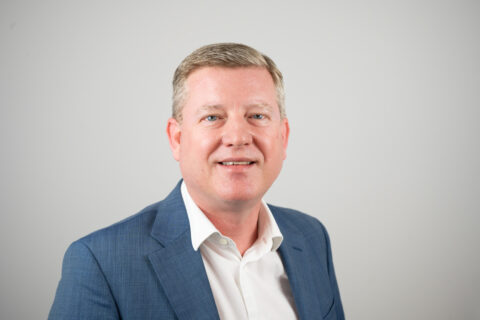
Andy Marsh, Co Manager
After qualifying as an accountant in 1997 with Ernst & Young, Andy worked as an analyst for ING Charterhouse and Merrill Lynch. He then became head of equity sales at Investec Investment Bank in 2005. From 2006 to 2017, Andy managed money at Polar Capital, where he was a partner. In February 2018, he joined Artemis' income team to work alongside Adrian Frost and Nick Shenton.
Risk

As an income-based portfolio, risk tends to be lower than those vehicle’s targeting growth. The trust is well-diversified and has risk embedded throughout the process – including a 20% exposure to overseas companies, which allows it to benefit from currency gains during periods of sterling weakness.
Murray Income Trust is designed to be resilient in all market conditions. Investors can expect it to protect assets in downward markets although it may lag in periods of strong outperformance from equities.
Company Description

UK-based Artemis was founded in 1997 as a limited liability partnership. Affiliated Managers Group (AMG) and the management team at Artemis own 100% of the equity of the business. This is a financial partnership; AMG takes a share of the revenues produced by Artemis but does not get involved in the day-to-day running of the business. Artemis has retained its manager-centric, innovative and supportive culture, which has helped it to attract and retain talented investors.
Investment process
The Murray Income Trust mirrors the open-ended strategy ran by the firm since 2000. However, the managers will deploy gearing of 8-10% allowing them to take advantage of the closed-ended structure to boost both income and total returns.
The underlying investment philosophy of the trust embraces the belief that shareholders are rewarded by investing in companies with a sustainable business franchise at an attractive valuation point in their business cycle.
Stocks deemed to be 'special situations' tend to appear in many different sectors, but are driven by similar catalysts: management change, recovery and industry restructuring. However, all the investments in this trust have further similarities: they all have a strong franchise and often a unique product; they all have a quality management team whom the managers have met on several occasions, and most of them have been market darlings in the past, but have since fallen by the wayside.
The managers seek undervalued companies that are able to generate a high degree of surplus cash. This cash can be returned to shareholders, providing an income, or re-invested back into the business. The team therefore focus their analysis on whether companies use their cash wisely.
At the point of purchase a price target is established for a stock. This target is based on a variety of factors, which will vary depending on the company in question, but may include underlying asset value, price to earnings ratio, dividend yield, free cash flow yield and the strength of the company's intellectual property rights. Share prices are constantly monitored and targets revised according to news flow. The sell discipline is driven by the performance potential of new investments compared with existing holdings. Typically, a stock will be sold if it reaches the price target; if from a risk/reward perspective there are better ideas elsewhere; if the company’s fundamentals deteriorate, e.g. because of regulatory or market change; or if the thesis does not evolve as the managers anticipate.
All managers and portfolios are reviewed formally each quarter by the investment committee, chaired by the chief investment officer. The data reviewed by the committee is collated from a variety of sources, most significantly from Style Research and StatPro Risk Management analysis tools. The review concentrates on the portfolios’ relative exposures to key fundamental factors, ex-post and ex-ante risk statistics, plus stress test results and value at risk (VaR) as viewed over time. For each strategy, the portfolio is analysed in numerous ways to ensure that no unintended risks have built up.
The trust is built company by company from the bottom up without reference to the index. They have no restrictions on sector weightings and this has been an important driver of outperformance in the past. The managers’ focus on absolute risk ensures their portfolios are properly diversified. To this end, they have a maximum limit of 5% on individual stock holdings. Position size is a function of assumed upside, conviction and liquidity. The trust will typically hold between 50 and 70 holdings with a bias towards large-cap stocks. Style analysis is used to measure the portfolio’s style tilt, enabling them to monitor the portfolio’s beta or its tilt towards any particular investment style.
Risk
As an income-based portfolio, risk tends to be lower than those vehicle’s targeting growth. The trust is well-diversified and has risk embedded throughout the process – including a 20% exposure to overseas companies, which allows it to benefit from currency gains during periods of sterling weakness.
Murray Income Trust is designed to be resilient in all market conditions. Investors can expect it to protect assets in downward markets although it may lag in periods of strong outperformance from equities.
ESG
ESG - Integrated
The team integrate ESG analysis into the process based on the belief that good or improving ethical and social practices can be beneficial to a business. This could be through an improvement in the sustainability of operations and cash flow, a lower cost of capital (as the company stays investable to a wider pool of investors), and therefore better financial outcomes. This in turn will lead to better long-term share price performance. There are also the wider social benefits too.
The team are active managers, meaning they will discuss their thoughts and analysis with their companies, though this does not mean they will take an activist stance and force change. They are long-term investors and believe their above average holding periods enable them to constructively improve firms through management engagement.
Abrdn has around 150 equity professionals globally, all of whom analyse ESG risks and opportunities for each company. It also has a 20 strong ESG investment team, providing consultancy and insight. These teams help to build the ESG profile for each potential investment. An ESG House Score and an Equity ESG Quality Score are produced by the ESG equity analysts and the investment manager equity sector analysts respectively. This is done to help build the profile of each potential investment, while the management continually engages with companies to maintain ESG standards.
Gearing
The Murray Income trust will be run with gearing of 8-10% with the aim of enhancing income and total returns, dividends will be paid quarterly.
Related Insights

Who wins when Britain goes on holiday?

International Day of Yoga: a yogi’s guide to investing

The UK market has been written off — but should it be?
The information, data, analyses, and opinions contained herein (1) include the proprietary information of FundCalibre, (2) may not be copied or redistributed without prior permission, (3) do not constitute investment advice offered by FundCalibre, (4) are provided solely for informational purposes and therefore are not an offer to buy or sell a fund, and (5) are not warranted to be correct, complete, or accurate. FundCalibre shall not be responsible for any trading decisions, damages, or other losses resulting from, or related to, this information, data, analyses, or opinions or their use. The Elite Fund rating is subjective in nature and reflects FundCalibre’s current expectations of future events/behaviour as they relate to a particular fund. Because such events/behaviour may turn out to be different than expected, FundCalibre does not guarantee that a fund will perform in line with its FundCalibre benchmark. Likewise, the Elite Fund rating should not be seen as any sort of guarantee or assessment of the creditworthiness of a fund nor of its underlying securities and should not be used as the sole basis for making any investment decision. FundCalibre disclaims any responsibility for trading decisions, damages or other losses resulting from any use of the Elite Fund rating. All performance data, as well as fund size, OCF, AMC, annual income (historic), share price discount or premium, is sourced directly from FE Analytics, and will change periodically.