22 January 2026 (pre-recorded 12 January 2026)
Please be aware that the accuracy of artificial intelligence-generated transcripts, such as those utilised in our interviews, may fluctuate based on factors like audio quality, subject matter complexity, and individual speaker enunciation. Consequently, these transcripts are unlikely to achieve 100% accuracy. However, it is important to note that, at FundCalibre, we do not consider the correction of automatically-generated captions to be an effective or proportionate use of resources.
Given the inherent limitations of machine-generated transcription, we strongly advise against relying solely on this transcript when consuming our content. Instead, we encourage you to use the transcript in conjunction with the accompanying interview to ensure a more comprehensive and accurate understanding of the topic.
Please remember we’ve been discussing individual companies to bring investing to life for you. It’s not a recommendation to buy or sell. The fund may or may not still hold these companies at your time of listening.
[INTRODUCTION]
Staci West (SW): Welcome back to the Investing on the go podcast. Technology touches almost every part of modern life, yet many investors still see it through a narrow lens. In this episode, we explore how the technology opportunity set has evolved and where real growth is emerging beyond the headlines.
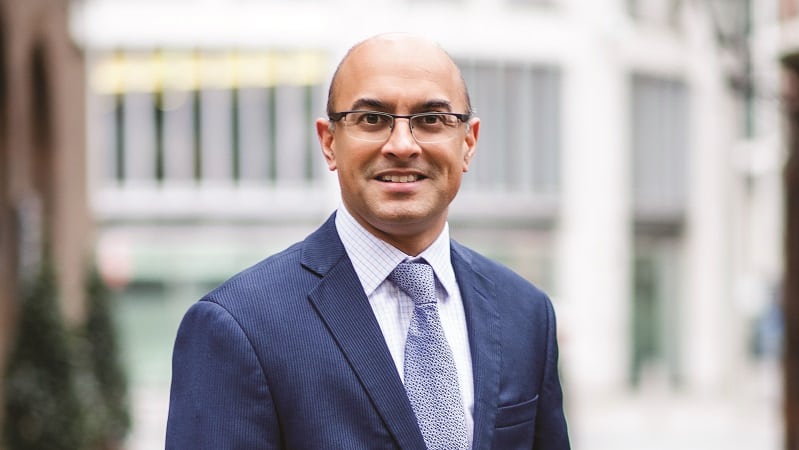
Darius McDermott (DM): Hello, I’m Darius McDermott from FundCalibre and this afternoon I’m joined by Jeremy Gleeson, who’s the manager on the Allianz Global Hi-Tech Growth fund. Jeremy, how are you?
Jeremy Gleeson (JG): I’m really good, thanks Darius, and happy new year to you.
DM: And to you mate, as well. Jeremy and I have known each other for a long time and he’s always a go-to when I need some guidance or some technical knowledge if we’re honest around the sector.
[INTERVIEW]
DM: So look, I think a lot of our listeners and people when they think of technology, they think of their computer, their tablet, their hardware, maybe even as far as their Apple Watch, but technology’s much broader than that just opportunity set. What way do you look at technology? Tell us a little bit about the sub-sectors that you have available to you.
JG: Yeah, yeah, no, you’re absolutely right there, Darius. Technology is so broad these days touching upon, you know, almost every aspect of our lives every aspect of a company’s existence and and beyond. So I go into this with a very open mind.
I believe that most technology companies or companies that have a sort of a technology DNA don’t necessarily think about being classified as a technology company when they either start or when they decide to go into a new area of business, which might be something that their skillset lends well to. And we’ve seen this over time.
We’ve seen the likes of Google, Alphabet, as they’re now known, start off as a search engine, and now they’re starting to put autonomous vehicles on the roads in the US and soon in London as well. We’ve seen Microsoft start off as an enterprise software company now making games, consoles and video games. And Apple have kind of, sort of jumped across all over the place. So, you know, the important thing is to think, you know, is the company got sort of a technology first mindset regardless of where they’re based.
So we are now finding technology companies in which are classified as financial services companies, industrial companies consumer obviously. And that’s just gonna continue. So it’s more about the DNA of the company rather than are they being classically identified as a technology company.
DM: So when you are starting your process and you are thinking what sort of buckets if you like, do you break those down into, and I suppose the secondary question is, which of those as areas are most attractive today, whether it’s valuation or high, given the name of the fund is high growth, which areas are you focusing on at the moment or think are most attractive?
JG: Yeah, I mean, every time you go sort of to sort of classify or categorise, it’s challenging because so many companies span so many different areas now. One of the easiest ways I think to look about what the opportunities are is by looking at who the ultimate end customer is.
So in that order, we kind of look at enterprise spending, we look at telecom services spending, we look at government spending, we look at consumer spending, and there’s more categories as well out there. But those are sort of maybe the four bigger ones.
And then we look at seeing who is spending and why they’re spending and what are the opportunities for the companies that are providing services or products into those spending categories. So clearly, a great backdrop is that enterprises around the world realise that they need to do more, increase their productivity, but also at the same time cost optimise. They need to do that, they need to do more with less, and technology is at heart. So pretty much all of those initiatives. So enterprise branding is a great area to be exposed to. If you are a company, if you can sort of get access to companies, IT budgets, it’s a great place to be.
And then consumers are just more savvy about spending on technology today. It’s at the forefront of a lot of consumers’ minds, whether that’s your teenage children or even your elderly parents. And so therefore, if there are companies who are producing products which are finding themselves attractive to various levels of consumer, that’s also a great place to be because more discretionary spend is focused on technology spending today than it was in the past.
DM: Well, maybe that leads me nicely or not nicely onto where the big spend is, and it would be inappropriate, although I don’t wanna do the whole section on AI, but clearly that’s where the big hundreds of billions of dollars is being spent in the race to AI, generative AI, the chase or whatever, however it’s classified. There’s a lot of spend in that area. Is that something that worries you? Do you expect a lot of returns on the investments in those high spend? Or it will, we know it will increase productivity. We know it will, the winners will win big. How are you seeing the whole AI thing given that we’re now technically, I suppose, into the third year of the AI race?
JG: That’s right. I mean, you know, if things changed very dramatically in late 2022 when we had the Chat GPT moment we are seeing a huge amount of innovation. And breakthroughs take place constantly around AI. Doing the maths on some of the investments that have been made or have been made and the potential ROI the returns on those investments in the future are challenging at the moment, because we don’t know what the future lies, but at the moment we’ve got sort of say, you know, half a dozen companies, maybe a few more who have all got the opportunity to be long-term AI winners, and none of them really right now want to sort of step away from that potential race to be part of the AI of the future. So there are, you know, I understandably some concerns that some of the spending has is without merit.
And that’s something we need to keep an eye on when spending goes beyond sort of, you know, something that is there to sort of deliver an outcome to being spending for the sake of spending, you know, almost egotistical spending. [DM: Yeah] But we don’t believe we are there yet. We see that the opportunities arising the technology is getting better, there are gonna be more use cases for AI in the future. We’re starting to see some then come through.
I’ve already mentioned autonomous vehicles. That is, you know, just really wouldn’t have been able to exist if it wasn’t for artificial intelligence. You know, we’ve seen the likes of Alphabet roll out in several cities across the US now where there are fleets of autonomous vehicles driving around next to manned cars.
We are starting to see some emergence of humanoid robotics. It was a big talking point at the consumer electronic show in Las Vegas a year ago, and it’s continued to be another talking point at the consumer electronic show that took place just last week. So the opportunities are expanding but we’ve got to keep an eye to make sure that the spending is not getting completely out of whack with what those opportunities are.
DM: Yeah. So I think we always think of technology as a high growth, interesting sector comes with some volatility, but the returns certainly in the last 10, 15 years have more than rewarded those ability to take risks. What about some slightly less sexy, even dull areas that are maybe benefiting as a second derivative of some of the spend on AI or all this innovation that’s that’s going on generally?
JG: Yeah, there’s certainly some of those as well. I mean, a year ago we flagged one of the themes of 2025 to be around high speed networking. Particularly we were talking about optical communications optical components optical components have been around for decades. They’ve been what’s kind of powering our internet for the last 20 plus years. But that whole area of spending has historically been very much tied into telecom spending and telecoms companies are very cyclical in their spending cycles. So those companies that supply optical components enjoy peaks and troughs from the spending of telcos. Those components are now being used inside the AI data centres that are being built. And so these companies are actually enjoying a secular growth tailwinds, which they haven’t enjoyed for quite some time. So they’ve gone from being these sort of somewhat boring, very cyclical, somewhat unpredictable companies, dependent on a very select customer base to now enjoying secular growth as well. And you know, we’ve had some fantastic returns in some of our optical companies and we think 2026 is gonna be a a great year for them too.
DM: So another thing that comes up, and this isn’t just a technology index issue, but actually an S&P index, which is the concentration the well-known acronym MAG 7 in the S&P being approximately 40%. But an even bigger challenge for technology investors is that Apple, Microsoft, and Nvidia make up circa 50% of your index. So mathematically under the rules of which you run funds in Europe and the UK, you can’t have 50% in three stocks. I know you’ve been in and out of all of those, but what other opportunities outside those three hyperscalers, I believe they’re now called, but what other technology companies are interesting you?
JG: Yeah, so I guess, you know, the benefit, you know, there’s obviously a challenge because we can’t own index weights in those positions or full weights on those positions. But the opportunity is actually, it gives us the opportunity to diversify a fund far more than the index would be diversified. [DM: Yeah.] And it does that on three levels.
One is from a market cap perspective, we can delve down into mid-caps and small-caps more than the index does. We could do it on a geographical basis. Those three companies that you mentioned are all US companies. So we can be a lot more international with our exposure in the fund. And then from a sector perspective, which we kind of touched upon at the beginning of the podcast, which is we can look outside the technology sector to find interesting companies outside.
So I mean, we’ve got a portfolio of just over 50 stocks. Only three of them are those big three that you mentioned. So there’s a lot of other interesting names across semiconductors, software hardware comm services, et cetera that we can get exposure to names in Asia, which your typical investor based here in the UK would not have heard of. We can tap on to our very well resourced colleagues in Asia who are, you know, looking and analysing at Asian technology stocks on a daily basis and pick ideas from them. We use our own research capabilities here in Europe to identify companies in the US and Europe, Europe which we can get exposure to. So just being able to move away from the index and being active is really, really important.
DM: I think it’s interesting then, because you have colleagues out in Asia, but when one thinks of the AI race, but generally the most tech, obviously it is mostly listed in the US. Do you think Asia is playing catch up? I know you’ve added to Samsung electronics for it, for instance, or do you think the Asian powerhouses are there, they’re just a small part of the index?
JG: Yeah, I think the Asian powerhouses are there and something’s changed over the last sort of 10 years maybe. Is that, you know, Asia, for the largest part when you thought of technology, they were largely just used as the outsources for Western demand, whether it was providing IT services or making semiconductor chips or putting hardware together. But there’s something that’s changed in the DNA in Asia and now we’re seeing a lot of innovation really start to push through. And we saw some of that almost 12 year, 12 months ago when we saw the Chinese breakthroughs in AI with the Deep Seek announcement.
And then we noted the fact that Alibaba are building their own large language models they’re at the forefront of this stuff as well. We clearly know that Taiwan Semiconductor is the leading foundry globally and have sort of you know, competed against the likes of Intel very, very successfully for many years now. And now we’re starting to see that sort of really sort of almost sort of spread out down the market cap spectrum in Asia as well.
So mid-caps and smaller cap names are also sort of demonstrating how cutting edge with their technology rather than just being a manufacturer of products which have been designed by an American or European company.
DM: And that’s a differentiator for your franchise, isn’t it? Those mid and potentially smaller companies, but also that geographical diversification, not there’s anything wrong with the hyperscalers. They’ve made a lot of money over the last 10 years, but you can add a slightly different flavour of in a technology fund.
JG: Yeah, absolutely. And our view is that we have lower weights in the hyperscalers, the Mag 7 than maybe the indices, but it’s not because we don’t like them, it’s just because we want to ensure that there’s good diversification in a broad portfolio. And so we can identify companies who are benefiting from some of those big trends out there, but they’re just off the radar screen and therein lies the opportunity regards to valuation and growth, et cetera.
DM: So another area I’d like to touch on is super interesting and leads to individual and enterprise spending, but of course it’s cybersecurity. For all the newfangled technologies that we’ve come to actually think of as every day you know, we need companies and people to businesses to protect consumers and business. I see you’ve got Palo Alto and Arista Networks, which I think you call digital plumbing. Tell us a little bit about your exposure to cyber and some of the interesting things about it.
JG: Yeah, I mean, some of these companies are just working away in the background. You know, many people just wouldn’t have heard of these companies or aren’t aware of what they do simply because they’re not the marquee names that get mentioned in the press or that have that sort of marquee consumer branding that we know. And it’s these companies that enable things to happen whether it’s protecting us or just enabling the internet and AI applications and workloads, the app store to run, et cetera.
And you know, there’s companies, you mentioned Palo Alto firming and cybersecurity. You know protecting your digital assets, whether you are a consumer or an enterprise is very, very important. Protecting your intellectual property is very important. And we know that the bad guys out there are attempting to steal data and intellectual property, and it’s important to have a cybersecurity strategy that helps protect your assets. The interesting thing about cybersecurity is that it’s maybe a little bit less cyclical than other areas of it spending. So companies have to kind of spend on cybersecurity regardless of whether their business is booming or they’re going through a more challenging economic time.
DM: Yeah, I was going to ask, it feels to me like it’s a non-discretionary item. You know, you have to have that if you’re a company certainly companies that deal with data, et cetera. And are you starting to see some of those cyber names that you invest in or that you watch that really are starting to get bigger spend of company wallet?
JG: So it is an interesting one because when a company’s enjoying significant growth when the economy’s booming they don’t necessarily need to increase the amount of spending on cybersecurity. So they would likely more spend on areas which are gonna help them sort of support that growth.
But the flip side is that when times are more challenging and belts are being tightened, cybersecurity’s not an area where you’re typically gonna go and cut spending either. So the the interesting thing is the cybersecurity, there was a kind of a sort of, I guess a step function in demand, which took place six years ago when COVID kicked in. And employers suddenly had to support their employees working from home. And it changed the cybersecurity environment quite significantly for companies. So they had to step up spending to support sort of remote access and work from home environment. So now we’re seeing a sort of a pjatformization taking place around cybersecurity, where companies are looking to work with fewer vendors but do more with those vendors. And our sort of goal is to identify the vendors that are going to be the winners in the pjatformization trends and invest in those.
DM: But also as well, when you say, you know, whilst historically some of the spending may have been cyclical, actually, now you should be, you know, that there’s a minimum spend, companies can’t cut their spending because the threat to companies and individuals from cyber attacks that we hear and read about every day is so great. So at least you’ve got that good longevity of cash flows from some of those companies, which you know, nothing wrong with good stable cash flows.
JG: That’s exactly it and just one of the reasons why we like these companies. You know, they’ve got very predictable revenue. They’ve got very predictable cash flow. And if you’re an enterprise or a company which has got predictability, then it means that you could plan for the future better and put you in a very good shape with regards to investing in new technology or even deciding to make acquisitions to sort of expand your product portfolio.
DM: Yeah. And just approaching the end of our chat, Jeremy, one of the things which has come up, and I think it’s more of a three-six month phenomenon, but certainly continuing a base is are we in another bubble? Is this AI bubble the same as the tech bubble of the late nineties into the early noughties? I think obviously it comes on a company by company basis, but it does feel as if whilst on elevated P/Es, they’re not at the same ridiculous levels that they were around the Dotcom.
JG: No, I mean, I think there’s been a lot of commentators out there who have been very quick to draw parallels to the 99, 2000 period. Maybe I will flag some of the differences.
DM: Yeah, that’d be useful. Thank you.
JG: One is in terms of overall financial market behaviour we are not seeing the sort of the huge you know, flood of IPOs take place with lots of capital being raised for companies with unsustainable or challenged business models. We haven’t seen aspects of you know, just broad based excitement over all aspects of the technology sector or equities as a whole. So even within the technology sector, there are very big ongoing debates right now as to the future of the software industry. Some people think that software companies are in a very good position to be the AI winners of the future, and some people believe that they will be displaced by AI in the future, and that’s very much reflected in their valuations. Software companies have seen a sort of a contraction in them in their valuations over the last several years since we had sort of the Chat GPT moment.
And then, thirdly, just from a valuation perspective, overall, you know, I think people who sort of are considering AI as a bubble, the company which is probably most synonymous with that is Nvidia, the maker of graphical processor units which are used in AI. And currently that company, if you look at one year out, despite the fact that the company is growing very substantially, is trading on an S&P like multiple if actually possibly even a discount to the S&P. [DM: Yeah.] Which doesn’t strike me as optically something that you would expect to see in a bowl.
DM: So finally, maybe just a slightly lighthearted, slightly more lighthearted type of question. I mean, the one thing I do, I mean, I struggle to keep up with what’s going in technology, but it is your day job. And is there any areas that you’ve spent more time in the last 12 months thinking about or any areas you think in the next 12 months I really have to learn more about a new technology or a spinoff technology that maybe lay people like myself don’t know about?
JG: I think something that we’re gonna be hearing a lot more about over the coming months is around space technology, space tech. And this is an area which a little bit like AI has had several, four storms in the past. Lots of excitement build up subsequently to be sort of disappointed. We will likely see a company spin out called SpaceX at some point this year. We are seeing an increased amount of sort of revenues associated with space related technology and communications. So it is, we are gonna start to see some aspects, I’m not really sort of that excited about areas of space tourism, which obviously got a bit of attention a few years ago. But it’s more about use of satellites to enhance communications and how those satellites are, I could be monetised going forward, which I think could be very, very interesting.
So it is an area which I would say that I’ve done relatively little work on, little work on in years past. I probably need to do more as we go into 2026. I am falling back on the view that I think one of the ways that we will probably look to make investments in this area is through our exposure to semiconductors because of the quantity and value of semiconductors, which get put into satellites and the like.
DM: Yeah. Well, I can tell you having followed SpaceX personally for a number of years, if we think NVIDIA’s on a high P/E even though it is yet to list SpaceX is on a very juicy valuation.
JG: Oh yes. Very much so.
DM: So look, that seems an obvious place to say thank you very much. So thank you Jeremy.
SW: This multi-cap global technology fund focuses on high-growth companies with proven business models. Jeremy Gleeson was previously a long-standing Elite Rated manager before he moved to this new fund and we’re excited to see what this new team of experienced investors can do at Allianz. For more information on the Allianz Global Hi-Tech Growth fund please visit fundcalibre.com