5 March 2026 (pre-recorded 10 February 2026)
Please be aware that the accuracy of artificial intelligence-generated transcripts, such as those utilised in our interviews, may fluctuate based on factors like audio quality, subject matter complexity, and individual speaker enunciation. Consequently, these transcripts are unlikely to achieve 100% accuracy. However, it is important to note that, at FundCalibre, we do not consider the correction of automatically-generated captions to be an effective or proportionate use of resources.
Given the inherent limitations of machine-generated transcription, we strongly advise against relying solely on this transcript when consuming our content. Instead, we encourage you to use the transcript in conjunction with the accompanying interview to ensure a more comprehensive and accurate understanding of the topic.
Please remember we’ve been discussing individual companies to bring investing to life for you. It’s not a recommendation to buy or sell. The fund may or may not still hold these companies at your time of listening.
[INTRODUCTION]
Staci West (SW): Welcome back to the Investing on the go podcast brought to you by FundCalibre. Generating reliable income without sacrificing capital growth is one of the biggest challenges investors face, particularly in retirement. This week we’re looking at how a multi-asset approach can deliver that sustainable monthly income.
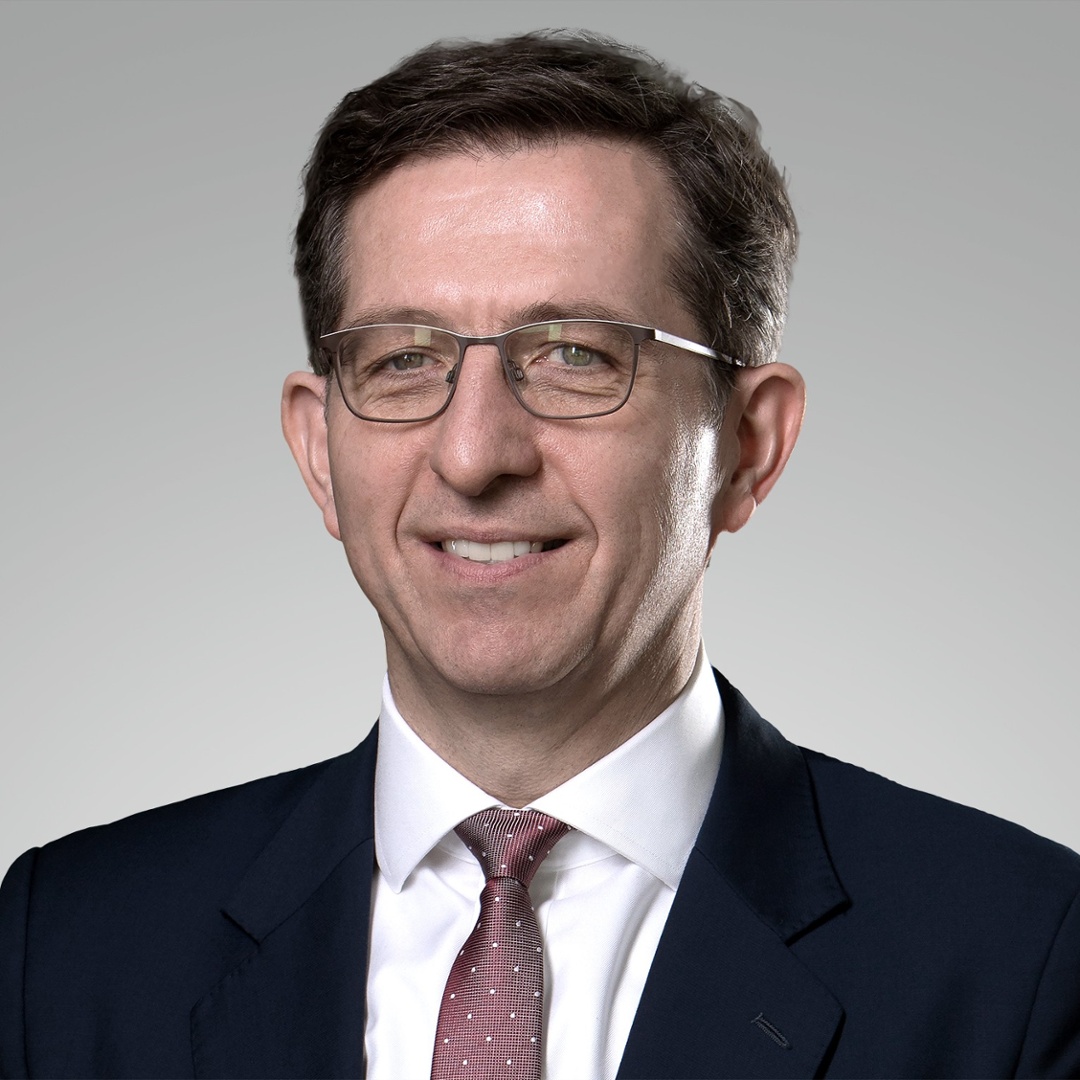
Chris Salih (CS): I’m Chris Salih and today I’m joined by Vincent McEntegart, manager of the Elite Rated Aegon Diversified Monthly Income fund. Vincent, once again thank you very much for joining us.
Vincent McEntegart (VM): Good morning Chris.
[INTERVIEW]
CS: And to you, let’s start with a bit of a sort of overlook of the fund. So, you know, for those retirees or those approaching retirement, obviously income’s very important as an element of what they’re looking for going forward, and that decumulation phase, et cetera. The fund targets a sort of 5% per annum distribution of income paid monthly. How did you sort of come about as that number and how did you sort of build the scope of the portfolio around that?
VM: Yeah, look, the fund is almost 12 years old, so I guess when we first launched back in 2014, it was a very different environment but when you launch a fund, you obviously have to think, what are the objectives? What is it you’re trying to achieve? And I guess we felt that at that time and still today, that investors would appreciate a fund that was able to do two things for them to give them income, but also to give them some capital growth. And so it kinda becomes about trying to find the sweet spot, wherever that might be in terms of how much income, how much capital growth.
I guess in broad terms, if you think about, you know, over the long term markets might deliver you from a multi-asset portfolio, you might get an annualised return over like 30, 40 years or something like 7%, right Just pick that number. Could be eight, could be six, whatever. But that sort of level then of that sort of 7%, how much of it do you want to come from income and how much do you want to come from growth? And you could choose almost no income and just focus on growth or you could go for, you know, all income virtually and not so much growth.
And so we ended up setting the objective for the fund at 5% income target and sort of 1-2% growth that that’s what we ended up with. Some other funds would offer you 3%, maybe 4% we picked 5%. And I mean, you know, there are different ways of thinking about that. If you say we had picked 4%, well when you talk, when you think about it in income terms a fund that delivers four versus a fund like ours that aims to deliver 5%, that extra 1% might not sound like a lot, but 1% of 4% is 25%. So by aiming for 5% rather than 4%, we’re essentially delivering people 25% more income. That’s like a 25% salary increase.
CS: And I was gonna say, I’d say sort of, you know, 15 years ago, I’d say the golden ticket was a portfolio of this with 4% rather than 5%. But you know, we’ve seen the headline saying, that now it’s sort of high hundreds need up to a million you need in your pension pot and retirees live, you know, 20 plus years that constantly has to adjust. So there has to be a reasonable allocation to growth as well as income in your portfolio to make the thing work long term.
VM: That’s right. I mean, absolutely. And I think, again, the four, I think there’s been academic studies done in the past, to try and see you know, you can’t, it’s difficult to say for all retirees, what would you know to come up with one answer that suits everyone because clearly everybody’s different. And so you know, when academics have looked at this and thought about, well, what is the sustainable amount of income you control out of a pot of money? And they often approach that from the point of view of the assumption that the pot of money is still existing for a long time.
So think of an endowment for a university or something. They don’t, it’s not the lifetime of an individual who might retire and live for 20, 30 years or whatever. This is for an endowment that goes on forever. You know, that’s a different thing, right? So when people have looked at these problems and thought about what is sustainable, a number like 3-4% has been the number they’ve come up with. As we’ve said, we are aiming for 5% but we do genuinely hope and that people who invest in our fund, their original capital, we pay out 5% in natural income. We don’t use capital to get to that 5%. And so the the aim of the fund is to not only give investors who buy the income shares that that nice level of income, but also that their original capital will still be there.
Now if you want more, you can draw down some of that capital and by selling some shares, but that’s a choice for the individual. I think it was, I’m trying to remember, it was William Sharp, the famous economist of the sharp ratio who said that decumulation is the hardest problem in finance. And I think that’s true. It’s a really tricky thing to manage. And all we are trying to do with our fund is give people an option to get them through that.
CS: Okay. I mean, the best way to sort of maybe go a bit deeper is to sort of compartmentalise how you go about getting that income specifically. So in terms of breaking down the fund, where you go to in terms of equities, bonds, alternatives, et cetera, maybe just explain that to us, and do you have to do anything more to get from 4% to 5%? Or is it, you know, we’re in a world now where that’s a bit easier perhaps. Maybe just talk us through how you get to that 5% target on the sort of sector by sector basis.
VM: Okay, yeah, a number of good points there. I mean, things have changed a lot over the 12 years that we’ve been doing it. Back when we started the Bank of England base rate I think was 0.5%. The UK government tenure gilt was 2.7%. So at that point in time when you are getting half a percent on cash in the bank, clearly to deliver 5% to people is quite a big gap.
Obviously today interest rates are higher gilt yields are higher. And so the gap of delivering 5% to those measures is smaller than it was. So the market is always changing. But our objective hasn’t changed. So we continue to aim for 5% and capital growth of 1-2%. And I guess when there’s a smaller gap between the five that we are delivering and what the market yields are on, or bank interest rates, then the capital bit becomes even more important because you want to deliver the income plus the capital growth to give people an attractive proposition.
Today, in terms of where our 5% is coming from, it’s interesting, we’re almost equally split between the four main areas that we generate yield from. So there’s the bond market, the equity market, we invest in some alternatives, which for us is largely listed property companies and some infrastructure assets. And then the fourth component is currency. We use currency to help generate some yield. So it’s not exactly 25% of our yield is coming from each of those four components today, but it’s actually not that far off. I just looked at the numbers this morning before coming on this call, and it’s maybe actually currency’s the biggest of the four at about 27-28%. And alternatives is the smallest at about 22%, but it’s quite an even split.
CS: Just a couple of quick points to pick up on that. Firstly, on the alternatives, obviously the likes of real estate and infrastructure, they were very important when we had the era of low rates. Perhaps now then, you know, they’re not an essential, but still useful as a diversified. When I say essential, you can meet your targets with bonds and equities, but perhaps these guys offer some a diversified option. Just how useful are they today still versus that era of low rates?
VM: Yeah, no, you’re spot on. It was it was a big change in markets in the last 12 years was, I mean, a lot has happened in 12 years, but probably the most significant was the year 2022, because that’s when the whole bond market and the whole capital markets reset. We had post COVID inflation that where bond yields had been low, we had this big burst of inflation. You remember the UK inflation got over 10% for a brief period. And that forced the bond market to reset. And by reset it meant that the value of bonds went down and the yields went up. So suddenly you went from having low yields like 1, 2, 3, 4%, you suddenly found yourself in a world by the end of 2022, where bond yields were like 4, 5, 7, 8, 10% depending on where on the credit spectrum.
You went from government bonds to high yield corporate bonds. And that complete change in the environment meant a lot of things changed within our portfolio, but just generally for investors. And so what we did was we having relied a lot on alternatives before the year 2022 they became less necessary because suddenly bond markets were giving us all of this yield. So we did quite a big shift moving about 20% or more of the funds capital from alternatives into the bond market to pick up on those higher, more attractive yields.
Now today, roll forward from the end of 2022 to today bond yields have come back down a bit. They’re not as low as they were before 2022. And alternatives have had not all alternatives, but as a broad observation, they’ve had a difficult two or three years in terms of total returns. And so that means that they now start to look a little bit more attractive relative to where bond markets are. And of course, equity markets have also had a good few years and that means that their future potential return might, well, we certainly expect it to be lower than it’s been in the last three years, and therefore these other assets that have like alternatives that have been somewhat left behind become a little bit more interesting. So we have started to build positions back up gradually only a few percent of the fund into things like a select risk select listed property companies and also a small number of infrastructure investments that we’ve been adding to.
CS: Just before we move on to a couple of questions about what you’ve been doing recently maybe just give us a quick line on how you use currencies in the portfolio.
VM: Yeah, so we’re obviously the investors in this diversified monthly income fund is a sterling fund. We have at any time, perhaps about 30% of the assets will be in sterling. So that would be whether they are UK companies listed in the UK stock market or UK bonds, whether those are government bonds or corporate bonds or some of those infrastructure or alternative assets. If we add up all of those assets at any point in time, about 30% roughly will be sterling denominated. That means that roughly 70% of the fund at any point in time is invested in assets outside of the UK whether they are US dollar assets whether they are Japanese yen assets, euro assets spread, spread around the world. And so our approach is to take that those foreign assets, those foreign currency exposures and hedge them back to pound sterling. So that’s just a straightforward thing for us to do.
A big firm like Aegon Asset Management, we have the capability to just put in place currency hedges to bring that so that we still want to own shares in, for example, Microsoft or Broadcom, some of the top US tech companies, but we don’t necessarily want the dollar fluctuation against the pound. So by hedging we’re removing that fluctuation. We’ve still got the share price growth of Microsoft or Broadcom or some other stocks. But we’ve removed the fact that pound and dollar can move up and down against each other by doing the hedging. So that’s the main thing we do in terms of currency.
But I mentioned earlier that about 25-27% to percent of our yield currently is coming from currency. And that’s a second part of what we do where we use a small number of usually emerging market currencies. For example, today the Brazilian rial, we have 3-4% of the fund exposed to the Brazilian rial interest rates in Brazil are in the region of 14%. And so by having that exposure, we pick up a night that’s like cash in the bank earning 14% per annum and interest, and that counts as income towards our fund. So that’s the second way that we use some currency exposure to help us to achieve our yield objective.
CS: One of the things we should talk about is the fact that, you know, we have that period of rates at north 0.5%, which meant you, the primary sort of focus had to be on trying to scour the world for that income, be it geographies or asset classes moved into a different world where the income was a bit more easier, slightly more accessible. That gave you an opportunity to look at some of the more growthier names in the so growthier opportunities for the portfolio because you had scope, because the income was there as more accessible. Obviously that leads to the like of US tech, but you have been trimming that back a bit more recently, if I’m right. Where are you looking at now for opportunities?
VM: Yeah, look, it’s been a fascinating period since 2022 because as you’ve just highlighted, we’ve been able to, I would never say it was easier, but it certainly has been easier since 2022 to get to a 5% number. And, and just to give you an example, actually just picking last year, a calendar year 2025, you know, the fund continued to deliver the historic yield, which is one of the yield measures that we quote when you look at the factsheet was 5.3% for 2025. But the total return on the fund was just over 13%. So the capital growth element was an excessive 7% last year. And so the reason I mentioned that is to make the point that this fund can achieve two things.
It can deliver you a 5% yield, but it can also deliver you good capital growth. And of course that capital growth last year was definitely supported by our exposure to US technology companies. Now, those US technology companies did a wonderful job for the fund in terms of delivering capital growth. They didn’t deliver very much income. We still managed to achieve at the fund level the 5.3% yield. But that’s because at any point in time when we’ve got over a hundred different securities in the fund, some of them will have very low yields, less than 1%, and some of them can have much higher yields numbers like 7, 8, 9%, and it’s the blend of those different yields that helps us to get to the target of 5%. And then it’s also the blend that helps you to get some capital growth.
And of course your choices as active fund managers as to what you put the capital into will determine whether that capital growth is a bigger number or a smaller number. So that’s why I think it’s people perhaps do find it interesting or unusual that as a fund that’s targeting income, that you might have very low income assets. But that’s the beauty of a multi-asset fund like this where you can balance off higher yielding assets like some currencies, some bonds against lower yielding assets like technology equities and deliver both of the objectives of yield and capital growth. And to your, what are we switching? So that’s certainly been the story of recent years where those US technology companies have done very well. Of course at some point you start to think, well, they can’t keep going up and at some point the discipline in your investment process means that you move on.
And having a yield target is very good for that because in the end the more that asset prices go up, and it doesn’t matter whether it’s a technology company or a bond, any asset that goes up in price, when the price goes up, the yield comes down. And so when you’ve got a target like 5% in our case then as yields come down, as prices keep going up and up and up, yields come down and down and down, at some point the discipline in your investment process says, well actually we need to move on now.
So you tend to trim, we tend not to be the type of fund where if we’ve got 2% of Microsoft to pick that one again, and we don’t suddenly go one to come in one day and say, let’s go to zero, we would tend to be, we’re the type of fund to incrementally start selling down our positions after a period of good performance. And that’s what we’ve been doing. And when while we’ve been doing that, we’ve been trying to rotate into areas of the equity market has been fascinating.
In recent years you’ve had this very narrow concentration of enormous returns in some small number of US, mainly US technology companies. And then you’ve had other parts of the market that have been, you know, just left behind with very poor returns. Some parts of the healthcare pharmaceutical sector have for example have been left behind. Consumer staples were doing quite badly. So some of these areas of the market that have been effectively become unloved by investors, we’re starting to just put a little bit, we’ve been putting a little bit of capital in there, taking out of the stuff that’s done very well and just recycling it into some of these areas as well, as I mentioned earlier, a little bit into some alternatives.
CS: Okay. And in terms of the other side of the portfolio, in terms of fixed income, the bond duration is just, what is 9.6 years, I believe [VM: that’s correct, yeah] What does that mean? And maybe just explain what that means and why is low duration sort of helpful in today’s interest rate environment?
VM: Yeah, so we’ve got about, well, we’re probably down in the low as as a percentage of NAV. We’ve probably got about 30-32% or so now in bonds. Now that’s a combination of government bonds and corporate credit, whether that’s high yield investment grades and bank capital. So we’ve got a range of exposures in the bond market broadly. And one of the one, I mean duration is just one way of measuring what sort of risk exposure you’ve got there. There are other measures for the risk exposure within the bond portfolio. And when we quote the duration of the fund, it is at the fund level, as you say, it’s about 0.6 years. So what does that mean essentially means that if bond markets were to move bond deals were to go up by 1%, the the duration number gives you an indication of what would happen to the value of your bond portfolio on that move.
And so in our case, if bond yields were to go up by 1%, the value of our bond portfolio would would change by only 0.6%. So in other words, not by very much. And that’s so the reason we’ve got, we could easily choose to have a lot more sensitivity to bond market yields in the portfolio. To give you an example, today, the the 30 year government gilt in the UK has a yield of 5.3% and that’s given our 5% target. We could have a lot, we could have a lot of that 30 year UK government gilt and pick up a yield of just over 5%. But with that 30 year government bond in the UK comes a duration of about 15 years.
So go back to the example I was describing a minute ago. If the bond market generally has, sees yields going up by a percent, then if you’ve got exposure to that 30 year government bond, your capital value of your bond is gonna go down by approximately 15%. So your choice as the manager of a fund or as an individual investor is if you’re comfortable with that risk trade off the 5.3 yield for the 30 year government gilt and the possibility that if yields move up by 1%, your capital value goes down by 15%, then you might buy that bond. We are not comfortable with that yield because we are a bit worried about, sorry, with that duration since that sensitivity to yields going up because we are a bit worried that inflation is a bit stickier.
It stays a bit higher than people are. Perhaps most people are expecting inflation to come down to the targets around 2%, whereas we think it stays a bit higher. And also just generally concerned in the case of the gilt which is the UK government backed bond, then we’re just a little bit concerned about fiscal positions and so on, so we don’t really want to own that longer dated bond. We’re quite happy to own shorter dated bonds and if you own shorter dated bonds, then your fund duration is a much lower number.
CS: Okay. You’ve kind of touched on that, I just wanna bring it together quickly. So you’ve got that duration focus, you’ve got that sort of ability to move around if you feel valuations are sort of get becoming excessive. And you’ve also got that sort of diversified sort of income diversified set of income streams. Are there any other sort of ways that you go about protecting against drawdowns because obviously, you know, we’re talking about the deaccumulation phase, people are gonna be more aware of risks in that market. Are there any other tools you use to manage that risk for investors to give them sort of the ability to sleep at night?
VM: Yeah, the short answer is there’s nothing explicit in the fund today that would, if we see equity markets selling off by 10%, which is something that equity markets do then we don’t have an asset in the fund that is going to go up by 10% to compensate for the equity market going down 10%. But we do have diversification. And so we, given that we’ve got approximately 40% of the fund in equities, I’m talking very broad strokes here, but if the equity market goes down by 10%, then we would hope that the other sort of 50-60% of the portfolio would hold its value or perhaps even some of that would go up in value as the market adjusts to whatever it is that makes the equity market go down by 10%.
So we would almost certainly have a negative return in the period where the equity market drops by 10% in this scenario I’m out outlining. But, in a sense, if you look at the history, the 12 year history of the fund, you will see periods where the fund value drops. But I think one of the best disciplines that we’ve got in the absence of having an explicit asset that would go up when the equity market goes down, the next best discipline you can have is only to have an exposure to equity markets that you believe you can keep that exposure when the market sells off. Because the worst thing you can do either as a manager of a fund like this or even as an individual investor, the worst thing you can do is to be a forced seller at the worst point. And so we make a put a great deal of thought and effort into not being caught in that type of situation where our risk levels would be uncomfortable, market sell off, and then we have to sell. And if you sell your selling assets at prices, which are usually below where they will ultimately return to if you’re able to hang on.
CS: And with that in mind, given what you’ve just said, I’ve said that just there, I just wanted to finish by asking with that psyche in mind where you sort of see the most attractive opportunities for delivering a sustainable monthly income over the next few years.
VM: Yeah, so look, I think the income in this fund is going to continue to come from those four main areas we talked about equities, bonds, alternatives, currency. The question is what will be the mix? I think equities have become you know equity markets have become quite interesting in the sense that lots of companies are paying out less as a yield in terms of a percent of their share price. Some of them are actually still paying out bigger dividends than they used to pay, but because share prices have gone up a lot, actually the yield in the equity market has come down a lot. So it’s getting increasingly difficult in equities certainly in the technology space and related space to get much yield, you can still get yield in banks, insurance companies, utility companies.
So we’ll still be able to source a decent amount of yield from equities, bonds yields are coming down, but we’re not gonna go back to, I don’t see us in, certainly in the time horizon, I’m thinking about one, two years, we’re not going to see yields that were like they as low as they were before 2022. So bonds will continue to be a significant component and then alternatives I think will become an increasing component as equities become less of a yield driver for the portfolio. I think we’ll get more from alternatives. So that’s the sort of bond’s a bit the same, but less from equities, a bit more from alternatives is, is how I would, I would think about it.
CS: Vincent, thank you very much once again for joining us today.
VM: A pleasure.
SW: This is a truly diversified, multi-asset fund, with a mixture of bond, equity, property and alternative exposure. This gives the managers a variety of different sources from which to derive income. It’s also consistently paid a reliable monthly income since launch. To learn more about the Aegon Diversified Monthly Income fund, please visit fundcalibre.com and don’t forget to subscribe to the Investing on the go podcast, available wherever you get your podcasts.