19 March 2026 (pre-recorded 2 March 2026)
Please be aware that the accuracy of artificial intelligence-generated transcripts, such as those utilised in our interviews, may fluctuate based on factors like audio quality, subject matter complexity, and individual speaker enunciation. Consequently, these transcripts are unlikely to achieve 100% accuracy. However, it is important to note that, at FundCalibre, we do not consider the correction of automatically-generated captions to be an effective or proportionate use of resources.
Given the inherent limitations of machine-generated transcription, we strongly advise against relying solely on this transcript when consuming our content. Instead, we encourage you to use the transcript in conjunction with the accompanying interview to ensure a more comprehensive and accurate understanding of the topic.
Please remember we’ve been discussing individual companies to bring investing to life for you. It’s not a recommendation to buy or sell. The fund may or may not still hold these companies at your time of listening.
[INTRODUCTION]
Staci West (SW): Welcome back to the Investing on the go podcast brought to you by FundCalibre. Balancing reliable income with long-term growth is one of the biggest challenges facing investors today. In this episode, we explore how a multi-asset approach can deliver both, even in volatile times.
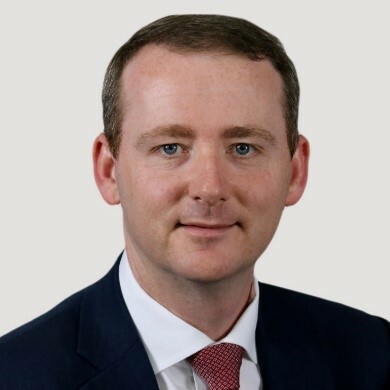
Chris Salih (CS): I am Chris Salih, and I’m glad to be joined by Paul Flood, who’s manager of the BNY Mellon Multi-Asset Income fund. Paul, once again, thank you very much for joining us.
Paul Flood (PF): Thank you very much for having us on, Chris.
[INTERVIEW]
CS: No problem at all. Let’s start with the structure of the fund itself. I mean, the approach is kind of two-pronged in that not only are you trying to deliver a consistency of capital growth, but also a consistency of income. Now, income as you know, has kind of been come even more and more and more important throughout the years for investors, but I don’t think despite what we’ve seen in recent years that they quite understand sometimes that the consistency of income can also be a challenge, and that’s an important part of what you’re trying to do. Maybe just explain to the listeners how you go about meeting that challenge.
PF: Yeah. Well, I think, you know, income is probably the primary objective in the fund. And I think advisors and clients are starting to understand that, given the change that we saw with the FCAs thematic review, really encouraging advisors to think differently about investment propositions in retirement. And to consider the loss of income as a priority for those people in retirement as much as what people think about the capacity for loss of capital.
And when we set up the strategy, we thought long and hard about what clients in retirement would be looking for, particularly given we’ll have far fewer people going forwards that have a final salary pension scheme that really covered off a lot of their income requirements in retirement. And because of that, unlike those with final salary, those people with defined contribution or SIPPs going forward will be relying a lot more on their advisors to generate their income needs from their retirement portfolio, their investment portfolios.
And in order to do that, advisors need the confidence that the income is stable and consistent. So that they can rely upon it and help with their income plan and for clients. And we believe the key priority is to deliver a stable and grown income pence per share pounds in pockets. That allows investors who, even if they are retired, to remain invested in growth assets as they still have a very long investment horizon.
And so our process for focus on securities that can pay grow their income allows or has allowed the strategy to hold up in two particularly challenging periods particularly for income investors. Firstly, in 2020, during a pandemic period when many companies cut their dividends, we managed to deliver a stable dividend through that year. And that’s because of our philosophy, trying to identify company securities that can pay and grow their dividends irrespective of the economic backdrop. And we had exposure or a large exposure to assets that had contractual cash flows that were availability based revenue streams, and they were much less economically sensitive.
And then secondly, we need to grow the income over the longer term as well because people’s disposable income requirements will go up with inflation. And so in 2022, when inflation peaked out at about 10.1% in the summer of that year, we actually grew our monthly income, or raised our monthly income by about 10.2% in line with inflation. And that’s because we had allocations to those kind of real assets that had inflation like revenue streams, and therefore were able to grow their dividends to investors as well allowing us to grow the dividend in real terms.
CS: Do you look to specific target, a specific number with it?
PF: No, we don’t. We’ve done a lot of work when we initiated the strategy looking back at what we’re trying to achieve and making sure it was an achievable outcome. But also it had longevity to it. So, you know, we need that income to be attractive and peers of low interest rates and high interest rates. You don’t want to overreach for income because that’ll end up paying an income at the expense of capital. And obviously our capital base is your income generating capability of the future, so you don’t want to overreach for income. And so the way in which we try to set out an achievable income and one that will remain attractive throughout time is really to target a 30% premium to a traditional 60/40 portfolio. And that’s kind of your investible universe.
So as bond yields rise or equity dividend goes up, obviously our target goes up. But it will be achievable because there will be assets in the investible universe that generate an income of those levels. But also, it’s not too hard an objective because in order to grow the dividend or to grow the income, you need to grow the capital over the longer term as well. So you want to make sure you don’t reach too high for income that then puts the capital or undermines the capital to ensure that you can go both the income but also the capital.
CS: I mean, a lot of people talked about the sort of death of income post the Global Financial Crisis and a lot of managers started to look towards alternatives as another way, another income stream to sort of get those returns. The world has sort of changed a little bit in that we saw rates start to rise and inflation, et cetera, and the attraction of fixed income picked up. But more recently it started to go a bit the other way. Again, we’re sort of levelling out of yields coming down more recently, are you sort of moving away from fixed income again and back to alternatives in the portfolio? Maybe just talk us through what that looks like in practice.
PF: Yes. So that has been the direction of travel and, you know, I wouldn’t say we are aggressively changing asset classes from from one quarter to the next. It’s more of a journey in which when the opportunities arise, we move in that direction. And that is the great thing about income investing.
As many listeners will be aware, historically there was a great demand for equity income just the philosophy of compounding income over the longer term and what it can do for long-term returns stacks up. And with multi-asset, you know, it’s a very similar story. We just have a wider array of asset classes or tools in the toolkit in which to achieve that. And so if there’s a dear of income in one asset class well, we just won’t be there.
It’s a great valuation tool and indicator of where value is in markets. And so it kept us away from bonds when bond yields were very low. And as we went through 2022, obviously that was a great thing. And we moved, we had a larger allocation to alternatives. And so when most multi-asset funds were down double digit in 2022, we actually delivered a positive return because we only had about 12% in bonds. And because inflation had picked up, obviously the demand for real assets increased. And so had very strong performance out of those real assets.
As we went into 2023 and bond yields were at a higher level becoming more attractive, we then reduced the alternatives in the portfolio, which has done very well and moved into bonds. And as you’ve kind of highlighted over the last 18 months, actually there’s not been a lot of demand for those real assets. And it’s been a pretty torrid period. And so we took our allocation to alternatives in 2022 to 2023, down from about 35% into about, you know, 15, 16%. And more recently we’ve been increasing that back up to the mid-20 sort of level. And bonds have come down from that 30% level down to about 20%. As the opportunity set has changed. And effectively what we’ve done is bonds have been fairly reasonable.
You’ve had some income over the last 12 to 18 months. We are a bit of capital growth and we’ll switch from what is about a 4% yield today in government bonds. And we’re reallocating that into some of the real asset areas where we’re getting 9-10% dividend yields. And that helps us obviously to grow the income for clients over the longer term as well.
CS: Well, let’s just be clear as well, I mean that it’s not just a case of running toward where the higher dividends are. I mean, there are sentiment issues because you are going through investment trust here as well. I mean, you’re getting double digit discounts on some of those trusts as well from a sentiment perspective on top of those attractive yields.
PF: Yeah, I mean there’s a few things that have happened obviously as bond yields have risen the discount rates that are used for valuing these assets have gone up. Which has put the net asset values under pressure. But on top of that, the negative sentiment that you’ve seen from investors means that you’ve gone from what was a premium to that net asset value to now, you know, in some cases 20% to 30% discounts to net asset value. And so we think it’s been a pretty difficult time. But now one in which on a forward looking basis you’re now getting paid for many of those risks that are inherent within those asset classes. And if inflation does pick up if the oil price energy prices remain more elevated then perhaps, or corporates start to push through some of the costs of tariffs that we’ve seen rise over the last few years. And that could put inflation under more pressure on the upside and people and demand for real assets will start to increase again. But ultimately, you know, we just think over a three to five year investment horizon, they’re relative opportunity set within the real asset space looks fairly attractive compared to other areas in which we can invest.
CS: And maybe let’s just go into a couple of those areas. The first one worth talking about is obviously property. You mentioned earlier how, you know, if things don’t look nice, you’re quite happy to go and leave them alone property, something you’ve brought back into the portfolio recently, isn’t it?
PF: Yes, so we’ve had quite a long period actually where we’ve had very little if you know, in some cases nothing over periods of time in property just because obviously there was a lot of risk around valuations with low interest rates and as bond yields rose that put real estate under quite a lot of pressure as well.
More recently we’ve been increasing our allocation to property particularly in areas where we think there is more thematic trends towards those areas. So high quality office particularly in areas like Australia where we’ve brought in dexus and healthcare REITs where population dynamics with, you know, aging population supports demand for the services in that healthcare area. And then in some of the digital infrastructure areas, digital property where they’ve been benefited from non strong thematic tailwinds as well. So properties now, you know, it’s gone from 0% in the fund to about 4% in the fund. And as we see the opportunities, we’ll continue to add to those areas.
CS: And another one obviously is sort of infrastructural renewable infrastructure. Obviously that’s a long term trend. Is that just a price, is there a pricing attraction in that area specifically that you are finding at the moment?
PF: Yeah, that’s been, particularly in the UK fairly challenged just given some of the changes that we’ve seen from government intervention, which is one of the main risks given they have fixed inflation link contracts. But the government’s changed the inflation assumptions from RPI to CPI. And so the negative sentiment around that has really come through in the share prices.
And obviously as we went through the war in Ukraine, that led to very high power prices. And government looked to reduce some of the support given the benefits they were having from those very high power prices. And a taxation on some of the renewable generators. And so that was another hit to sentiment within the renewable space. But we do think that now with the discounts to NAV more than comping for those risks and seeing double digit yields that does provide good coverage for some of the risks that are inherent within that asset class.
CS: Okay. One of the things I saw you mention was that within the equities bucket, you’ve sort of been looking to have more of a value income tilt. I think maybe it’s good for the listeners just to sort of understand what that is and where you’ve sort of been targeting that specific area of the market from what sort of angle you’ve been targeting that sort of error in the market?
PF: Well, yeah, I mean certainly that’s what you will get with an income fund. Obviously it’s very challenging to get exposure to technology within an income strategy. And so we are significantly underweight technology against an MSCI benchmark weight but we’ve also been taking profits in some of the beneficiaries of the build out of data centres demand for AI in the United States where we have seen very strong performance outta some of those companies like Trane Technologies which makes HVAC equipment or heating and ventilation air conditioning equipment that goes into data centres. And they’ve seen, you know, strong demand for their products. And we’ve been moving that to some of the beneficiaries in Europe where we’re about two to three years behind the build out of data centres compared to the United States. And so we’re trying to find some of the companies that will benefit as that starts to play out in Europe.
CS: And I think you mentioned you were looking a bit more at some of the industrials and the staples markets as well.
PF: Yeah, so within that will be the industrials. So companies that be benefit from the builder of the infrastructure for the grid some of the companies that perhaps can use AI within their businesses to be able to improve efficiencies increase their margins and that should help them to deliver better earnings growth and therefore attract higher valuations. And so it’s not just about the risks around AI and who are the losers and the winners of AI but more importantly, I think as this broadens out, it will be about who utilises the technology to improve their business models. And we particularly think industrial companies that will be able to use that. And then another side of that, clearly staples have had a fairly thorough time as bond yield have risen. But it’s probably one of the areas that are perhaps is less at risk of AI is people continue to have to feed themselves. And so we see staples as an area of the market that is probably more resilient towards the risks around AI.
CS: Okay. And I guess just lastly, I mean obviously stock selection, we talked before and you’ve mentioned that stock selection’s determined by four specific factors. And just quickly to run through them. So you’ve got the global themes, you know, around the everywhere basically company fundamentals, which is the likes of balance sheets, the ESG footprint of a company, but also valuations. Now we live in a market where things look across the board fairly expensive versus history in most parts of the world. Is that the area that’s driving your attention more than any other at the moment? Maybe just talk us through how that balances out across those four specific factors.
PF: Yeah, I mean from a thematic standpoint, obviously Newton is a very thematic house. And to put that in perspective it’s not about finding themes and then picking securities that fit that theme and put them into a portfolio. It’s much more about trying to direct our analysts and fund managers to really think about themes when we’re picking securities and try to identify areas that will benefit from structural growth areas and perhaps avoid the areas that face significant headwinds.
Obviously those themes change over time, but they’re really just big picture themes that are driving global change in society. And that that comes into our work when we’re doing the company fundamentals. From a balance sheet perspective, we think that’s quite important particularly given the higher cost of financing with higher interest rates that we think will be around in the next decade compared to what we’ve seen post the financial crisis period.
But also because of the risks around AI and the challenges that companies will have to face. And so you want a strong balance sheet to be able to navigate that dynamic. ESG you know, for us that is just part of due diligence, making sure we’re covering off on the governance aspect the environmental and social impact that can have an impact on a company’s business model. It’s not about and particularly excluding things or having some kind of filter to avoid areas that is certainly for us just part of the due diligence and making sure that those risks and opportunities are evaluated in the valuation work we do when assessing a company.
I think more and more, given the high valuations we see, particularly in the United States it’s becoming apparent to us that we need to be more considerate of those risks with a higher interest rate environment because the opportunity set the ability to get and a return from the bond market, for example, is an opportunity for investors.
And so where we see dislocations across markets, particularly from a geographical standpoint that provides opportunity to get similar exposures perhaps at lower valuations. And particularly in these markets today where valuations in the United States do look stretch across the market, there are opportunities in emerging markets and in Europe where we are seeing good opportunities for long-term returns. And so we’ve been doing a little bit more work in those areas and reallocating some of the capital into the portfolios and the margins and to some of those opportunities.
CS: Is it a case of just like, obviously you always want to maintain some sort of balance, but perhaps balance is as important as ever at the moment, given that where the value of US equities are in particular, there might be a bit more dispersion of returns from here.
PF: Yeah, and certainly we’ve seen that in the market, aren’t we? I mean, you know, software stocks used to be on very high multiples because of the high recurrent revenue streams. In a world where there’s a lot of disruption obviously from AI we’ve seen over the last six months some of those software names come more into the forefront. And it’s just a question around how sustainable are those revenue streams and those business models. And so we believe it’s good to have valuation discipline across the market, given the uncertainty that can be created by these tectonic shifts that we’re seeing both from a geopolitical standpoint but also from a technological standpoint as well. And it’s ever more prominent now given the disruption factors that we’re seeing.
CS: Paul, on that note, thank you very much for joining us today.
PF: Thank you very much for having us.
CS: No problem at all.
SW: The BNY Mellon Multi-Asset Income fund seeks to achieve a stable income, with the potential for capital growth over the long term by investing in equities, bonds and alternatives. Since launching in 2015, the fund has been a consistently strong performer, whilst maintaining an attractive yield. To learn more about the fund, please visit fundcalibre.com and don’t forget to subscribe to the Investing on the go podcast, available wherever you get your podcasts.