30 April 2026 (pre-recorded 28 April 2026)
Please be aware that the accuracy of artificial intelligence-generated transcripts, such as those utilised in our interviews, may fluctuate based on factors like audio quality, subject matter complexity, and individual speaker enunciation. Consequently, these transcripts are unlikely to achieve 100% accuracy. However, it is important to note that, at FundCalibre, we do not consider the correction of automatically-generated captions to be an effective or proportionate use of resources.
Given the inherent limitations of machine-generated transcription, we strongly advise against relying solely on this transcript when consuming our content. Instead, we encourage you to use the transcript in conjunction with the accompanying interview to ensure a more comprehensive and accurate understanding of the topic.
Please remember we’ve been discussing individual companies to bring investing to life for you. It’s not a recommendation to buy or sell. The fund may or may not still hold these companies at your time of listening.
[INTRODUCTION]
Staci West (SW): Welcome back to the Investing on the go podcast brought to you by FundCalibre. In this interview, we explore how a different approach to investing, focused on overlooked and unconventional assets, can help navigate uncertain conditions while aiming to protect capital and still capture opportunities others may be missing.
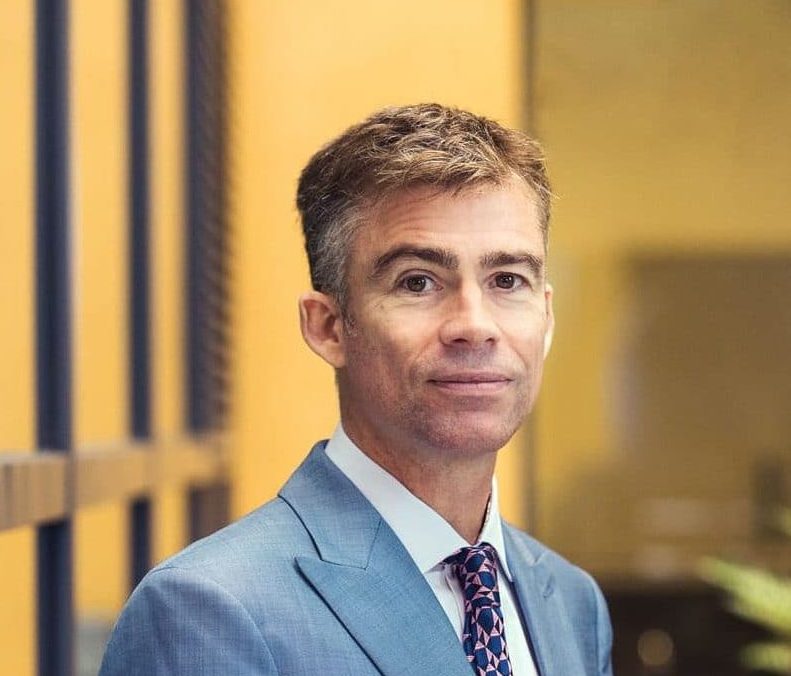
Joss Murphy (JM): Hi, I’m Joss Murphy, research analyst at FundCalibre. Today I’ve been joined by Niall O’Connor, manager of the SVS RM Defensive Capital fund. Hi Niall. How are you?
Dr Niall O’Connor (NO): Very good, thanks.
[INTERVIEW]
JM: Great to hear. Could you just give listeners a quick overview of the fund please?
NO: So, yeah, it is the Defensive Capital fund. As the name suggests, we are providing a low to medium volatility return – risk three or four typically. And what we’re doing is we’re investing in alternative assets, but really alternative assets that you wouldn’t get access to anywhere else. So we we’re never gonna invest in Nvidia or an IBM bond, but we are looking for off-piece assets, typically things that are less than a billion market cap, which won’t be part of your portfolio.
And what we really do is we like finding assets that are unloved under research and undervalued. And what we think is here, we just have a bit of an edge because as everybody else has been getting bigger I think fewer and fewer people are looking at some of these assets and we’re finding plenty of orphan assets where the valuations just don’t look right. And hence we’re buying these assets on very discounted valuations. Either the valuation comes back to where it should be or what we see is if the public markets don’t like these assets, then the private markets will take them. And we’ve seen plenty of our assets have takeovers in the last year.
JM: Sounds like you really differentiate yourself from the wider market.
NO: Yeah, I think we’re a unique fund. I don’t think anybody else is doing quite what we we’re doing multi-asset space, you know, really looking at anything that’s been ignored basically by the main markets.
JM: Well, Niall, it’s been a pretty turbulent period across both equity and bond markets recently. How would you describe the current investment landscape from your perspective?
NO: No, I think that’s exactly right. This year has been a very, very tricky market to navigate. We’ve had huge amounts of volatility especially actually more in the bond space and the equity space. There’s been a huge amount of noise mainly coming out of the White House over the Iran situation. And we’ve seen big up and down swings and even intraday swings. But interestingly, from a sort of fund management perspective, there’ve been relatively few real dislocations. You’ve not really seen any obvious buying or selling opportunities other than maybe sort of just going against what Trump says.
But it’s an interesting time again to run a fund because you can see people are beginning to get tired of it because very often we see news that’s being published and from a corporate perspective, company news, which isn’t being properly priced in. So it is giving us some interesting trading opportunities. If you stay focused on stock rather than looking at the big macro picture.
JM: And now your fund being an all-weather strategy, how has it behaved in this kind of very volatile and more difficult environment to invest in?
NO: Yeah we are a long-only fund, so generally speaking, if markets go up a lot, we’ll go up. If markets go down, hopefully we’ll defend the downside better. We had a very good January we had a very good February. The fund hit plenty of new all time highs during February and and the end of February was an all time high March, as you might expect, was a bit trickier with both bonds and equities down. And as a long-only fund, we did see some downward movement in the fund NAV there. But in April we’ve made pretty much all of that back. And currently we’re about 3%, just over 3% up year to date. And to bear in mind, this is a low to medium volatility fund, so we’re talking about 6% volatility. So 3% year to date, I’m pretty happy with that.
JM: Sounds pretty good to me. Now the portfolio is broken up into three main buckets, capital preservation and income, capital growth, and diversifiers; could you talk through each part and the role it plays, please?
NO: Yeah, sure. I mean, capital preservation very much that’s the backbone of the fund. It’s currently a little bit over 40% of the fund. This is really where we’re trying to get more of a fixed income like return. So we’ve got some lending funds in there, UK investment trusts involved in lending, but more recently we’ve looked into the high yield space. So we’ve bought some high yield bonds in aviation. We have a high yield bond in shipping and also a high yield bond in the private equity space. And the nice thing, the reason I like high yield bonds is you have quite high coupons. So in this field, we’re talking anything from 7% up to about 9% and yield sometimes over 10%. And the nice thing about having a high coupon and a high yield bond, which has quite a short maturity normally is those high coupons keep duration short and duration is the sensitivity to interest rates. So what we want here is we want to get an income like return, but with low sensitivity to movement and interest rates because higher sensitivity obviously would just increase the volatility of the fund.
JM: And then maybe moving to the capital growth bucket, this includes some less traditional equity exposure like private equity and biotech. What’s the role of this leaver in the portfolio?
NO: Yeah, you’re right. This is the more equity like exposure within the fund. And the idea here is to try and capture more of the upside. And so what we’re trying to do here is we’re trying to buy exposure on a big discount. So I mean, you might think that private equity and biotech, there’s a bit bit strange holdings within a Defensive Capital fund. But what we’re doing here is we’re buying mostly investment trusts and very often we’re buying these on very, very big discounts. So the defensiveness really comes through the valuation from buying things at a big discount and hopefully watching things close to NAV.
So within the biotech space, for instance, we had RTW and we were buying out on about a 35 discount, and that that closed pretty close to NAV. So what you can do there is 35 discounts. And now if you’re buying something at 65, you’re selling it at a 100, you can make it nearly a 50% return even if the underlying doesn’t move. But what we liked about the biotech sector is it’d gone through what they call the biotech winter. Everyone hated it. And what we really do is we like buying things when everyone hates them.
JM: And then diversifies are also a really interesting part of the fund, things like commodities. How do you decide what belongs in this bucket?
NO: Yeah, that’s the really interesting one. It’s a bucket that we’ve really developed over the last two or three years because we aim to provide investors with a low to medium volatility return. And what we thought was, what we can also do is we can reduce the volatility of the fund by adding diversifiers. And what we tried to do is look for genuine diversifiers.
So for instance, you might think, okay, let’s look at the Korean market because Korea ought to be a diversifier. But the problem is if you look at Korea, you discover that it’s pretty much all made of semiconductor manufacturers and tech companies, so you’re not really diversifying. So what we did is we looked around long and hard to see if we could find things that really shouldn’t move with bond markets and shouldn’t move with equity markets.
So we’ve got things in there like aviation, leasing companies and on the commodity side, my favourite exposure there has been uranium which more recently of course has become very topical because we need more electricity generation not just for AI, but also to replace oil that used to come out of the Strait of Hormuz. So Uranium’s been a really interesting investment for us and should really provide a diversification for us. And again, what we were doing is we were buying that through a company called Yellow Cake, and we were buying that on about a 35 discount to NAV. And again, that closed pretty much to NAV. So we can also, you know, even throughout Diversifiers we can play the discount game.
JM: That’s certainly not a bad return. You also said recently that you trimmed your gold exposure. What ultimately drove that decision? Were you taking profits from what has been a very strong couple of years or was it something else?
NO: No, it was very much that we’ve got a basket of gold miners which we constructed and we bought the basket through an investment bank. But basically in simple terms, yes, it had got too big because we bought that at a hundred and we were selling it at, at well over 400. So as a result of that, the exposure just got a bit too big. Also, gold volatility started getting a bit high. So, you know, I’ve got quite a simple rule, which is that if every single day your best or or worst holding is the same holding, that probably suggests your position size is too big. And that’s exactly what we saw with our gold basket. It was just dominating the volatility of the fund.
Also, if you look at the fundamentals of gold, generally speaking, it is correlated with the US dollar and with real interest rates. But on that correlation basis, the gold price should be around a thousand and clearly we’re way way higher than that. So on a fundamental basis, gold looks a little bit overvalued as well. So hence, hence we’ve trimmed that quite a bit.
JM: No, it’s definitely a strange time when a risk off asset is dominating the volatility. I guess that leads me on to saying with traditional hedges not behaving as expected, how are you thinking about diversification going forward?
NO: Yeah, that’s a really interesting point because you’re exactly right. Gold traditionally has been a risk off asset and yet has has sold off in, in in times of risk. I also wonder whether in future the US dollar will work as a hedge or whether actually bonds will even work as a hedge in the case of a recession. And the reason I say that is that the US markets got quite expensive. If we did have a downturn in the US market, I think people would actually look to cheaper markets and you might actually see people taking money out of the US and hence the US dollar getting weaker.
Also, in the case of bonds, the problem is we’re in an environment now where the US is running around a 7% fiscal deficit and debt to GDP is projected to go up to 140%. So again, if we had a recession, you’d think if anything, that deficit would get bigger and would mean that the US would be forced to issue more bonds. So I think we’ve gotta be very careful about traditional hedges, whether they actually work going forwards. So hence we are looking more at sort of commodity space. And we’ll be thinking very hard about, you know, can we find genuine diversifiers things that have worked in the past. I wonder whether they’ll work in the future.
JM: Certainly seems sensible over the longer term performance has been strong and consistent. What do you feel has been the key driver of that success?
NO: I think it’s the way we run the fund. What we like doing is we like investing in under-researched, unloved and undervalued assets. So we like looking in places that other people either don’t look or can’t look. I mean, one of the things we’ve seen over the last five or 10 years is that everybody’s got much bigger and everyone’s very focused on liquidity. So a lot of people have a minimum market cap, they can look out of maybe a billion dollars or a billion pounds. And we are happy to look smaller than that. And basically it just means that if you like our playground, the things that we can look at that other people aren’t looking at or even a forced sellers just gets bigger and bigger. So I mentioned that biotech stock earlier.
Again, uranium was an interesting supply demand imbalance. After Fukushima blew up in 2011, nobody invested in the new uranium mine. The price of uranium went down from around 80 to about 20. So everyone had kind of given up on it. And we really like looking at sectors where people have given up. That doesn’t mean you need to invest immediately. Sometimes we’ve looked at stocks and we’ve waited two or three years before we’ve invested. But you know, what we really like is that transition point where we see demand going up as in the case of uranium and a restriction of supply.
I suppose aviation was another good example of that, where de demand was going up and Airbus and Boeing were really struggling to make new aircraft. So we’re really looking for those turning points in supply demand imbalances, insecurities where other people are either not looking or as I said, can’t look.
You know, good example aviation is a Singapore based UK listed aviation leasing company, which issued a US dollar bond and it just basically falls between the gaps. Nobody’s really looking at it. Another example was Molten Ventures. Their biggest holding is Revolut, again, falls between the gaps. It’s not really covered by the investment trust people and it’s not really covered by the equity people because it sort of is a bit of a hybrid between the two. And everybody kind of was a bit asleep at the wheel and we were buying that at about a 35 probably could even higher than 40 discount actually. And of course the Revolut valuation’s gone up a lot.
So yeah, really just looking in places that other people aren’t looking and we’re trying to give you that exposure. You know, we are never gonna invest in Nvidia. We’re never gonna invest in an IBM bond. I think those are sort of things that you can buy through passives much cheaper than what we are doing.
JM: Well given everything that’s happened globally with geopolitics, inflation, interest rates. Where are you most cautious right now?
NO: I think people are being very complacent over the reopening of the Hormuz Strait. I mean everybody, it’s well documented how much oil is stuck behind there. Little bit, well less well documented how much fertiliser is stuck. So I do wonder whether we are going to, even if it open tomorrow we are going to see a surge in food price inflation and a higher oil price for longer. And of course the natural consequences of that is that we’ll see higher inflation.
We’re certainly seeing higher bond yields in the UK that’s partly political, but I think it’s also partly due to an inflation bold, which might be coming through later this year and beginning of next year. So I’m quite nervous on inflation. And also of course, the consumer will be ultimately impacted is, this is a little bit of a rerun of what we saw after the Ukraine invasion or maybe even possibly after COVID where we had a big surge in demand and Ukraine where we had a drop in supply of oil and food. So yeah, I do worry a little bit about inflation going forwards and also consumer spending.
JM: Just to push you on that, why do you think the market has been so reluctant to go down? Why is the market filled with so much optimism?
NO: I think there’s a huge polarisation in the market. If you look at airline stocks, they are down substantially. I mean, WH Smith was down the other day suspending its dividend, you know, parts of the market are going down, but you’re seeing that same polarisation we’ve seen before, which is that everyone’s very excited about artificial intelligence. Everyone’s very excited about quantum computing, small modular reactors. You know, there’s a lot of loss making companies which are doing very, very well. And then also a lot of profitable companies, which are the picks and shovels of the AI boom. So we we’re seeing a big polarisation there. It’s very interesting to see the headline numbers. The headline S&P is sort of keeps bumping up against all time highs but you are seeing some of the more consumer sensitive, some of some of the cyclical sectors declining.
JM: I guess on the flip side of that, what excites you the most today? I know you, you’ve spoken a bit about biotech and the closing of discounts. Are there any other things that really excite you?
NO: Yeah, I mean, there are plenty of things which are still over discounted. I think you can still buy things on 40% discounts which I think in this market doesn’t feel quite right. The other place that I think is quite interesting at the moment we are looking at frontier markets. And the reason for that is if you look at the UK, the UK has huge fiscal constraints. You know, we’re seeing the UK government desperately struggling to raise tax and and desperately struggling to bail out the consumer through raising tax. And the problem is that that tax or the salami slicing of of of market capitalisation comes from companies. So we’ve seen it in the renewable space. The government’s already switched the subsidy from RPI to CPI that cost all of those companies 2%. More recently looking at delinking. I’m not quite sure how they’re gonna do that delinking the electricity price from gas, but all of that comes outta corporate profitability. And the problem with investing in UK corporates is if the government’s taking your profitability, the valuation’s gonna go down.
The other place you’d traditionally want to invest is the US but the issue I always had with the US is the valuations are extremely high. And you could kind of justify that in the past because the US has good rule of law. But I will also wonder under the current administration how much rule of law there is. And as we’ve mentioned earlier, there’s, it’s very much a one trick pony in the US at the moment. The whole of the US economy is really being supported of capital expenditure in AI. So when that cycle turns, that won’t look very good for the us.
You then look at frontier markets. So we are looking at places like Georgia. There’s also an Uzbek IPO coming up or places like Romania as well, where we’ve done very well in the past. And there you’ve got almost no debt to GDP. You’ve got 8% plus GDP growth. I’ll include Vietnam in this and also very business friendly governments and some very low valuations. So I think as people rotate out of the US and and the UK I think some of these frontier market opportunities were very interesting.
JM: Well now thank you very much for your time today. That was a very interesting discussion.
NO: It’s been a pleasure.
SW: Long-term capital growth and protection is the objective of this defensive, multi-asset fund. Niall is an experience manager who uses the range of tools available to him to dial up or dial down the fund’s sensitivity to market movements, which results in an intelligent investment mix that will see investors through a range of market conditions. To learn more about the SVS RM Defensive Capital fund please visit fundcalibre.com and don’t forget to subscribe to the Investing on the go podcast, available wherever you get your podcasts.