
“If you’re buying something like my trust, you’re getting access to 80 names, for example, and I look at those every day and make a decision on what to buy and sell. And you as an investor aren’t supposed to look at them every day. I’m supposed to look every day but, as a long-term investor, you shouldn’t be watching your phone thinking, ‘I made 2% today. I lost 3% yesterday.’
Six questions fund managers wish investors would ask
By Staci West on 14 October 2026 in Ideas & insights
Fund managers are used to being asked questions. What’s your outlook for markets? Where are you finding opportunities? What’s your latest portfolio positioning? And, inevitably, why did the fund perform the way it did?
But what happens if you turn the tables?

At our recent fund manager speed dating event, I took the opportunity to ask our Elite Rated managers a slightly different question: what do you wish investors would ask you?
Their answers ranged from the role of luck in fund management to whether investors have forgotten how attractive a 7% return can be. Others wanted investors to pay more attention to process, think differently about innovation or reconsider assumptions that have shaped portfolios for years.
Here’s what they had to say:
Do investors need to watch their portfolios so closely?
Georgina Brittain, manager of the JPMorgan UK Small Cap Growth & Income Trust, would like investors to worry a little less about what their investments are doing from one day to the next.
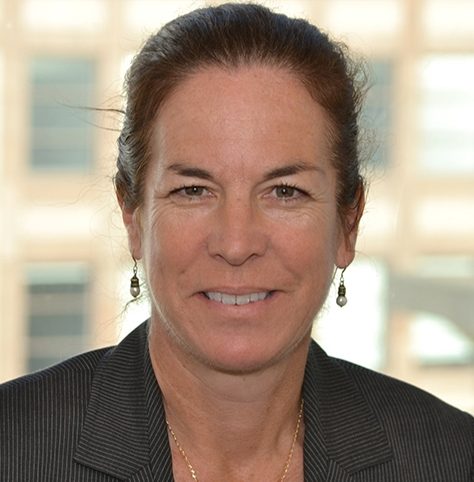
“I wish people did that less. Not for my sake, for their sake. I think they’d sleep better, they’d be more relaxed, they wouldn’t be jumping in and out trying to be clever and, over time, they’d make more money.”
What’s different about these innovation companies?
For Graeme Bencke, manager of the WS Amati Global Innovation fund, the question he’d like investors to ask is: what makes your innovation companies different?
“We’re finding much more granular areas of innovation that have already been proven to work and add value, but haven’t yet reached their potential or come under the spotlight. We invest in slightly less well-known areas of innovation, but we’re also very careful about investing in companies that have really strong business models. Our companies are not going to run out of cash. I’m very confident that if we sit down here again in five years’ time, even if we go through a big recession, all these companies will still be just as strongly positioned in their niche.
“So we’re finding well-valued, strong businesses, but I think people assume innovation is very boom and bust.”
Why should anyone care about bonds?
Aitken Ross, manager of the Liontrust Sustainable Future Monthly Income Bond fund, initially offered us a considerably more technical question before settling on the one he really wanted investors to ask: Why should I care about bonds? They’re boring.
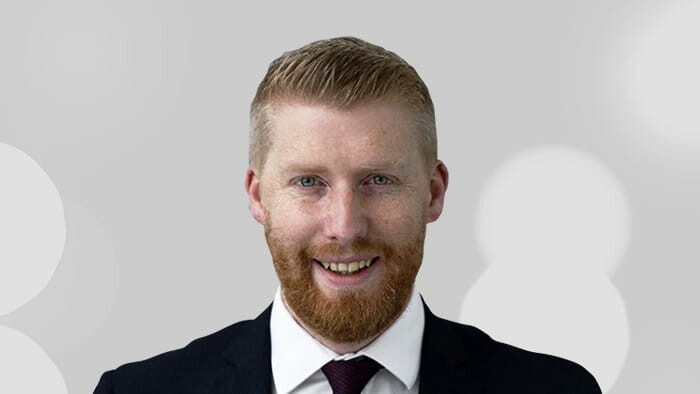
“From 2019 to 2021, government bond yields were low. I can get why people weren’t interested in bonds. But now, we’re at some record highs in bond yields and people are starting to get a little more interested in yields. A global corporate bond fund is generating 7%; sterling is generating 6.5%.
“What do people actually want from their returns? Have we moved into a world where, if it doesn’t give us double digits, then we’re not interested? Is that the world we’ve moved into across asset classes?”
And for anyone who still thinks bonds are simply too boring, Aitken’s pitch is relatively straightforward: with yields at much higher levels, high-quality companies can now offer potentially attractive levels of income.
“What more do you want from an investment portfolio?”
How are you positioning for the new geopolitical order?
Richard Parfect, co-manager of the VT Momentum Diversified Income fund, wishes investors would ask him about the changes in geopolitics.
“The world has shifted. There’s a lot more self-help that’s going to have to be required by all nations, and not seeing the United States as a benevolent father or uncle. All countries have to be more responsible for more security — financial security and physical security.
“Investors need to be a bit more realistic about how they think the world actually works. For years, defence companies have been a pariah sector based on ESG. Now, ultimately, if you don’t have a society, then…” he said, leaving the conclusion hanging.
What role does luck play in fund management?
Perhaps the most unexpected question came from Jason Pidcock, manager of the Jupiter Asian Income fund. He wishes investors would ask: What role does luck play in what you do?

“The way I think of what we do is that we’ve got to get more right than wrong over a period.
“It’s a bit like golf, where over the course of a whole round you will have some lucky shots and you will have some unlucky shots. Over the course of a whole round, it probably nets out.
“And I’d say in fund management that’s definitely the case too.
“You can have a period — it could even be as long as three years — when you’re just lucky. And it looks like you’ve done a good job. And you have, ultimately, because the numbers are what matter. But it was luck that got you there.
“I would say you probably need a track record of well over five, but ideally over 10 years, where people can say, ‘Okay, over that period, luck probably didn’t play a part.’ But over a short-term period, luck might even be the biggest single factor.”
And why don’t fund managers talk about it more?
“Because fund managers don’t want to talk about it. They don’t want to blame bad luck when they’ve had bad luck, of course. But they wouldn’t want to give credit to good luck when they had good luck. So they just don’t talk about it at all.”
Why aren’t you asking about the process?
Niko de Walden, manager of the IFSL Pinnacle Life Cycle Global Equity Income fund, would like investors to ask more about how he invests.
“The problem with most investors is that they have a certain set of characteristics they like in companies. They’ll go out and buy 40 companies with those same characteristics. So their portfolio will do well when those characteristics are in favour, and badly when they’re out of favour. Whereas our process — because we have this flexible life-cycle process — enables us to invest anywhere. So we can build a portfolio that is balanced across factors, across styles and across the corporate life cycle.”
What have we learned from this exercise?
Rather than only asking what a manager is buying, where markets are heading or what might outperform next, sometimes a slightly different question can tell you much more about how they actually think and invest.
This article is provided for information only. The views of the author and any people quoted are their own and do not constitute financial advice. The content is not intended to be a personal recommendation to buy or sell any fund or trust, or to adopt a particular investment strategy. However, the knowledge that professional analysts have analysed a fund or trust in depth before assigning them a rating can be a valuable additional filter for anyone looking to make their own decisions.
Past performance is not a reliable guide to future returns. Market and exchange-rate movements may cause the value of investments to go down as well as up. Yields will fluctuate and so income from investments is variable and not guaranteed. You may not get back the amount originally invested. Tax treatment depends of your individual circumstances and may be subject to change in the future. If you are unsure about the suitability of any investment you should seek professional advice.
Whilst FundCalibre provides product information, guidance and fund research we cannot know which of these products or funds, if any, are suitable for your particular circumstances and must leave that judgement to you. Before you make any investment decision, make sure you’re comfortable and fully understand the risks. Further information can be found on Elite Rated funds by simply clicking on the name highlighted in the article.
Related insights

What does your sustainable fund actually own?
408. Is AI in a bubble?

Sell in May? Not this year…