
Ben Rogoff, manager of the Polar Capital Technology Trust, has been paring back his exposure to this part of the market. He says: “The Mag Seven dominated the profit pools of the cloud and smartphone era, including social media and streaming content. These are the pre-AI profit pools.” He points out that AI is replacing and redistributing some of those profit pools. Ben adds: “Microsoft has 450 million people using productivity software that may become moot in an AI world. For Google, 90% of its revenues come from advertising.” He is considerably more cautious on Meta and Microsoft, but has retained Alphabet exposure*.
The next phase of the AI trade
By Joss Murphy on 12 August 2026 in Specialist investing
While few doubt the potency of the AI trade, it is becoming increasingly difficult to know how to benefit from it in a portfolio. The more obvious routes – through semiconductors or the hyperscalers – look crowded, but the next generation of winners is not yet clear. At the same time, investors can’t afford to ignore the most significant technological shift in a generation.

Are the obvious AI winners running out of road?
The traditional route to AI has been through the US technology giants. This includes some of the semiconductor groups, but many investors have believed that a decent holding in the Magnificent Seven would probably give them the AI exposure they needed. However, there are growing doubts about this route. The hyperscalers have spent eye-watering amounts on their AI build-out, to the detriment of their cash flow and balance sheets. Investors have started to worry that they are not worth their lofty valuations.
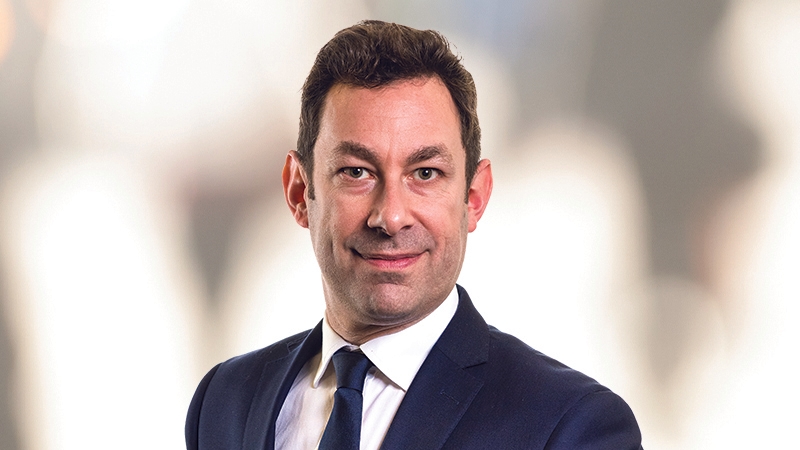
Aditya Khowala, manager at Premier Miton, agrees: “Some headwinds to the AI trade have started to surface, namely switching to open-source models over frontier models, and SpaceX and Meta offering their cloud services to compete with AWS, Azure, GCP and Oracle, thereby creating concerns of over-investment. This remains our core view – that the current AI investments will struggle to generate the required return on invested capital and will therefore lead to substantial slowdown and losses.”
Looking beyond Silicon Valley
If not via this route, how should investors be taking exposure to the AI trade? The semiconductor and memory behemoths have been seen as a key beneficiary. Much of the work done by the Silicon Valley giants relied on infrastructure provided by these companies. The market has woken up to this over the past 12 months. TSMC has seen its share price grow over 60% over the past 12 months. Samsung is up 220% over the same period**.
For Ben, these companies are supported by the growth of agentic AI – this is the “non-human scaling” part of the AI story. AI can now synthesise information in a way humans cannot and this should usher in an age of ‘cognitive abundance’. He remains focused on semiconductors/hardware assets in Japan, South Korea and Taiwan, as well as in the US, with Nvidia, Micron and Lam Research in his top 10 holdings*.
However, some of the Asian giants have started to look like a crowded trade. There have been concerns over the leverage building in the Korean market, where loose regulation has allowed the widespread use of leveraged ETFs. This has created significant volatility.

James Cook, investment director for the Federated Hermes Asia ex Japan Equity fund, says today’s environment presents “a more nuanced challenge”. “Returns are highly concentrated and momentum-driven, now centred on AI beneficiaries. The current market leaders are not uniformly expensive. Select semiconductor memory names, for example, are delivering extraordinary earnings and, in some cases, still trade on low forward multiples of around 6–7x.”
That said, those valuations are anchored to exceptionally strong and potentially peak-cycle earnings. James adds: “What matters, therefore, is not simply the multiple, but the sustainability of the earnings base to which that multiple is applied. In our view, current pricing in parts of the AI supply chain increasingly reflects expectations that are both elevated and fragile. Should demand normalise, supply respond, or capital intensity rise, there is a risk that earnings expectations are reset, potentially sharply.” This argues for some selectivity on the AI infrastructure names.
James sees more value in China. Whereas the Korean and Taiwanese technology giants are ‘ambiguously cheap’, Chinese AI companies are ‘unequivocally cheap’. He points out that some of the Chinese companies equivalent to the US companies trade on significantly different multiples***.
China is taking a different approach to AI, championing ‘open source’ technology rather than the closed system used by the Silicon Valley giants. Open source can be used by international governments and companies, and adapted to their own needs. It becomes ‘theirs’. In contrast, US closed AI systems can be turned off at the whim of a disgruntled chief executive or political leader. This has made the Chinese option more appealing to many countries.
French think tank IRIS says China’s open-source strategy serves three key objectives. “It undermines US tech dominance by providing a viable alternative to proprietary systems. It builds a new tech alliance, particularly among developing nations that lack the compute resources for expensive models. And it lays the groundwork for a parallel tech ecosystem.
The next generation of AI winners
Selected commodities are another option. Ben Rogoff says that their AI team identified the power complex as being essential for AI, “given how power-intensive AI is relative to traditional compute…areas such as power, transmission, cabling.”

Cedric Durant des Aulnois, part of the team on the Montanaro European Income fund, agrees that firms providing the physical building blocks of AI deployment – data-centre construction, power transmission, liquid cooling, networking, building controls and industrial connectivity – will be the next wave of beneficiaries. “Their products may be unglamorous, but unglamorous is not the same as unimportant. When the binding constraint shifts from compute to heat rejection or grid connection, these companies become chokepoints.”
He believes that it will also start to become clear which companies are using AI effectively to improve their businesses. This could power a new wave of ‘AI winners’ beyond the more obvious technology giants. “These are companies using AI to reduce costs, improve workflows, increase pricing power, launch new services or deepen customer relationships. This part of the story is still underappreciated.” He believes smaller companies, with fewer legacy processes to unpick, should be able to move faster than sprawling incumbents and may be in a better position to benefit^.
The market is starting to be more nuanced in its understanding of the winners and losers from AI. This is likely to continue as AI adoption builds momentum. This should present opportunities for investors willing to look beyond the obvious AI players.
*Source: Investment manager’s report, 30 April 2026
**Source: Yahoo finance, at 10 August 2026
***Source: Federated Hermes, 14 July 2026
^Source: Montanaro, June 2026
This article is provided for information only. The views of the author and any people quoted are their own and do not constitute financial advice. The content is not intended to be a personal recommendation to buy or sell any fund or trust, or to adopt a particular investment strategy. However, the knowledge that professional analysts have analysed a fund or trust in depth before assigning them a rating can be a valuable additional filter for anyone looking to make their own decisions.
Past performance is not a reliable guide to future returns. Market and exchange-rate movements may cause the value of investments to go down as well as up. Yields will fluctuate and so income from investments is variable and not guaranteed. You may not get back the amount originally invested. Tax treatment depends of your individual circumstances and may be subject to change in the future. If you are unsure about the suitability of any investment you should seek professional advice.
Whilst FundCalibre provides product information, guidance and fund research we cannot know which of these products or funds, if any, are suitable for your particular circumstances and must leave that judgement to you. Before you make any investment decision, make sure you’re comfortable and fully understand the risks. Further information can be found on Elite Rated funds by simply clicking on the name highlighted in the article.
Related insights

The silver economy: five sectors poised to prosper

Myth-busting Europe: the opportunities investors are missing

Meet the latest funds to earn an Elite Rating