
Rob Perrone, co-manager of the Orbis Global Cautious fund, says: “The market’s long-term inflation expectations have been surprisingly stable this year. Essentially all of the increase in Treasury yields has been in real (after-inflation) yields, not higher expected inflation. Our prime suspect looks innocent.”
Trick or treat? The risks haunting markets this Halloween
By Juliet Schooling Latter on 27 October 2026 in Equities
This year’s Halloween brings plenty to spook investors. Bond yields have risen to levels not seen in two decades. The AI trade on which so much of the recent bull market has depended looks increasingly fragile. Geopolitics is as fractured as it has been in decades, with old alliances being redrawn. Markets are said to climb a wall of worry, but this time, there might really be something to worry about.

The ghosts of crises past
Bond yields are a concern. If they go much higher, recession becomes a real threat. Even at these levels, it is likely to impact household spending and corporate investment. While the rising oil price is having an impact, inflation doesn’t appear to be the market’s chief concern.

The real problems are less readily fixed: high and expanding fiscal deficits, for example, and governments with no inclination to fix them, or fracturing geopolitics, which is disrupting supply chains and creating competition for commodities. France is perhaps the poster child for this new environment, with its economy and its politics in chaos.

Alistair Irvine, co-manager of the Jupiter Merlin Balanced Portfolio, says France’s finances are a mess: “Debt to GDP is 119% and an intractable budget deficit, incapable of serious reform, remains stubbornly over 5% of GDP. Productivity is poor, growth nugatory. Under the eurozone financial stability mechanism, member states’ debt to GDP should not exceed 60% while the budget deficit should be below 3%.
France fails those tests by almost 100% and by the EU’s own definition must be contributing to eurozone instability. Practical measures, including pension and welfare reform, to address both the debt and the deficit have defeated successive French prime ministers.”
Jason Pidcock, manager of the Jupiter Asian Income fund, believes this is enough to create a crisis and prompt outflows from European bonds and equities. Certainly, it is not clear that the ECB will step in as it did in the last Eurozone crisis.
The only good news is that the crisis should be contained. European leaders learned from the last crisis and the banks will not make the same mistake twice. Measures are in place to ensure that the crisis will stop with France. However, that doesn’t stop financial market contagion.
An end to the bull market?
The wider question is whether these higher yields lead to an end to the bull market. Will Mackintosh Whyte, co-manager of the Rathbone Multi-Asset Strategic Growth Portfolio, says they’re also in danger of being a core driver of why stocks and other risk assets might fall:
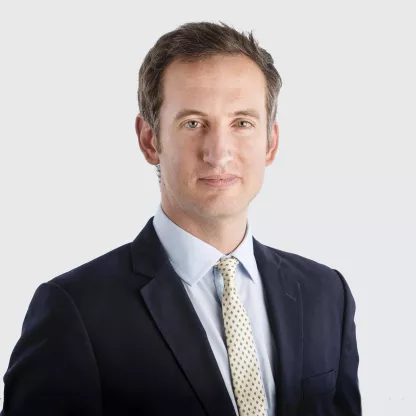
“As bond yields rise, they act as a headwind to growth, driving up the cost of borrowing for governments, companies and consumers alike. The higher rates also reduce the value of future cashflows of companies, sending their share prices lower. This is particularly acute for growth companies that aren’t growing at exponential rates. Over the last few years, as the 10-year US government bond yield has approached and now edged beyond 5%, it has typically been negative for equities, and we are starting to enter that territory.”
The biggest worry is that it might derail the AI boom. Global stock markets have become uniquely dependent on AI-related growth. Investors were worried about the concentration in the US market 18 months ago, but the focus on the US, and on a handful of stocks has, if anything, increased. There are other worries around AI: are companies making money from it, for example? A recent report from MIT suggests not*. There appears to be a growing backlash from those required to deploy AI in their businesses, or live next door to data centres. These are just a few of the factors that could thwart its exponential growth.
In the longer term, this could be a good thing. The AI trade has absorbed huge amounts of productive capital that could be deployed elsewhere. It would force investors and policymakers to slow down on a technology that has potentially lethal side-effects. However, the short-term consequences could be painful for investors. The AI trend has become hard to ignore and is baked into a number of sectors beyond technology – including areas such as financials and healthcare.
Even some growth investors are starting to doubt the durability of the bull market in AI stocks. James Thompson, manager of Rathbone Global Opportunities, says:
But perhaps the greatest risk spooking investors is the sheer unpredictability of the current climate. Investors can prepare for a recession, or lean into a bull market, but the prevailing environment presents so many uncertainties. The volatility of the current US administration gives investors a new challenge from moment to moment. There had previously been some hope that a resounding Democrat win in the mid-terms might put some checks and balances on the power of the president, but the fears are that with a dwindling domestic power base, he may now turn his attention to foreign policy.
While companies continue to deliver high earnings, investors may be able to look beyond some of these problems. However, there comes a point when they become too big to ignore. There are certainly plenty of things going bump in the night for investors this Halloween, but the best defence against whatever is lurking around the corner remains decidedly less frightening: good investment practice, proper diversification, regular savings and a strong stomach.
*Source: Fortune, 18 August 2025
This article is provided for information only. The views of the author and any people quoted are their own and do not constitute financial advice. The content is not intended to be a personal recommendation to buy or sell any fund or trust, or to adopt a particular investment strategy. However, the knowledge that professional analysts have analysed a fund or trust in depth before assigning them a rating can be a valuable additional filter for anyone looking to make their own decisions.
Past performance is not a reliable guide to future returns. Market and exchange-rate movements may cause the value of investments to go down as well as up. Yields will fluctuate and so income from investments is variable and not guaranteed. You may not get back the amount originally invested. Tax treatment depends of your individual circumstances and may be subject to change in the future. If you are unsure about the suitability of any investment you should seek professional advice.
Whilst FundCalibre provides product information, guidance and fund research we cannot know which of these products or funds, if any, are suitable for your particular circumstances and must leave that judgement to you. Before you make any investment decision, make sure you’re comfortable and fully understand the risks. Further information can be found on Elite Rated funds by simply clicking on the name highlighted in the article.
Related insights

AI’s next disruption

Asia’s broadening investment story

Six questions fund managers wish investors would ask