
Chip champions: how to invest in the semiconductor boom
By Joss Murphy on 26 October 2026 in Global, Specialist investing
Semiconductors have existed for decades, but investor interest has surged dramatically in recent years due to their crucial role in the technology boom. Companies that make all-important semiconductor chips, used in everything from mobile phones to medical equipment, have seen their share prices soar. But what are these innovative products, which tech firms have benefitted most, and how can would-be investors get access to the area?
What is a semiconductor chip?
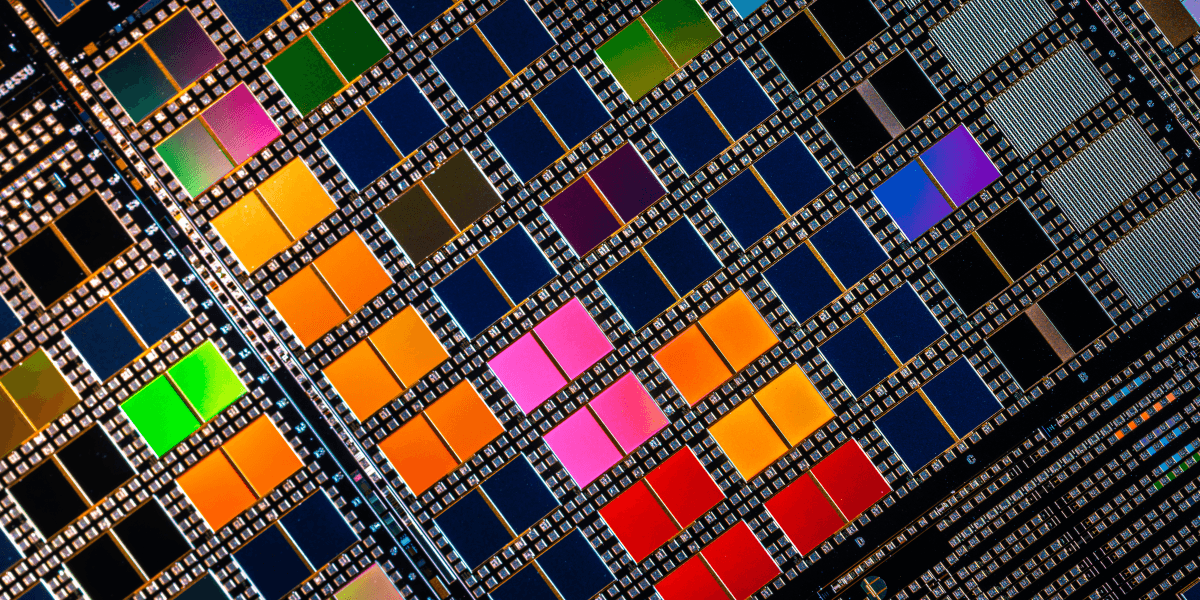
Semiconductors are made from silicon wafers imprinted with tiny switches called transistors. They’re the fundamental building blocks of our digital world. The first semiconductors available for sale in the 1960s had just four transistors on them. Today, a smartphone chip can have at least 10 billion!
Chips control various functions in electronic devices and can be found in smartphones, computers, refrigerators, washing machines, and gaming consoles. Electric and petrol cars also use hundreds of chips to run everything from engine performance to parking cameras and built-in touchscreens.
Key growth drivers
The sector has had a rollercoaster few years. Sharply rising demand during the COVID-19 pandemic subsequently led to a global chip shortage. However, the industry bounced back strongly. More recently, remarkable growth in artificial intelligence has created unprecedented demand for semiconductor chips, and this trend is expected to continue. The global market has grown for 18 consecutive months, and global annual sales hit a record $1 trillion by August 2026*.
Who are the biggest winners?
The combined market capitalisation of the top 10 global chip companies is currently $15.4 trillion, however, it’s highly concentrated with the top three (Nvidia, TSMC and Broadcom) accounting for 60% of that total**.
Broadcom is up 555% and Samsung 205%. Micron Technology, which specialises in memory and storage solutions, rounds out the top five, and has seen its stock price rise 1,253% over the past five years***.
Of course, just because a company operates in a high-flying industry doesn’t mean its shares will keep rising. Much of its value, for example, could already be factored into the price
Potential downsides
Semiconductor stocks can be cyclical. This means they’re sensitive to changes in the macroeconomic background and global spending on technology. Geopolitical issues can also impact negatively. As much of the advanced chip production takes place in Asia, global supply may be affected by political uncertainty, trade tariffs and bottlenecks. However, making these supply chains more flexible and adaptable to geopolitical change and other disruptions is the number one priority for companies****.
How to invest in the sector
There are quite a few sub-sectors. These include Integrated Device Manufacturers (IDMs), which are traditional semiconductor companies that oversee everything from design to sales. Then there are fabless design companies that devise the products and pure-play foundries that focus on production. Other plays include software providers, IP vendors and quality assurance testers.
With so many different parts of the industry to consider, researching individual companies and deciding where to invest can be challenging. For investors looking for broader exposure to the theme, technology funds offer a simpler route, with professional fund managers making those decisions on their behalf.
Allianz Technology Trust

Allianz Technology Trust
Equity
It seeks long-term capital growth from a diversified portfolio of technology stocks, including Nvidia, Broadcom and Micron Technology^. An active overweight position in Taiwan Semiconductor Manufacturing helped returns, according to Mike Seidenberg, the fund’s lead portfolio manager.
He attributed enthusiasm for the stock to “strong AI-chip demand” and “strong revenue guidance”, which reinforced expectations for continued investment in AI infrastructure. Mike focuses on themes addressing major growth trends that can replace existing technology or change how products and services reach consumers.
AXA Framlington Global Technology

AXA Framlington Global Technology
Equity
This is an unconstrained fund that invests in global tech firms. Its approach enables it to invest in innovative new technology, although it favours large-cap positions. Semiconductor exposure accounts for almost 44% of the fund, while six of the 10 largest stock positions are from the sector^^.
The fund’s aim is to provide long-term capital growth over periods of at least five years. We like its high-conviction approach and willingness to take a different stance from the benchmark, which is rare in this sector.
Guinness Global Innovators
Guinness Global Innovators
Equity
The fund’s managers, Matthew Page and Dr Ian Mortimer, invest in innovative and disruptive businesses that are changing our world. They create an investment universe by identifying nine themes – and then pick the fastest-growing and best-value stocks from within these areas. As with many funds in this area, it’s heavily weighted towards the US and information technology.
Many of its largest stock holdings have semiconductor exposure. These include AMD (Advanced Micro Devices), Taiwan Semiconductor and Nvidia, while stocks such as Apple design their own semiconductors^.
Polar Capital Global Technology
Polar Capital Global Technology
Equity
This high-conviction fund invests across the global technology sector, targeting companies that can benefit from long-term structural trends such as artificial intelligence, cloud computing and cybersecurity. The fund currently has 36% invested in semiconductors, with Nvidia, TSMC, AMD and Micron Technology among its top 10 holdings^.
We like the depth and experience of its specialist technology team, as well as its willingness to adapt the portfolio as new technologies and disruptive businesses emerge.
*Source: Semiconductor Industry Association, 5 October 2026
**Source: Statista, Leading semiconductor companies worldwide, 28 September 2026
***Source: Google Finance, 21 October 2026
****Source: ICAEW, Global semiconductors, 19 October 2026
^Source: fund factsheet, 30 September 2026
^^Source: fund factsheet, 31 August 2026
This article is provided for information only. The views of the author and any people quoted are their own and do not constitute financial advice. The content is not intended to be a personal recommendation to buy or sell any fund or trust, or to adopt a particular investment strategy. However, the knowledge that professional analysts have analysed a fund or trust in depth before assigning them a rating can be a valuable additional filter for anyone looking to make their own decisions.
Past performance is not a reliable guide to future returns. Market and exchange-rate movements may cause the value of investments to go down as well as up. Yields will fluctuate and so income from investments is variable and not guaranteed. You may not get back the amount originally invested. Tax treatment depends of your individual circumstances and may be subject to change in the future. If you are unsure about the suitability of any investment you should seek professional advice.
Whilst FundCalibre provides product information, guidance and fund research we cannot know which of these products or funds, if any, are suitable for your particular circumstances and must leave that judgement to you. Before you make any investment decision, make sure you’re comfortable and fully understand the risks. Further information can be found on Elite Rated funds by simply clicking on the name highlighted in the article.
Related insights

The Junior ISA: A gift anyone can give

Back to school: An investment portfolio for every subject

The next phase of the AI trade