
Craig Rippe, manager of WS Kerridge Diversified Monthly Income, believes it is not the time to be taking heroic bets on any one outcome: “Within equities, diversification matters more than formerly. The concentrated US market is vulnerable to disappointment in AI returns. Europe, Japan, equal-weighted baskets, and selected emerging markets offer useful alternatives.”
Growth, value or bonds? Investing in a higher-rate world
By Joss Murphy on 24 September 2026 in Fixed income
The Federal Reserve has lifted interest rates. This has been a relief to everyone who prefers stable bond markets, even if it has irritated President Trump. With inflationary pressures still evident, the US central bank may not stop at a single rise. Should investors be trying to adapt to this ‘higher for longer’ environment?
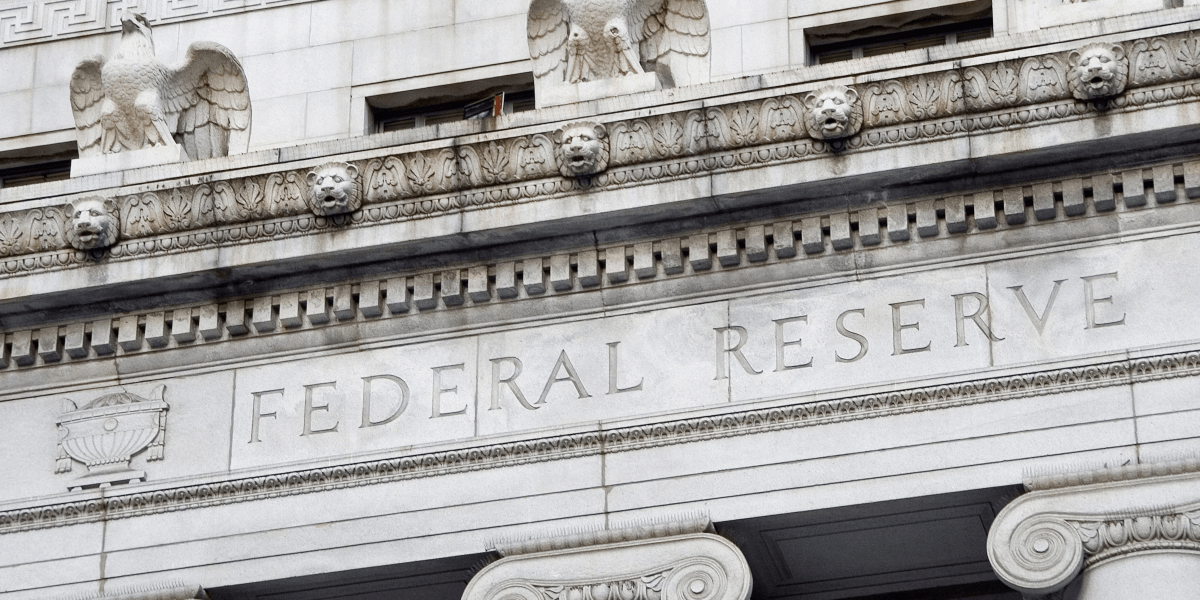
Fed chair Kevin Warsh was clear that the rate rise showed he was serious about getting inflation under control. He said the move removed the “dose of accommodation” still in the system. Financial markets were relieved and the long-dated treasury market – the strongest indicator of inflationary expectations – stabilised.
However, inflationary pressures remain. The conflict in the Middle East appears to be broadening, with attacks on Saudi Arabian oil infrastructure, and an impasse in Iran. The US jobs market remains buoyant and there are also inflationary pressures emerging from AI spending and resource nationalism.
Although most economists believe this is not the start of a prolonged rate-rising cycle in the US, there may be one or two rises still to come, and interest rates are likely to remain higher for longer. Equally, bond markets have become very jumpy.
In the immediate aftermath of the rate hike, it was the blue-chip focused Dow Jones that bore the brunt of the increase, falling 1.7% over the week. The S&P 500 only falling 0.1%, while the Nasdaq rose 0.7% over the same period*. In bonds, shorter-dated government bonds rose, while longer-dated bonds fell. However, it is not certain that this pattern will hold.
Value versus growth
Higher interest rates are normally good for value strategies and bad for growth strategies. The rising cost of capital has a disproportionate effect on companies whose cash flows are further in the future. Higher inflationary environments favour those companies with visible near-term earnings. These tend to be value companies. Equally, some ‘value’ sectors, such as financials, tend to do well in higher interest rate environments.
There is also the problem that many of the largest growth companies are now undertaking more capital spending. The major US technology companies have issued around $220 billion to $230 billion in corporate bonds so far in 2026, to support the AI build-out**. While they still have strong cash-flows, the cost of issuing any more debt will rise, which could exert a drag on their share prices.
Even growth-focused managers are tempering their exposure to some of the higher-profile AI names. James Thomson, manager of the Rathbone Global Opportunities fund, has been leaning into the “HALO” theme — ‘hard assets, low obsolescence’: “New stocks such as electrical infrastructure contractor Quanta, aerospace contractor Howmet, mining equipment supplier Sandvik, digger-maker Caterpillar and two others join names that were already in the fund, including diversified industrial and aerospace engineer Parker Hannifin and Amphenol.”
There is also a question as to whether ‘quality’ companies might revive in this environment. These have been in the doldrums, but a higher interest rate environment should put greater value on the less indebted companies that tend to be a feature of quality portfolios. Valuations are low relative to history and areas such as healthcare – often a favoured area for quality portfolios – have seen a revival in recent months.
Added diversification

Investors need to be prepared for a range of scenarios. It is plausible that, spooked by the prospect of a wipeout in the midterm elections, Donald Trump works harder on an agreement with Iran. While it will take time for the oil market to return to normality, given the damage to infrastructure, it would at least open up key trading routes. This would ease inflationary pressures and could even reduce the cost of borrowing. It doesn’t look likely at the moment, but the possibility can’t be discounted.

James Thomson agrees: “Despite occasional flare-ups, as the Iran conflict keeps getting priced in then out of everyone’s assumptions, we think a downward trend in the main macroeconomic forces could surprise investors… Oil prices, inflation rates, expectations of future inflation, bond yields, and central banks’ rate projections could all reverse their Q2 shift higher.”
What about bond exposure?
This flexibility should also apply to bond exposure. Bond markets have been sensitive and unpredictable. Maintaining agility has been important. Craig says: “We are still wary of long-duration government bonds; UK gilts now offer more yield, but they also carry more volatility. We also prefer shorter duration and flexibility; gilt yields peaked above 12% in 1990 and then fell for 30 years, before bottoming in 2020 at 0%. This is a reminder that yields can move a long way and trend changes can take a long time.”
Vincent Ropers, co-manager of the IFSL Wise Multi-Asset Income fund, has been reducing its exposure to infrastructure, and recycling it towards selected strategic bond funds, including the Premier Miton Strategic Monthly Income Bond fund.
The strongest message is the need to retain flexibility in an unpredictable environment. Higher interest rates seem likely, but there is a scenario where inflationary pressures and bond yields start to fall again. Taking significant positions on the assumption of higher interest rates is a risky call – just as the assumption of lower rates at the start of this year proved to be. Markets are likely to remain noisy and various scenarios are plausible. Diversification may prove crucial.
*Source: CNBC, 28 September 2026
**Source: Reuters, 29 August 2026
This article is provided for information only. The views of the author and any people quoted are their own and do not constitute financial advice. The content is not intended to be a personal recommendation to buy or sell any fund or trust, or to adopt a particular investment strategy. However, the knowledge that professional analysts have analysed a fund or trust in depth before assigning them a rating can be a valuable additional filter for anyone looking to make their own decisions.
Past performance is not a reliable guide to future returns. Market and exchange-rate movements may cause the value of investments to go down as well as up. Yields will fluctuate and so income from investments is variable and not guaranteed. You may not get back the amount originally invested. Tax treatment depends of your individual circumstances and may be subject to change in the future. If you are unsure about the suitability of any investment you should seek professional advice.
Whilst FundCalibre provides product information, guidance and fund research we cannot know which of these products or funds, if any, are suitable for your particular circumstances and must leave that judgement to you. Before you make any investment decision, make sure you’re comfortable and fully understand the risks. Further information can be found on Elite Rated funds by simply clicking on the name highlighted in the article.
Related insights

National Savings Day: from your first £1 to your first investment

Have megatrends changed the game?

Are UK investors right to back global funds?