
What investors should watch in the coming months
By Darius McDermott on 2 April 2026 in Equities
What should investors expect over the next few months? Will stock markets start rising, or will the world wrestle with more geopolitical problems?

The first three months of the year have seen attacks on Iran by the US and Israel, relatively volatile global stock markets, and oil prices on the rise. But what’s likely to happen next? Here are five issues that could influence the second quarter of 2026 – and how to position your portfolio.
One: More volatility
Investors should probably brace themselves for more volatility in stock-market movements, oil prices, and the general news flow. It’s hoped there will be a relatively swift conclusion to the ongoing conflict between Iran and US-Israeli forces that started in late February but nothing is guaranteed.
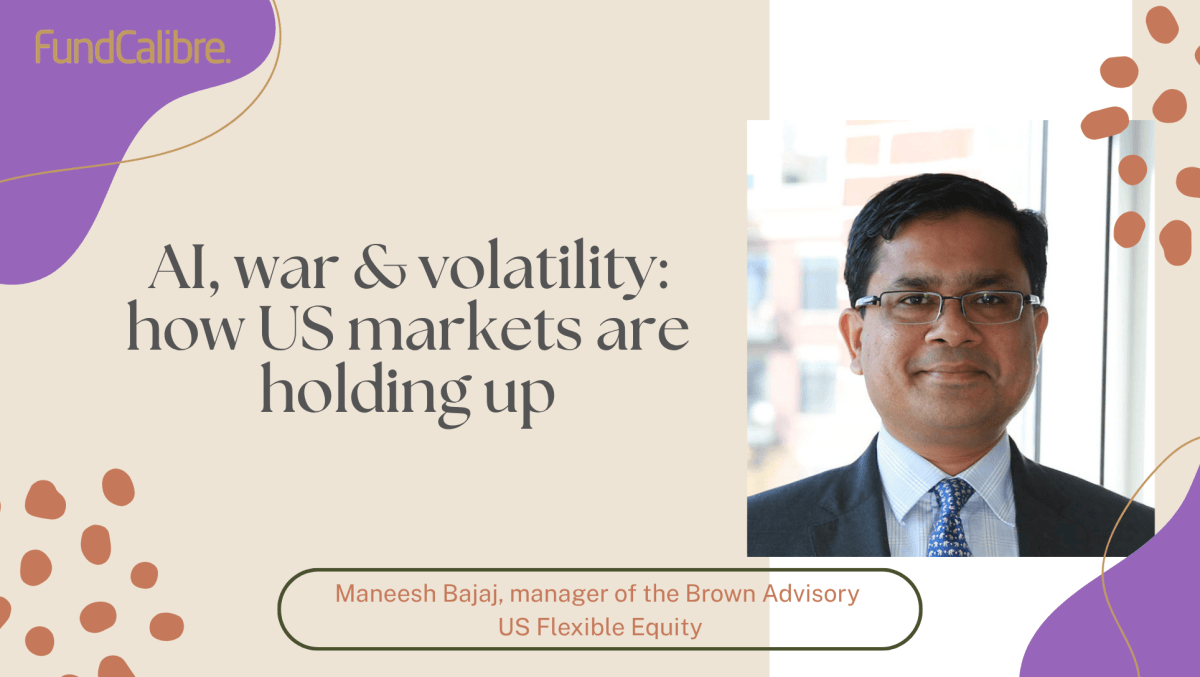
Stock-market values have fallen since the attacks started. The longer-term impact largely depends on how long it lasts, according to Maneesh Bajaj, manager of the Brown Advisory US Flexible Equity fund. In a recent interview, he told us: “If the war is not protracted, then the economy is going to prove to be resilient.”
Two: Earnings season
Robust earnings growth, lower rates and declining policy headwinds should help global equity markets, according to JPMorgan. In a market outlook, Dubravko Lakos-Bujas, its head of global markets strategy, claimed the AI-driven supercycle was fuelling record CapEx and rapid earnings expansion:
Investors should get an insight into how global corporate names see the outlook, as a string of FTSE 100 giants report results in April and May. These are expected to include pharmaceutical giants AstraZeneca and GSK, which are both holdings in the Janus Henderson UK Responsible Income fund*.
Three: Possibility of interest rate cuts
Global interest rates affect almost everything, so the focus will be on upcoming decisions by central banks, such as the US Federal Reserve and the UK’s Bank of England (BoE). The Fed held rates steady at 3.5%-3.75% in March, but economists expect a rate cut in June, according to a Reuters poll.
In the UK, the base rate was maintained at 3.75% in March 2026. The BoE’s Monetary Policy Committee had previously cut them six times since summer 2024. They said:
Some UK economists are predicting interest rates will only be cut once this year as policymakers remain concerned about persistent inflationary pressures. Yael Selfin, chief economist at KPMG said: “Further rate cuts are now likely to be delayed until 2027, as the Bank balances the risks of rising prices against a weakening labour market and sluggish economic growth.”
Four: More mergers and acquisitions
There have already been some significant deals announced this year and observers predict an increase in merger and acquisition activity could be on the horizon. Specialist insurer Beazley and fund group Schroders have seen their share prices spike after both agreeing to be taken over.
A combination of artificial intelligence (AI) accelerating strategic change and a macroeconomic backdrop of lower interest rates is helping fuel interest, according to a PwC report. It stated: “A late-2025 surge in mega-deals (transactions more than $5bn in value) and AI thematics have carried into the new year, pointing to a market that is structurally reshaping rather than simply rebounding from a subdued cycle.”

Five: Continued demand for technology
The demand for AI shows no signs of waning as the new breed of technologies continues to drive different industries. JPMorgan stated in a report: “Business investment in sectors such as technology and artificial intelligence remains robust, but a broader CapEx boom outside of tech is limited.”
This will benefit funds such as AXA Framlington Global Technology. This portfolio can invest in new technology and innovation, although its focus tends to be on large caps. In a recent fund update, the managers expressed the view that indiscriminate weakness in software stocks was presenting attractive investment opportunities.
We heard more about the demand for technology in Asia in a recent podcast with Richard Sennitt, manager of Schroder Asian Alpha Plus, Schroder Asian Income and Schroder Oriental Income.
Positioning during periods of volatility
During times of uncertainty, it helps to remain calm, avoid knee-jerk reactions and stay invested. Pound cost averaging can also be your friend. This involves investing a set amount each month into buying fund units, irrespective of price movements.
Diversification also makes sense. Having a broad spread of asset allocations, as well as sector and geographic exposures, can help protect your overall portfolio. In the same way, ensure that your portfolio has at least some reliable, income-producing assets alongside growth-focused investments.
For more on markets, don’t miss our quarterly market insights episode of the Investing on the go podcast with Darius McDermott and Juliet Schooling Latter.
*Source: fund factsheet, 28 February 2026
This article is provided for information only. The views of the author and any people quoted are their own and do not constitute financial advice. The content is not intended to be a personal recommendation to buy or sell any fund or trust, or to adopt a particular investment strategy. However, the knowledge that professional analysts have analysed a fund or trust in depth before assigning them a rating can be a valuable additional filter for anyone looking to make their own decisions.
Past performance is not a reliable guide to future returns. Market and exchange-rate movements may cause the value of investments to go down as well as up. Yields will fluctuate and so income from investments is variable and not guaranteed. You may not get back the amount originally invested. Tax treatment depends of your individual circumstances and may be subject to change in the future. If you are unsure about the suitability of any investment you should seek professional advice.
Whilst FundCalibre provides product information, guidance and fund research we cannot know which of these products or funds, if any, are suitable for your particular circumstances and must leave that judgement to you. Before you make any investment decision, make sure you’re comfortable and fully understand the risks. Further information can be found on Elite Rated funds by simply clicking on the name highlighted in the article.
Related insights

Back to school: An investment portfolio for every subject

Mid-year review 2026: a lesson in diversification

The overlooked corners of the US market