9 July 2026 (pre-recorded 24 June 2026)
Please be aware that the accuracy of artificial intelligence-generated transcripts, such as those utilised in our interviews, may fluctuate based on factors like audio quality, subject matter complexity, and individual speaker enunciation. Consequently, these transcripts are unlikely to achieve 100% accuracy. However, it is important to note that, at FundCalibre, we do not consider the correction of automatically-generated captions to be an effective or proportionate use of resources.
Given the inherent limitations of machine-generated transcription, we strongly advise against relying solely on this transcript when consuming our content. Instead, we encourage you to use the transcript in conjunction with the accompanying interview to ensure a more comprehensive and accurate understanding of the topic.
Please remember we’ve been discussing individual companies to bring investing to life for you. It’s not a recommendation to buy or sell. The fund may or may not still hold these companies at your time of listening.
[INTRODUCTION]
Staci West (SW): Welcome back to the Investing on the go podcast brought to you by FundCalibre. Markets are increasingly being driven by headlines, but are investors focusing on the wrong things? This episode explores the structural forces shaping the global economy and why looking beyond the obvious could uncover overlooked investment opportunities.
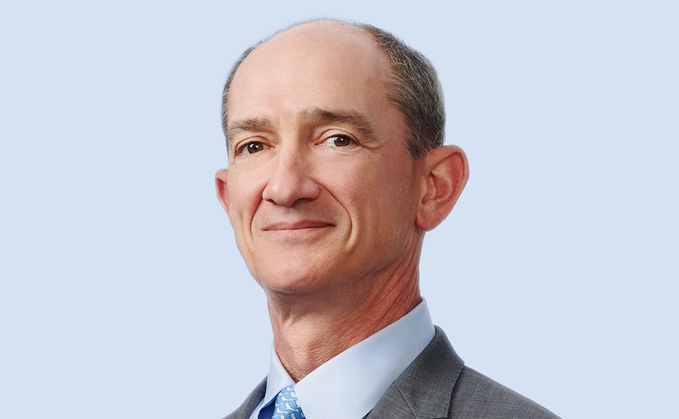
I’m Staci West, and today I’ve been joined by Alec Cutler, manager of the Elite Rated Orbis Global Balanced and Cautious funds. Alec, thank you very much for joining me.
Alec Cutler (AC): Thanks for having me.
[INTERVIEW]
SW: So I wanted to start with something that we had touched on last time we spoke, which is now probably about 18 months ago. It was just after the elections when Trump came back into office. And at the time we had talked quite a lot about what this might mean for markets. So we talked about tariffs, currency, trade shifts, and where opportunities might come off the back of that.
But I wanna fast forward to today because a lot of investors seem to kind of look at Trump and politics and the ongoing geopolitics. And this is, you know, this has been the main driver of what’s been happening in markets. It’s what everyone seems to want to talk about – which is ironic because it’s where I’m starting today – but you’ve tended to frame it a little bit differently in that it’s more of a symptom of a deeper structural change that was kind of already happening. It’s not really Trump’s fault, let’s say.
And so what do you think was already shifting beneath the surface? And then why has Trump become this focal point? How are we today?
AC: There’s a couple ways we can look at this. Trump is a manifestation of populism being on the rise. Why is populism on the rise? Populism is on the rise because people don’t feel good about the environment they’re in. They don’t feel good about the deal they’ve been given by their government, and they want change. And we’re seeing it in other countries as well. So that’s one aspect of it, and that’s part of what drives Trump on a daily basis.
The other is that we had it good for too long. The Western world, the developed world, had it good too long from the fall of the Berlin Wall, we had peace from the peak in interest rates in the early eighties. We’ve had, you know, an ever dropping interest rate, which produces a wonderful tailwind. We had goods that were ever cheaper as we outsourced around the world and embraced globalism.
All of those things have been reversing, ending, crashing, burning. Things are getting more expensive. Interest rates are going up. Globalizations being reversed. Countries are necessarily focusing on becoming more self-reliant or having to focus on the bottom of what we call the Pyramid of Needs for a nation. The foundational blocks of what you need to have a successful country. Things like national defense, energy security, food security, industrial policy that gives you industrial security. You can’t have the top of the pyramid ‘fun stuff” without that bottom stuff being intact, those important elements of the foundation. And for too many years we have almost been mortgaging or deteriorating that foundational level elements. Trying and striving even harder to have more of a fun time and to be focused on self-realization, self-actualization, entertainment, and dare I say it, personal pronouns.
And now we have to get real. So I think, you know, part of Trump’s message, if you will, to other countries is that the US isn’t gonna back you up anymore. The US isn’t gonna be your provider of security or your provider of energy necessarily. We’re gonna have to cut a deal, it’s gonna be a commercial relationship, it’s a reminder to other countries where we have to head, which is we are on our own. We can rely on other countries to the extent that we’re of like mind for a period of time, but we can’t count on it forever.
SW: And this is driving, it sounds like part of that like onshoring story that we do hear a lot about for the US, onshoring, nearshoring. And this is, I’m assuming in your view, one of the underlying reasons that this has become so popular that we’ve seen there, especially when it comes to, you know, things like energy, utilities, et cetera.
AC: Yeah. And we’re just getting reminders, like the Iran war, like the grid breaking and failing in Spain and the warnings that the grid company is putting out in the UK today, about tonight. We might have brownouts and blackouts in the UK tonight. These are all just reminders of the fact that every country needs to get its act together and provide for its base level foundational elements of a pyramid of needs.
SW: And so why do you think it is then that investors focus on those big headlines and probably a lot less on what we have just talked about, this pyramid of needs that you’re discussing? What is it about the headlines that is just making it more attractive to make that the story when there’s actually this kind of second layer effect that isn’t even being discussed?
AC: Well, I think it’s simple. I think it’s not that people want a simple story, it’s that people wanna tell a simple story and life isn’t simple.
SW: Makes their job easier.
AC: Yeah. Life isn’t simple. Trying to maintain or operate something like a nation is extremely complex. The issues around, if you take just a tiny little piece of the issues around net zero and decarbonizing, these are incredibly complex equations that need to be solved, that are based on chemistry and physics and economics and socioeconomic reaction functions. This isn’t something that can be explained in a five minute soundbite.
SW: Yeah. Well, funnily enough, I was gonna say, AI is a great example. Energy and EVs is certainly another one. But with AI, especially with so many headlines centering around AI, they tend to center around, you know, the software companies, NVIDIA. I think everyone probably knows what NVIDIA is, what they do, and who they are. It’s so well covered and talked about. Yeah. But you know, there’s so many other stories and enablers of AI that get often overlooked. And I think you have, you have some of these underlying companies to this story. So maybe you can just kind of walk us through what it is about the enablers that people are missing, and what do you have in the portfolio there?
AC: Well, I think it does get back to telling a simple and clear story. It also has to do with, you know, those whose prime mover is AI. Those are the ones talking about AI all the time. The fact is that you can’t do AI today or for the next 15, 20 years in many countries without using natural gas to make electricity. But that’s a pretty complicated story to tell, and it’s not exciting and it’s not a pure AI thing, and it’s not something where a natural gas company is gonna say “we do AI”. Yeah, “AI is one of our customers, and it happens to be a customer that’s growing really rapidly” but that’s just not a news breaking thing for the media.
And similarly, semiconductors have been quite popular recently, but for the first two or three years of AI, there was no association between AI and RAM or flash memory, or high bandwidth memory or Taiwan semiconductor, the makers of all the bits that go into the thing that NVIDIA sells. The fascination with AI stopped at NVIDIA. And it was great for us because it enabled us to build very large positions in the true enablers, the underlying enablers, of AI. And those are big positions that we hold through to today.
SW: And you’ve talked about previously green inflation. So the idea that the energy transition might be necessary but could also be structurally inflationary. And how do you actually think about that in practice? How would you explain that to the listeners? And what does that mean for energy for markets?
AC: Cutting to the answer. We’ve seen green inflation, or greenflation, through the utility bills in every country that’s made a priority of pushing alternative energy. Wind, solar, and batteries, those are all power plants, if you will, in quotes, that cost money to deploy. And on a cost per capacity or cost per output basis, they’re rather expensive, particularly when you think about the fact that they’re intermittent. You can’t rely on them. There are days when you have no wind and the sun goes down or behind a cloud that people still need electricity. So if you have a grid that you are really pushing hard on, say, wind and solar and batteries, and you’re paying for that, you then also need to pay for a grid that sits off to the side and isn’t being used until it’s needed.
So effectively you’re building two energy grids, two electricity grids when before you only had one. You have to pay both. You have to pay both the new energy sources and the older, more conventional ones, you have to give them a rate of return such that they continue to operate or they’ll shut down. You are almost making a grid that’s twice as expensive, super, super simplistically.
SW: And how or where do you see the opportunities in that story? Do you have utilities in the fund, for example, or the providers, the grid perhaps?
AC: I think where we’re finding the sweet spots for us where we can buy very low expectations, very attractively valued names that we believe maintain a way more important role in the entire grid, in the system, than the market is giving it credit for right now is natural gas producers. In certain parts of the world. North Sea oil and gas producers for the British North Sea, those who are transporting natural gas around North America. So it’s kind of, you know, bits and pieces, no pure utilities. The problem with many utilities is that they’re the ones that sit between the government and the rate payers. And when the rate payers are squawking about their bills being too high, and the government is the one that’s support that has to approve what the utility is asking for from a rate standpoint, they don’t wanna make their voting public angry, so they tend to shortchange the utility that’s stuck in the middle has to build another power plant because demand is on the rise because everyone is buying EVs or their EVs plus AI data centers getting rolled out in the service territory. They have no choice. They’re forced to add capacity, but the government doesn’t give them a fair return on it. So the utilities can be kind of in the squeezed middle, if you will.
SW: And I mean, stepping back slightly to, you know, building the portfolios, as I mentioned at the beginning, you run two Elite Rated, you run the Global Balanced and the Global Cautious. How do you go about building both of those portfolios that can, kind of, endure through different markets and different cycles, whether that is inflation sticking around, whether it’s, you know, the AI driven growth or the energy transition, a few of the stories that we’ve talked about. How do you go about building both of them? Is it starting with a blank piece of paper, or how do you approach that?
AC: I mean, you can think about it as starting with a blank piece of paper, right? I mean, in theory we buy the portfolio every day. In practice you obviously can’t do that, but that’s kind of the mentality that we employ. We are primarily valuation driven. So when something pops up as being where the market’s overly pessimistic, we’ll go in and if we decide that it’s worthy of a spot in the portfolio, we have to find something to kick outta the portfolio or a few things to shave off, other positions, to put it in.
And that will, over time, change the complexion of the portfolio. It changes the portfolio’s ability to withstand different risks that may appear. We like to think that we’re, you know, constantly maintaining an all weather portfolio, if you will, that can do well when the sun’s shining and the winds are calm, but can you know, withstand the stormy periods that happen upon us. Whether they do or not is outside of our control, but we do, you know, apply risk measures and metrics and spend a lot of time focused on making sure the portfolio is adequately diversified, that we’re not concentrating exposures into any one area or neglecting any other area that is placed, that’s worthy of investment. So it’s just a lot of hard work, a lot of elbow grease, you know, and then after that it’s hoping that the market treats us well, knowing full well that it’s not always gonna do so.
SW: And in the Balanced fund I noticed that you have quite a meaningful allocation to emerging markets, something like 30% I think. So what’s driving that EM exposure? Is it something that’s particularly standing out? Is it just that we’re trying not to be concentrated in the US? Is this what is happening? Is that all equities? Is it equities and fixed income? What makes up that allocation?
AC: So It’s, it’s absolutely coming from the bottom up competition for capital. So again, it’s that process of a name being attractive to us that we need to find capital for in the portfolio. And it competes well with other ideas in the portfolio. If I’m looking at the big concentrations of the, within the EM, first of all, the biggest concentration will come from Samsung and Taiwan Semiconductor. So are those EM or quasi EM? They’re certainly in Korea and Taiwan, which are in the EM part of the index, that’s a big chunk.
Brazil is a big chunk both on the equity and the fixed income side. It’s about 5/6% of the portfolio overall. And that’s split equally between short dated government bonds yielding 13%, 14%, 9% real, and some companies that we find attractive there in the current environment. Also Iceland got only in the debt side. Iceland’s considered in the EM. And we find that the one, two and three year notes there yielding 7, 8, 9% is to be quite attractive. And you know, in the EM in general, just to broaden it out, we have positions all spread throughout, including in the Philippines and Columbia, a little bit in Argentina. So we’re kind of spread throughout the rest of the world.
SW: World Cup of allocations.
AC: That’s right. Yeah. Probably one of those EM countries is gonna win the World Cup. And, overall though, you know, one of the things that’s kind of popping out to us is what we like to call EMs behaving like DMs should, developed markets should, and DMs behaving like EMs used to. It struck us that, you know, Brazil is running a much lower deficit than the United States. It has lower debt to GDP than the United States. It has structural barriers to overspending that the US doesn’t have.
The US on the other hand, is running a wartime level of deficit and has a debt to GDP of approaching 120%, which is kind of a red lining. And we can’t see a way of, or political will to unwind that scenario or to recover from that scenario. The US is spending more on interest expense, on national debt than on defense. And throughout history, that’s a really bad setup. It’s a precursor to kind of the fall part of the rise and fall of nations. Brazil doesn’t have that problem.
So people look at us and, you know, you’re running a global moderate risk multi-asset fund, you know, isn’t holding positions in Brazil risky. Yeah. But we think we’re being compensated for the risk more than adequately.
SW: You know, I was gonna ask you about government bonds. I was gonna ask you about government bonds in the cautious fund, because I noticed that it’s almost half the portfolio. I had assumed that that was going to be US treasuries, but given that we’ve just talked about some EM government bonds, I’m thinking maybe that’s not all US treasuries. So what is happening with the fixed income allocation?
AC: So the Cautious fund will have a bigger helping of the positions in Brazil, of the debt positions in Brazil, Iceland, Australia, Norway, or the other countries that we have government debt. We do have significant helping of US debt, but it’s focused on the short end and it’s focused on the longer end, it owns TIPS (treasury inflation protected securities) where a 30 year tip right now in the US is yielding 2.7% real. That means whatever inflation is, you’re gonna get inflation plus 2.7% The risk that we’re carrying in those. And they’re not riskless, you know, the cautious fund is a lower risk fund, not a no risk fund.
The risk and the TIPS, there’s no inflation risk, but there is duration risk. So if inflation is as high as we think it’s gonna be in the US there’s a risk that the longer dated nominal bonds will be terrible. They’ll go down, there’ll be capital losses, they will drag down that capital loss in the long end will not be ignored by the TIPS. They’ll go down to some degree. The cash flows will be fine. If we hold ’em for 30 years, we’ll get the, we’ll get inflation plus 2.7%, but we will have a shorter term capital loss. So that limits how much we invest in those, in those longer dated TIPS.
The other risk, and this is a bit out there, is that technically we get 2.7% plus CPI – CPI is a government statistic that the government manipulates. We think… we know. I mean the government has changed what goes into CPI and the weightings in CPI from the early ‘80s when the CPI was kind of brought out and was relied on for investments. So there’s a risk that, you know, the government just keeps defining inflation down and we’re not getting true inflation protection from an inflation protected security. So that’s another reason we live at this size.
SW: And then if we just step back for to wrap things up from individual positions and kind of themes that we’re maybe talking about, what do you think that investors are still just underestimating about the short to medium term and what to expect?
AC: I think there’s a lot of complacency in the market, particularly in the US market. No one cares about valuation right now. They care about, you know, missing out on the hot IPOs that are coming. They care about missing out on having exposure to AI. Even if they don’t really understand what AI is, not many people do, or where AI is gonna go one day, they wanna have exposure to it because it’s cool and it’s going up. The faith of the world in the US markets and the US large cap tech scene is just incredibly resilient. And they’re, you know, willing to buy into the US market and overweight the US market regardless of the valuation gradient to the rest of the world. That’s why our weighting in the US has kind of been dropping over time and going to the EM, because EM is the opposite of the US, the most developed market in the world. So that would be my biggest thing. And if it sounds like a complaint, it is.
SW: Well what a way to finish, with a complaint, great.
AC: I am a contrarian.
SW: Maybe we should finish it with something a little bit more optimistic. What are you most optimistic about? And maybe it is a contrarian view that people don’t agree with you, but you personally are really excited about in that short to medium term. Let’s end on a high.
AC: Well, so I don’t know if this is, as a contrarian, I don’t know if this is gonna be a positive or a negative. It depends on who’s listening. But seeing the formerly kind of blue chip top of the line growth sectors go down a lot and get cheap and come into our universe. It’s a super big positive for us, right? It’s not a positive for those who held the securities beforehand, but the entire software space has come down into our range finder, into our universe. The consumer staples, the luxury goods areas, and biotech have all become interesting to us. And that’s not just interesting to us and important to us from an opportunity standpoint and us getting more opportunities to look at, but it’s indicative of a value cycle that’s typical of a value cycle that you get rotation, that you get industries and sectors becoming valuable and valued and then getting taken out and shot.
And the valuations are getting down to levels where value investors can buy them. So, you know, if you just look at the last couple of years, four years ago we bought into the non-US defense sector at 4, 5, 6x earnings. And we were selling those names at 25x, 30x earnings. We’re buying biotechs at, you know, big discounts to book value and our perception of their probable stream of cash flows that can come from success on their drug pipeline. That is a typical value type of rotation or regeneration. And if that means that we’re in a value cycle after 14 years post GFC growth cycle, that’s a wonderful position for us to be in. And that is our nirvana.
SW: Perfect. We’ll end it there. Okay. Fantastic. Alec, thank you very much. Great. So interesting as always.
AC: Thank you.
SW: The Orbis Global Balanced fund is a moderate risk fund designed to be all-weather and suitable for long-term investment. Unlike many funds that are created for specific market conditions, Orbis focuses on a select number of funds that are intended to last in perpetuity. To learn more about the Elite Rated Orbis Global Balanced fund please visit fundcalibre.com