16 July 2026 (pre-recorded 2 July 2026)
Please be aware that the accuracy of artificial intelligence-generated transcripts, such as those utilised in our interviews, may fluctuate based on factors like audio quality, subject matter complexity, and individual speaker enunciation. Consequently, these transcripts are unlikely to achieve 100% accuracy. However, it is important to note that, at FundCalibre, we do not consider the correction of automatically-generated captions to be an effective or proportionate use of resources.
Given the inherent limitations of machine-generated transcription, we strongly advise against relying solely on this transcript when consuming our content. Instead, we encourage you to use the transcript in conjunction with the accompanying interview to ensure a more comprehensive and accurate understanding of the topic.
Please remember we’ve been discussing individual companies to bring investing to life for you. It’s not a recommendation to buy or sell. The fund may or may not still hold these companies at your time of listening.
[INTRODUCTION]
Staci West (SW): Welcome back to the Investing on the go podcast brought to you by FundCalibre. Geopolitics, inflation and interest rates continue to dominate financial markets, creating uncertainty for investors. This interview explores how all these factors impact global bond portfolios.
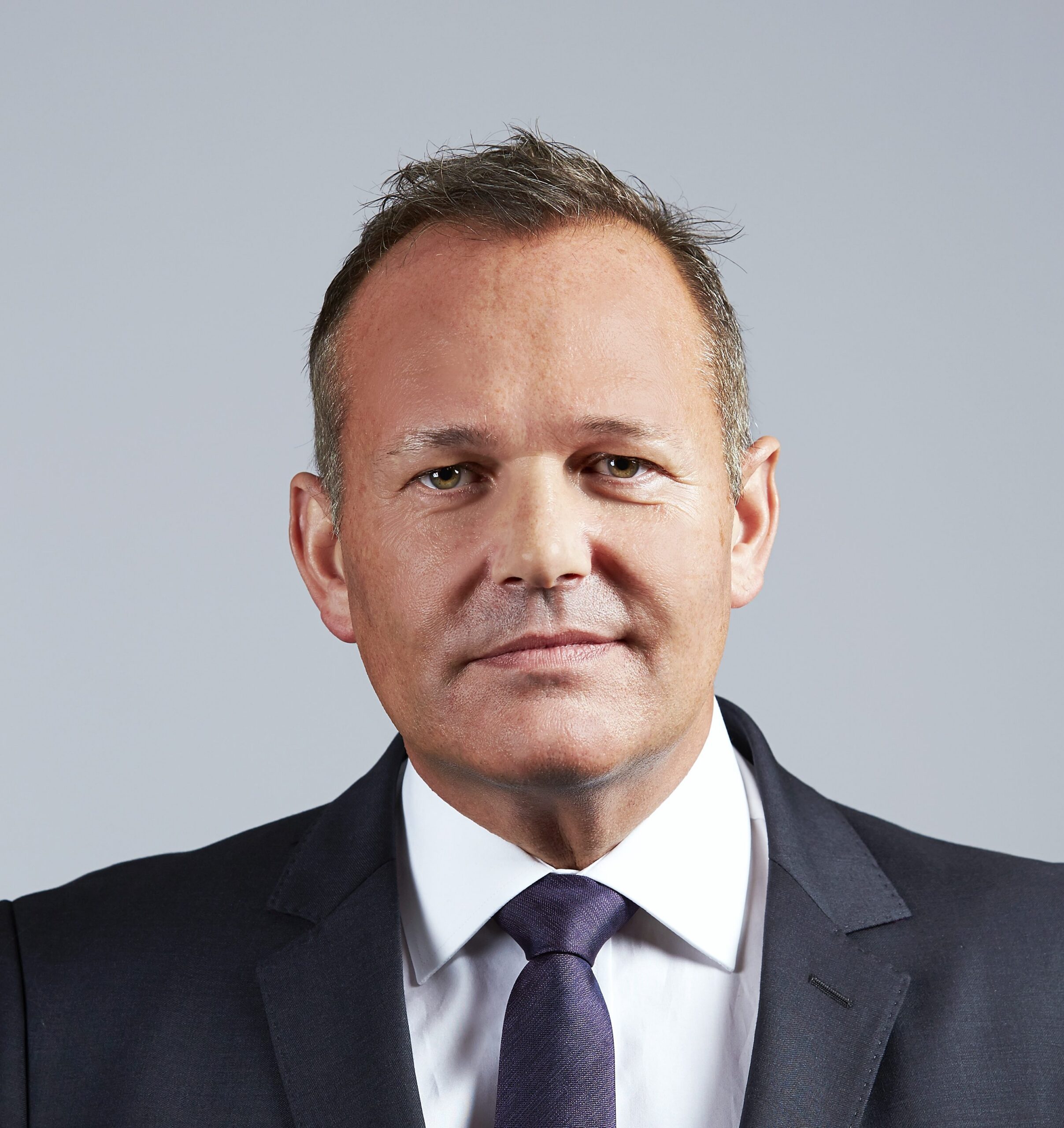
Darius McDermott (DM): I’m Darius McDermott and today I’m delighted to be joined by my good friend Dickie Hodges, who is the fund manager on the Nomura Global Dynamic Bond fund. How are you mate?
Dickie Hodges (DH): All good. Thanks for having me today.
[INTERVIEW]
DM: It’s my pleasure. So, bond markets, there’s always something going on as there is with geopolitics and Iran war and ceasefire and no ceasefire. What’s it mean for you? What’s going on?
DH: Well, the geopolitics is something which I think we’ve all gotta get a bit used to. It’s not gonna go away anytime soon. Obviously, we’re used to Iran and the US and the conflict that’s going on there. We’ve had the conflict, which has been going on elsewhere in the Middle East, and obviously we’re still looking at Ukraine and Russia.
The next one is almost certainly gonna be China and Taiwan and whether there’s gonna be any international sanctions, if this does indeed prove to be a geopolitical event that affects asset classes and asset prices. And almost certainly from my point of view, it is something which we are going to see over the course of the next 18 months.
It will almost certainly lead to weakness in asset prices, whether it be from equity credit all fixed income asset classes, emerging markets. But what you’ve gotta remember is that it also leads to opportunities and certainly we’ve got liquidity available on this fund. We are looking for events like this to push prices lower to allow us to participate again in the future.
DM: So asset prices lower but yields higher — because that is the converse.
DH: Yeah, absolutely. This is exactly right. We’ve seen yields, if you’d take into account the all in yield available on most fixed income products and compare that to where we were a decade ago, or the last post the Great Financial Crisis, which obviously happened in 2008. We moved to zero yields we used moved to negative yields in Europe. So if you look at maybe a three, three and a half percent as a yield to a European investor, that still looks exceptionally attractive when you are coming from a period where we had minus half a percent of the yield…
DM: We used to have to pay to lend money to the Germans or the Swiss.
DH: And many people forgot about the dynamics of actually investing as people invested in a 100-year Austrian government bond with a zero coupon. Well that’s priced at in the 20 cents now. And so you’ve lost 80% of your capital. All bonds mature at par as you know, you’ve just gotta wait a long time before you get your 100% back.
DM: So one of the major things that happened was oil price obviously went through the roof. Any conflict in the Middle East oil price goes up and then that then posts the spectre on inflation. What’s your view on energy prices at the moment? I mean, they’re almost back to sort of pre-conflict leverage.
DH: Yeah, they are almost back to pre-conflict levels. And one would assume that excluding any other future event, geopolitical event that would shut down could possibly affect oil price. Again, you could easily see oil back above a $100, $120 a barrel. And it was only a few a month ago that people were, even with these outlandish views, that oil could go to $300 a barrel. Under those circumstances, you are gonna have this significant amount of inflation. But you’ve gotta ask yourself a central bank raising interest rates, how is that going to help the level of inflation, which is causes an energy shock? [DM: Yes.]
You know, this inflation and the pickup we saw in inflation was not a demand led inflation from consumption and increase in consumption, if anything that detracted from disposable income because we are a forced payer of the price of goods. It’s not a choice. [DM: No] So you know, we always have, typically if your inflation is becoming embedded, you get wage inflation and then it’s your choice to spend as you want to. We had no choice. This was an energy price shock.
So as oil comes down, as wars come to an end, which ultimately historically they always have done, we’ve got subdued demand compared to where we were before the war. And obviously compared to where we have been over the course of the last couple of years, we’ve got elevated levels of interest rates, we’ve got elevated costs. We know in the UK we’ve got huge costs when it comes to utility bills and the wholesale price of energies significantly higher in the UK than it is pretty much anywhere else in the world. So it subdues this. SoI would say that inflation is always going to roll over. That is our opinion.
And that is actually what we are seeing today. It was only the other day that the ECB or the EU inflation numbers came out and surprised on the downside you had previous month it was around about 3.5%. This is CPI inflation. They were expecting it to come down to three, it actually came down to 2.8. So as a side issue, HSBC, we all know who they are, the large international bank actually came out yesterday calling to the end of the interest rate hike that had been priced in. And they actually see the ECB, the European Central Bank, more likely to cut rates in the first half of 2027.
Now, funny enough, this coincides with oil and Brent being back down in the low seventies, had oil and Brent been above a 100 or into the 120, it would obviously be the opposite. So I think transitory the conflicts, all these energy price shocks, but that is what it was. And we’ve yet to see any real translation into broader economic measures.
DM: So that leads me nicely to rate expectations. I think as we woke up on New Year’s Day, we were hopeful of rate cuts. I think Mr. Trump would like the Fed to cut. I think it was expected that we might get a couple of cuts here and a couple of cuts in the us. Obviously that hasn’t happened with that inflation shock, even if it is short-lived. Europe did raise once, didn’t they?
DH: That’s correct. Yeah.
DM: Where do you see UK and US rates for the rest of the year?
DH: Right. Well if I start with the baseline, we’ll go back to what was discounted at the end of February. We’ll go back to what was discounted in March and April and where we stand today and the likely where we will go to in the future. So first and foremost, earlier this year we had four rate cuts, three to four rate cuts priced into US interest rates by the end of 2026. Absolutely. That was priced in. How do I know this? Well, we look at Fed funds, which is the official interest rate in the US and we look at the futures contracts. So we look to see what the market is discounted. And it’s telling us it’s going to happen. So we had three to four priced in the US – in the UK we had three to four interest rate cuts. [DM: Yeah] priced in into SONIA.
SONIA is the future’s contract on sterling overnight interest rates. So it’s the equivalent of what used to be the old LIBOR. [DM: Yeah.] Now the SONIA contract was telling us three to four by the end of cuts by the end of 2026 and the ECB because they’d really cut more aggressively and they got down to below roughly 2%. [DM: Yeah.] Deposit rates. There was only one priced in come forward three weeks. We’ve had the invasion, sorry, in missiles and the exchange of conflict in the Middle East, we had the closure of the Straits of Hormuz news and suddenly we went within the space of 10 days if that. We went from four interest rate cuts to four interest rate hikes by the end of the year. And that was mirrored across not only in Fed funds, but in sterling in SONIA by the Bank of England to raise interest rates four times and three times a three interest rate hikes by the European Central Bank.
As you suggested, we had one raise of a quarter of a percent last month by the ECB. So what was priced into financial markets yesterday, there was only what obviously we’ve had some sort of conclusion or close to a resolution. And an agreement on reopening the Strait of Hormuz. Who’s gonna be in control of that? It’s still debatable. But as a result of that, there is only one interest rate priced in hike priced in the US, one in the UK and only a further one or less than one priced into Europe. So we’ve gone from three to four priced in to only one.
I would suggest that the longer the Strait of Hormuz remain open demand remains subdued. You are not seeing a sudden acceleration in economic activity in the UK, Europe, or the US. I would suggest that inflation rolls over, we saw the weaker number in Europe the other day. I’m absolutely convinced that you are gonna see any interest rate hike priced out of interest rate futures markets. And certainly in 2027, I still expect interest rates to resume being cut because again, as you suggested, Trump wants interest rate cuts in the US and what Trump wants. Trump genuinely gets, I think.
DM: Yes. And I like you, I think I can’t see the UK cut raising. We’ve got a fairly weak economy. We have bad jobs number, all the thing. As you say, the inflation was all of the above. Oil driven. Not exuberance. And it’s all going out and spending. And if you house prices are terrible.
DH: And if you read the headlines today, you are gonna have looking at more potential fiscal expansion because as we know, the king of the North is more inclined to spend even more money than the current prime minister who’s on his way out.
DM: So we’ve done rates. The other bit, and I always have to explain this for our audience, when we’re looking at corporate bonds and high yield bonds over the government bond is that nice word called credit spreads. That’s the bit that you get paid on top of a government bond for lending to companies on top. Now that part of the overall bond has been what we call fairly skinny or tight for a little while. If things just stay normal from the geopolitical side, where do you say, you know that there’s no nasty shock corporate bonds good value today? Or is it just a starting yield that’s a good value?
DH: Arguably they’re not, if you are coming from a point where as you suggested that credit spreads are historical tight levels as near as damaged. Why they there? Well, because we’ve even in light of the conflicts they’ve been having, well, it’s because of an all-in demand. That’s right. The all in yield. And what do I mean that as you suggested, you’ve got a government spread, a government yield, so the UK it’s four and a half or four and a half percent for 10 year UK gilts. And then you add a measure of spread.
So that spread might be in 10 years, about 75 to basis points or three quarters of 1% to, or 1% additional. So you’re looking at five and a half percent yield. Now again, if you, we are coming from historically where we had half a percent zero to half a percent Bank of England interest rates for over a decade at zero. And we are looking at, and so people are going back and looking at the what we used to be able to get to what we can get today. And they find it attractive regardless of the fact that credit spreads this additional premium.
This is a risk premium that investors should demand or do demand for lending money to corporates. It really is irrelevant and that’s why credit spreads have been narrowing. It’s the distant yield. Think about this not just from a UK perspective, but the same dynamic supply when you’re for a European investor looking at European corporate debt for high yield and more aggressive investors who all looking at opportunities of an even even higher yield.
So yes, I don’t find investment grade credit spreads attractive. And in fact on the fund I have probably 2% of global investment grade credit. I equally don’t find global high yield. High yield is junk. It’s we’re at lower credit quality, higher risk.
DM: And hence you should get paid more.
DH: Exactly right. Well I only have 1% global high yield in this fund as well.
DM: It almost as if you’re leading me to my next question, what’s in the fund?
DH: Because I just don’t find these many areas attractive. A lot of the capital return has come, have gone out of asset classes and it’s leaving you with arguably still a reasonable, attractive level of income. But from a point of view of future capital return, it’s not there anymore. So as you asked, where do I invest?
Well, I look into investing where we still see the probability of capital return and also a level of income that still looks attractive. Where do we see this? Well, I think, you know, you’ve been investing in the fund for a while. I’ve got a financial subordinated financials debt. Why do I hold financials? Well, they are very attractive still. You are getting paid an additional yield to hold that measure of risk. We invest across the whole of what we call the capital structure. So right at the top senior stuff with very low probability of default. So we don’t expect an awful lot of spread, but then we invest in subordinated levels of debt where we get that you are closer to a default probability or if a company goes into you are liable to lose more money. So therefore the yield’s higher. So we still have financial debt because I still find it very attractive. But, and I do think you are going to see more attractive levels in the course of the next two to three years. Then we look at emerging markets.
DM: Because this is a global product. If I’m talking to most corporate bond fund managers, they’re sterling, maybe euro hedge back or even us. But this is a global product.
DH: Absolutely. Again, we’ve got we’ve got constraints that we put if we have on the fund, which we put ourselves. So again, it it gives an investor an idea of the sort of volatility. Under no circumstances will this fund suddenly be a 100% invested in emerging market debt and take that volatility. We typically deploy hedging strategies. So we don’t want that volatility, we’re trying to suppress that, but allocating to where we see we generate returns.
So we do have emerging market debt, but you’ve got to, you’ve got to sort of understand the sort of performance dynamics of this. And just one example I’ll give you, we still have around about 5% exposure to South Africa. Typically people will say to me, oh yeah, but what about geopolitical risk? And well, I would say there’s as much geopolitical risk in the United States of America as there is anywhere else, including South Africa, South Africa during 2022.
If we cast our eyes back 2022, Ukraine, Russia, UK government debt ended that year. UK gilt market was minus 25% return. So had you invested your money in a UK government bond, you would’ve lost a quarter of your money if you looked to invested in index linked gilts, which again is inflation 34%. So you would’ve lost, you would’ve lost over a third of your money. Whereas South Africa, for instance, even through all the dynamics and the weakness that we saw in all fixed income and equity markets in local currency returns, it delivered a plus 3-4% return. And in sterling, a 100% fully hedged, which means you don’t have any currency risk. It’s costing you to hedge out of that, but you don’t have any currency risk. It delivered a plus half a percent return. So it had delivered significantly greater return.
Now we’ve still got exposure to South Africa. Yields have fallen as spreads have compressed like they have everywhere else in the world. But as an attractive proposition for generating returns in the future from both capital and income, which is significantly greater. Probability investing there will meet those criteria rather than any measure of global high yield. So there are areas in, but liquidity is paramount the most important for this fund. So I am not gonna put money into some Sub-Saharan country where the probability of me ever getting my money back is slight at best. We refuse to invest in those areas of emerging markets. We stick to the ones that are more liquid, where we have access to being able to transact with very low costs.
DM: So I always set you a little challenge when we do this, which is to sort of explain something to our audience, and you’ve already touched on it. You use hedging. I know what a hedge is. Can you explain without maybe all the different types of CDS or futures or whatever that you use to do that, how you achieve that outcome? I want to access to this asset, but I want to take some of the risk away from that asset to make it safer and I can still make a good return even paying the cost of that hit.
DH: Well, again, you only have to look at last year’s example and the performance of this fund. I mean, we’re close to 10% in sterling terms. We deployed hedges throughout the whole of the year. And yes, it cost, it it, funny enough, when you’re deploying hedges to protect the fund against asset prices declining, whether it be a small decline or a larger decline, when all equity markets or asset prices go to all time highs, it should be unsurprising to everyone that the cost of the hedging that hedging detracts from the fund. But equally, you and I both don’t know if there’s going to be another event. I’m certain that there’s going to be some sort of volatility if China were to get involved with Taiwan in a hostile manner. I almost certainly believe you’ll see equity markets weaknesses as a result of that.
Now it means that all of my investments in the PO in actual investments in the fund to generate a level of income and capital are likely to produce negative returns. But the one thing that will positive returns will be putting these hedging strategies in place. What do we mean by this? There’s a thing called a put option. You can buy them for equity markets, you buy them for credit markets, you can buy them for government bond markets. What this is, it’s an insurance premium. It’s no different from buying insurance, car insurance on the house. You know, you once a a year, we need to insure our car in case we have an accident. We don’t want to have an accident. We don’t know today that if we’re gonna have an accident tomorrow. But what we do is we buy a car insurance so that if in the event something like that happens, we get some money back.
Not in all instances we don’t get it all back, but in most instances we’ll get money back to help support us and limit the loss to we have, well, it’s no different in a fund. And what we deploy now, instead of phoning up five car insurance providers, I look at five different markets. I could look at Japanese markets, I could equity markets, UK FTSE 100. I can look at all of these other markets and choose to see where it’s cheaper because typically what we’ll all do is try and find the cheapest hedge that we possibly can.
The differences on this fund and the way that we have, and from my last 40 years of history investing in fixed income is that we dynamically manage that. So we don’t just wait once a year and just let that money disappear and wait and take out more insurance for another year. What we look to do is actively manage this. So if there is weakness, we can take some profit. We can take that profit and reinvest that into weaker asset prices to try and generate some future positive return. It’s a dynamic way and it’s the way that we’ve managed this fund.
Certainly, I started this fund 11 years ago and we’ve been deploying that. I was deploying that for seven years in my previous fund and deploying most of these strategies for 17 years prior to that. So we find them successful. But yes, very simply, if everything goes higher, you’re gonna generate a negative return on the hedging.
DM: As you rightly say, that’s the best way of thinking, it’s an insurance policy.
DH: And the skill is to try and find this cheapest way of doing it and not just leaving it there, waiting another year. We, and in all instances where you’ve seen where markets move higher levels, yes, we produce a negative return, but we were still in the top quartile if not better performing for the whole of 2025 in fixed income funds in the UK deploying all these strategies that generated a negative return. And as we all know, some of our best trades we’ve ever done are the hindsight ones. [DM: Yes.] We don’t know with foresight what’s gonna happen next. We choose to protect to greater or lesser extent the potential that there’s going to be a negative effect in the future.
DM: And then maybe just a very snappy answer please, and we’re recording this on the 2nd of July with base rates at 3.7% in the UK. What’s the yield on the fund? What extra am I getting?
DH: It’s closer to 6%.
DM: So actually a really generous amount over the base rate cash.
DH: Absolutely. We believe so and remember, and so if you’re looking at, as you said, it’s the 2nd of July, we’ve got six months to the end of the year, one of the most questions I get asked most of the time is also, so what do you think the return potential is for the end, for the rest of this year? So we’ve got six months to go. Well, if the yield’s 6%, very simply, if everything stays the same, it’s going to be 3% plus or minus some capital return. If we see inflation rolling over and if we see interest rates cuts not by the, necessarily by the end of the year, but being discounted, remember we are already, it’s the future already counted accounting for one hike. If we start seeing interest rate cuts as inflation rolls over, then I think you’re generally going to another three to 4% capital return on that. So even you’ve got a potential six to seven to 8% return for the next half of 2026.
DM: Dickie, thank you very much.
SW: Nomura Global Dynamic is an unconstrained strategic bond fund, with a focus on total returns. Dickie invests in the entire range of bond sectors including government bonds, corporate bonds, emerging market bonds and inflation-linked bonds. He can also use a variety of derivatives for dynamic portfolio construction and risk management. To learn more about the Nomura Global Dynamic Bond fund please visit fundcalibre.com